

United States-Israel Defense Partnership Act of 2025 This bill requires or authorizes certain actions to increase defense-related cooperation between the United States and Israel. Specifically, the bill requires the Department of Defense (DOD) to establish a cooperative program, with the concurrence of Israel's Ministry of Defense (MOD), to develop and deploy advanced technologies for countering unmanned systems that threaten the United States and Israel; establish in Israel an office of the Defense Innovation Unit (an organization that focuses on rapidly fielding and scaling commercial technology across the U.S. military); and seek to engage Israel's MOD on the ascension of Israel into the national technology and industrial base (currently defined in law as the persons and organizations engaged in research, development, production, integration, services, or information technology activities conducted within the United States, the United Kingdom, Australia, New Zealand, and Canada). The bill authorizes DOD, upon request of Israel's MOD, to jointly conduct research, development, test, and evaluation (RDT&E) of emerging technologies such as artificial intelligence and robotics to meet defense challenges. Additionally, the bill extends the authority for DOD to (1) carry out RDT&E on a joint basis with Israel to establish anti-tunnel and counter unmanned aerial systems capabilities through 2028, and (2) transfer defense articles intended for use as reserve stocks for Israel through January 1, 2029.
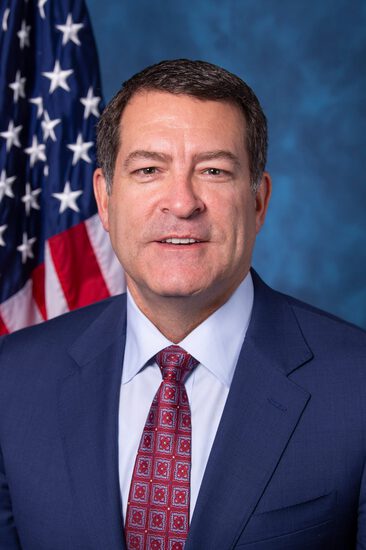
Rep. Mark E. Green
Sponsored bills
Maddy summaryHR 1232, the National Right-to-Work Act, would make union membership voluntary for workers in most private-sector jobs by removing legal requirements for employees to join a union or pay dues as a condition of employment. It directly affects workers in unionized workplaces covered by the National Labor Relations Act (including most private employers) and railroad workers covered by the Railway Labor Act. The key change eliminates provisions that allowed "union security agreements" (requiring dues or membership), meaning workers could no longer be forced to pay union fees to keep their jobs. This bill does not change other labor rights or create new programs - it only modifies existing laws to allow workers to opt out of union membership and financial obligations.
Maddy summaryHR 1165, the Port Crane Security and Inspection Act of 2025, requires the Department of Homeland Security to inspect high-risk foreign cranes connected to port cyber infrastructure before they are used at U.S. ports. It mandates a 180-day assessment of security risks from existing and new cranes and orders the removal of any crane posing a threat until certified safe. The bill prohibits operating new foreign cranes (from countries identified as security threats) after enactment and bans foreign software on port cranes after a 5-year phaseout period. This directly affects U.S. ports using cranes with technology from designated "covered foreign countries," such as those identified in national threat assessments.
Maddy summaryThe Laken Riley Act expands mandatory detention for immigrants convicted of certain property crimes like burglary, theft, or shoplifting by adding these offenses to existing immigration detention criteria. It requires the federal government to issue detainers for such individuals and take custody if not detained by local authorities. The bill also grants state attorneys general standing to sue federal officials in federal court if they believe immigration enforcement actions (like releasing detained immigrants) cause the state financial harm exceeding $100. This creates new legal pathways for states to challenge federal immigration decisions through expedited lawsuits.
Maddy summaryHR 1122, the China Technology Transfer Control Act of 2025, requires the U.S. President to control exports of specific technologies and intellectual property to China after 180 days of enactment. It targets "covered national interest technology" defined as items aiding China's military, supporting its Made in China 2025 industrial policy (like semiconductors or AI), or used in human rights violations. The bill mandates sanctions against foreign entities that knowingly transfer such technology to China, with exceptions for imported goods. It also directs the U.S. Trade Representative to create an annual list of China-produced goods tied to these policies or human rights abuses.
Maddy summaryHR 1057, the Safe Passage on Interstates Act of 2025, creates a new federal criminal offense for intentionally obstructing interstate highways. It makes it illegal to deliberately delay traffic, stand near vehicles, or endanger movement on interstates with the intent to block normal use. The bill directly affects individuals who engage in such obstruction, with penalties including fines up to $15,000 or imprisonment up to 20 years (or life if death results). Exceptions cover lawful activities authorized by federal, state, or local governments. This bill amends Title 18 of the U.S. Code to establish specific penalties for highway obstruction.
Maddy summaryHR 1040, the Senior Citizens Tax Elimination Act, would stop taxing Social Security benefits for seniors by repealing the current tax rule that includes some benefits in gross income. It directly affects senior citizens who currently pay federal income tax on portions of their Social Security payments. The bill adds a provision stating Section 86 of the tax code (which taxes Social Security benefits) no longer applies after enactment. To offset the lost tax revenue, the bill requires the government to appropriate funds to the Social Security and Railroad Retirement trust funds, ensuring they remain fully funded without requiring tax increases.
Maddy summaryHRES 102 is a procedural resolution that allocates $20.466 million in funding for the Committee on Homeland Security during the 119th Congress. It provides specific amounts for the committee's operational expenses, including staff salaries, split equally between the 2025-2026 and 2026-2027 sessions. The resolution requires payments to be authorized by the committee chair and approved by the House Administration Committee, with funds expended per established House regulations. This resolution directly affects the committee's budgeting process but does not create new policies or impact constituents.
Maddy summaryThis bill allows states to create new Medicaid demonstration projects that give enrollees an electronic benefits card for primary care and medications, with unused funds converted to cash annually. Participants could also enroll in state-determined catastrophic insurance for coverage beyond the card's limits. The projects must not increase federal spending compared to standard Medicaid and prohibit abortion coverage except when necessary to save a mother's life or in cases of rape or incest. It directly affects Medicaid enrollees in states that adopt such projects, granting states more flexibility in program design.
Maddy summaryHR 925, the "Dismantle DEI Act of 2025," would eliminate diversity, equity, and inclusion (DEI) programs across federal government operations. The bill requires federal agencies to close DEI offices, rescind related executive orders, and prohibit the use of federal funds for DEI training, offices, or initiatives. It defines "prohibited diversity, equity, or inclusion practice" as any activity that discriminates based on race, ethnicity, religion, biological sex, or national origin, or requires employees to complete training asserting that certain groups are inherently superior or inferior. The legislation also prohibits requiring employees to sign statements about race, ethnicity, or gender, and establishes private lawsuits for violations with potential damages of $1,000 per violation per day. This bill would directly affect federal agencies, contractors, grantees, and advisory committees receiving federal funding.