

Maddy summaryHR 1608 requires the Department of Homeland Security (DHS) to submit a detailed report to Congress within 180 days of enactment, assessing vehicular terrorism threats and countermeasures. The report must analyze emerging risks - including threats using autonomous vehicles, ride-sharing apps, and connected car technologies - and identify high-risk locations like airports, mass gatherings, and critical infrastructure. It also mandates DHS to detail current prevention efforts, coordination with state/local governments and private companies (e.g., ride-sharing platforms), and recommendations for new technologies like vehicle immobilization systems. An unclassified summary of the report will be published publicly, with annual briefings to Congress on findings.
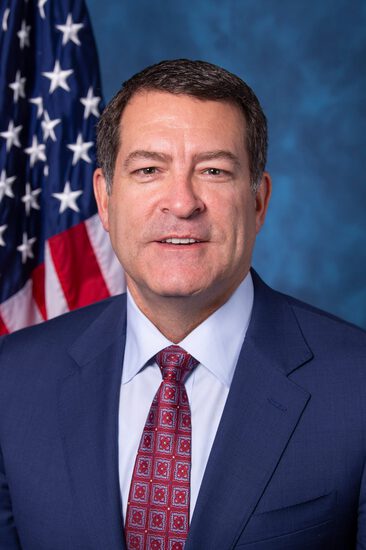
Rep. Mark E. Green
Sponsored bills
Maddy summaryThis bill would require all states to recognize valid concealed carry permits issued by other states, allowing permit holders to carry concealed handguns (excluding machine guns) in any state that either issues such permits or doesn't prohibit concealed carry. It directly affects law-abiding gun owners with valid permits from their home state, ensuring they can carry in states with similar permit systems or no prohibitions. Key provisions include treating valid permit documents as proof of legal carry (reducing officer stops), shifting the burden of proof to prosecutors if challenged, and allowing civil lawsuits for violations with attorney's fee awards. The bill does not override state laws restricting firearms on private property or government land, nor does it affect federal gun restrictions like those in section 922(q).
Maddy summaryThe Cyber PIVOTT Act creates a program to build a skilled cyber workforce by providing full tuition scholarships to students in two-year cyber or cyber-relevant associate's degree programs at participating community colleges and technical schools. The program requires scholarship recipients to complete a two-year service obligation in a cyber role for federal, state, local, tribal, or territorial government, with exceptions for military service. It includes mandatory skills-based exercises, internships with government agencies or critical infrastructure sectors, and a database of cyber training resources mapped to job roles. The program aims to enroll 250 students in its first year, doubling annually until reaching 1,000 students per year, with a long-term goal of 10,000 students annually within ten years.
Maddy summaryHR 1569, the CATCH Fentanyl Act, establishes a 5-year pilot program to test nonintrusive inspection technologies at U.S. border ports of entry. The bill requires U.S. Customs and Border Protection (CBP) to evaluate at least five technology enhancements - including AI, machine learning, and quantum sensing - to improve detection of contraband, drugs, weapons, and threats while reducing inspection wait times. Pilot projects must prioritize cost-effective solutions that integrate with existing systems, adhere to privacy protections, and report findings on performance metrics like detection rates and throughput. The program mandates detailed reports to Congress on effectiveness, implementation plans, and privacy impacts, using existing funding without new appropriations.
Maddy summaryHR 1919, the "Anti-CBDC Surveillance State Act," prohibits the Federal Reserve from developing, testing, or issuing any central bank digital currency (CBDC) or similar digital assets. It specifically bans the Fed from offering direct financial products to individuals, maintaining individual accounts, or issuing CBDCs directly or indirectly through intermediaries like banks. The bill also blocks the Fed from using any digital asset for monetary policy and clarifies that physical currency's privacy protections remain intact. This policy directly affects the Federal Reserve System's ability to create or manage digital monetary tools.
Maddy summaryHR 4370, the SAMS Act of 2025, codifies five existing executive orders into law to strengthen U.S. mineral supply chains. It gives legal force to orders focused on securing critical minerals (like lithium and rare earths) for national security and economic resilience, directly affecting federal agencies implementing these strategies. Key provisions require agencies to follow these established policies - addressing reliance on foreign mineral sources, supporting domestic mining, and prioritizing national security in mineral processing - without creating new regulations. The bill does not alter current mineral policies but formally enshrines them as binding federal requirements.
Maddy summaryHRES 559 is a non-binding House resolution recognizing the severe humanitarian crisis in the Democratic Republic of the Congo (DRC), where over 6.8 million people have been displaced and millions face starvation. It calls for U.S. support of diplomatic efforts like the Luanda and Nairobi peace processes, sanctions against armed groups (including M23 and ADF), and reforms to combat corruption and conflict mineral exploitation. The resolution directly affects DRC civilians enduring violence and displacement, as well as U.S. and international partners working on peacebuilding and mineral supply chain accountability.
Maddy summaryHRES 557 is a ceremonial resolution honoring Frederick W. Smith, founder of FedEx, for his life and contributions. It recognizes his military service (including medals from Vietnam), founding FedEx which revolutionized package delivery, and his dedication to Memphis, Tennessee. The resolution formally "honors" his legacy as an entrepreneur and community leader and requests that a copy be sent to his family. This is a symbolic tribute with no policy changes or funding impacts.
Maddy summaryHR 275 requires the Department of Homeland Security (DHS) to publish monthly reports on individuals classified as "special interest aliens" who attempt unlawful entry into the U.S. These reports, due by the seventh day of each month, must include the total number, nationalities or countries of origin, geographic regions of encounters, and whether entries occurred at ports, between ports, or inland. The reports must also identify if encounters involve "covered nations" as defined under existing law. This bill directly affects DHS, which must implement the reporting, and Congress, which receives the data for oversight. The law focuses on transparency around national security-related immigration encounters without altering immigration policy.
Maddy summaryHR 4202, the Protect Honduran Democracy Act, authorizes U.S. support for free and fair elections in Honduras scheduled for November 30, 2025. The bill requires the Secretary of State to create a strategy including funding for independent election monitoring by groups like the OAS and UN, and prohibits misuse of state resources to influence voters. It also authorizes sanctions - such as visa denials - against Honduran officials or others who prevent candidates from running, harass election participants, or misuse legal processes to undermine the election. The legislation allocates $1 million for each of fiscal years 2026 and 2027 to support these efforts, directly affecting Honduran election officials, candidates, and U.S. agencies implementing the strategy.