

Maddy summaryHR 589, the FACE Act Repeal Act of 2025, would repeal a federal law (Section 248 of Title 18, U.S. Code) that prohibited obstructing access to reproductive health care facilities through physical means, intimidation, or violence. This repeal would eliminate the federal criminal penalty for such conduct, meaning federal prosecutors could no longer charge individuals under this specific law. The bill applies to all pending or future federal prosecutions related to these actions. It does not affect state laws that may still regulate access to reproductive health care facilities.
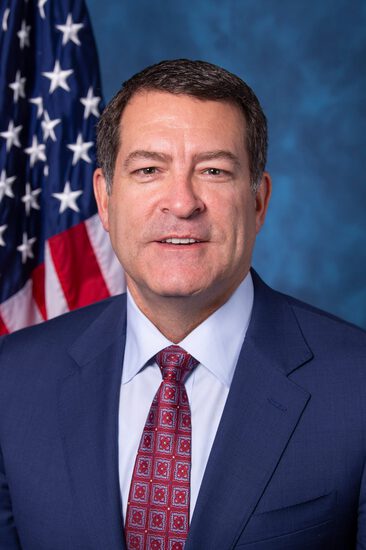
Rep. Mark E. Green
Sponsored bills
Maddy summaryHRES 481 is a symbolic resolution condemning recent antisemitic attacks in the U.S., specifically referencing the June 1, 2025, Boulder, Colorado, assault on a Jewish community gathering and other incidents like the May 2025 Washington, D.C., embassy shooting. It formally recognizes a pattern of violence targeting Jewish individuals and institutions, including attacks during religious events. The resolution calls on law enforcement to thoroughly investigate and prosecute such incidents and urges elected officials to publicly oppose antisemitism and politically motivated violence. As a non-binding resolution, it does not create new laws or allocate funding but serves to affirm congressional stance against antisemitism.
Maddy summaryHRES 483 is a House resolution recognizing the 250th anniversary of the U.S. Army's founding on June 14, 1775. It expresses appreciation for the Army's service over 250 years, honors soldiers' valor and core values, and calls for public observance through ceremonies and activities. The resolution has no policy impact or funding provisions - it is purely commemorative. It was introduced by 30 bipartisan House members and referred to the Armed Services Committee.
Maddy summaryThis bill modifies the Arms Export Control Act to streamline defense exports to the United Kingdom and Australia. It adds the UK to an existing exemption allowing defense item exports without separate bilateral agreements, and creates a new exemption for Australia under its existing defense treaty, specifically covering certain missile systems, biological agents, and nuclear weapons components. The exemption applies only when Australian laws prevent enforcement of export controls. This directly affects US defense export licensing requirements for transactions with these two countries, removing specific bureaucratic hurdles for listed defense items.
Maddy summaryHR 3765, the FALCONS Act, prohibits federal funding for curricula or training at five U.S. service academies based on critical race theory, diversity, equity, and inclusion (DEI). The bill directly affects the U.S. Military Academy, Naval Academy, Air Force Academy, Coast Guard Academy, and Merchant Marine Academy by banning the use of federal funds for such educational content. Its key mechanism is a funding restriction, preventing the use of federal money to develop or implement programs related to these concepts at the specified institutions. The law focuses solely on restricting federal funding for specific educational approaches, without altering academy admissions or academic standards.
Maddy summaryThis bill creates a presumption of service connection for specific health conditions in veterans who served at Karshi Khanabad Air Base in Uzbekistan. It directly affects those veterans by automatically qualifying them for disability benefits for 15 categories of diseases, including all cancers, thyroid conditions, bone disorders, cardiovascular issues, neurological illnesses, and other serious conditions listed in the bill. The key mechanism is adding these diseases to the list of conditions presumed to be linked to service at that specific location, eliminating the need for veterans to prove a direct connection. This change simplifies the benefits process for affected veterans without altering existing disability benefit standards.
Maddy summaryThe VITAL Act of 2025 creates new criminal penalties for medical research companies or sponsors who make false claims or hide important data about clinical vaccine trials, punishable by fines or up to five years in prison. It requires sponsors to certify no fraud occurred in trial data to maintain emergency use authorizations and gives the Health Secretary power to revoke approvals if fraud is found. The bill modifies liability protections by removing shields for vaccine manufacturers who committed fraud, allowing compensation claims under the National Vaccine Injury Program for such cases. It also explicitly allows ongoing legal claims related to COVID-19 vaccines at any time, defining "COVID-19" to cover all SARS-CoV-2 variants.
Maddy summaryHRES 444 is a symbolic House resolution calling on all Americans to observe Memorial Day 2025 by honoring military personnel who died in service. It does not create new laws or affect specific groups, as it is a non-binding expression of national remembrance. The resolution states that Americans should commemorate the sacrifices of over one million service members who died pursuing freedom and peace, framing Memorial Day as a day to express respect for their ultimate sacrifice. This is a routine ceremonial resolution with no policy changes or concrete mechanisms beyond urging public observance.
Maddy summaryHR 1701, the Strategic Ports Reporting Act, requires the State and Defense Departments to map global ports critical to U.S. national security and economic interests, including identifying Chinese government or company efforts to control such ports. It mandates a comprehensive study on Chinese activities at strategic ports - such as promoting products like LOGINK and setting industry standards - and assesses how Chinese control could harm U.S. interests. The departments must submit a detailed, unclassified report to Congress within one year, including lists of ports controlled by China or the U.S., vulnerability assessments, and a strategy for securing trusted investments in port infrastructure. The report will also evaluate costs for replacing Chinese products and identify funding sources for U.S. alternatives.
Maddy summaryHR 2243, the LEOSA Reform Act, updates the Law Enforcement Officers Safety Act to clarify and expand firearm carry rights for qualified current and retired law enforcement officers. It modifies training requirements to allow officers to meet standards set by their former agency, their state, any local agency in their state, or a certified instructor within the state. The bill also adds exceptions for transportation property and public spaces when applying state laws, and permits qualified officers to carry concealed firearms in certain federal facilities (Security Level I/II civilian public access facilities). These changes aim to provide clearer, more flexible standards for firearm carry while maintaining existing safety frameworks.