

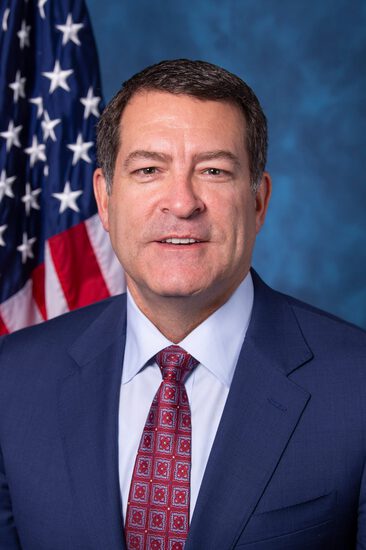
Photo of Mark E. Green
R United States House · District 7 · Tennessee

Rep. Mark E. Green

Compare
Total votes
2,375
all sessions
Attendance
94%
150 missed
Lower than 97% of chamber peers
With party
93%
of cast votes
Near the chamber average
Bipartisan score
4%
crosses aisle rarely
Near the chamber average
Sponsored
562
bills & resolutions
Lower than 95% of chamber peers
Committees
0
assignments
562 bills and resolutions

Sponsored bills

Total
562
Primary
95
Co-sponsor
467
This page
562
matching current filters
Co-sponsor HR 3730
In committee · United States House · Co-sponsor
Rural Health Clinic Burden Reduction Act

Maddy summaryThis bill simplifies regulations for rural health clinics (RHCs) by reducing administrative burdens. It allows RHCs to contract with physician assistants and nurse practitioners (instead of requiring direct employment), updates the definition of "rural" to exclude areas with 50,000+ residents, and removes outdated lab service requirements by requiring only "prompt access" to clinical labs. These changes directly affect RHCs, enabling them to more flexibly staff and operate while complying with state practice laws. The amendments take effect January 1, 2024, applying to services provided on or after that date.

In committee Dec 17, 2024 1 co-sponsor
Co-sponsor HR 3635
In committee · United States House · Co-sponsor
Save Rural Hospitals Act of 2023

Maddy summaryThis bill establishes a minimum payment floor for Medicare reimbursements to rural hospitals not located in frontier states. It sets a 0.85 minimum for the area wage index used in hospital inpatient payments (starting October 2023) and a similar floor for outpatient department payments (starting January 2024). This prevents Medicare payments from dropping below 85% of the standard wage index for eligible rural hospitals. The bill includes budget neutrality requirements to ensure overall Medicare payments don't increase, while exempting hospitals already receiving payments above the floor.

In committee Dec 17, 2024 1 co-sponsor
Co-sponsor HR 3206
In committee · United States House · Co-sponsor
Senior Citizens Tax Elimination Act

Maddy summaryThis bill repeals the tax on Social Security benefits for seniors, making those benefits fully tax-free. It directly affects seniors who receive Social Security benefits and are currently subject to income tax on a portion of those payments. The key provision removes Section 86 of the tax code that previously included benefits in gross income, while a separate funding mechanism appropriates money to Social Security trust funds to replace the lost revenue. The bill ensures Social Security trust funds remain fully funded without requiring new tax increases.

In committee Dec 17, 2024 1 co-sponsor
Co-sponsor HR 2940
In committee · United States House · Co-sponsor
PASTEUR Act

Maddy summaryThe PASTEUR Act establishes a new subscription payment model to incentivize development of new antimicrobial drugs for resistant infections. It creates a Committee on Critical Need Antimicrobials and a Subscription Contract Office to manage payments based on specific drug characteristics like treating multi-drug resistant infections, novel mechanisms of action, and oral administration. Under this model, the government would pay drug developers up to $3 billion over 10 years for qualifying drugs, with payments tied to requirements like ensuring drug availability, reporting resistance data, and developing appropriate use plans. The bill aims to address the lack of new antimicrobial drugs by changing the funding model to reward drugs that meet specific clinical and public health needs.

In committee Dec 17, 2024 1 co-sponsor
Primary HR 2794
In committee · United States House · Lead sponsor
Border Reinforcement Act of 2023

Maddy summaryThe Border Reinforcement Act of 2023 requires the immediate resumption of border wall construction along the US-Mexico border using previously allocated funds, with annual goals to complete 200 miles of wall until operational control is achieved. It mandates a comprehensive 5-year technology investment plan for border security systems, including surveillance and detection technology, and sets staffing requirements for U.S. Border Patrol, including a target of 22,000 full-time equivalent agents by 2025. The bill also requires U.S. Customs and Border Protection to publish monthly operational statistics on border encounters, drug seizures, and other border security metrics. Additionally, it includes provisions for DNA collection at land borders, eradication of certain vegetation impeding border security, and a report on Mexican cartels as potential foreign terrorist organizations.

In committee Dec 17, 2024 0 co-sponsors
Primary HR 2594
In committee · United States House · Lead sponsor
China Technology Transfer Control Act of 2023

Maddy summaryThis bill would restrict the export of certain technologies and intellectual property to China that the U.S. government identifies as threatening national security or supporting human rights abuses. It requires the President to control such exports after 180 days of enactment and imposes sanctions on foreign entities that knowingly provide these technologies to China. The bill also mandates the U.S. Trade Representative to create an annual list of Chinese products supported by the government's "Made in China 2025" policy or used in human rights violations, covering sectors like semiconductors, AI, robotics, and medical equipment. These measures aim to prevent U.S. technology from advancing China's military capabilities or enabling human rights abuses.

In committee Dec 17, 2024 0 co-sponsors
Co-sponsor HR 2474
In committee · United States House · Co-sponsor
Strengthening Medicare for Patients and Providers Act

Maddy summaryHR 2474, the "Strengthening Medicare for Patients and Providers Act," changes how Medicare pays physicians for services. It replaces the previous two-part payment system (used through 2025) with a single annual payment rate update starting in 2024. This update will be based on the Medicare Economic Index (MEI), which tracks costs for medical providers. The change directly affects Medicare-certified doctors and clinics who receive payments under the physician fee schedule.

In committee Dec 17, 2024 1 co-sponsor
Co-sponsor HR 2407
In committee · United States House · Co-sponsor
Nancy Gardner Sewell Medicare Multi-Cancer Early Detection Screening Coverage Act

Maddy summaryThis bill would require Medicare to cover FDA-approved blood tests that screen for multiple cancers simultaneously (like breast, lung, or colorectal cancer) for beneficiaries. It directly affects Medicare recipients aged 65+ who could access these new screenings once per year, without prior authorization. The key provision adds "multi-cancer early detection screening tests" to Medicare's covered services under Part B, defining them as blood tests analyzing cell-free DNA, while maintaining existing coverage for standard screenings like mammograms. The bill does not change current coverage for individual cancer screenings but ensures Medicare keeps pace with new medical technology.

In committee Dec 17, 2024 1 co-sponsor
Co-sponsor HR 1769
In committee · United States House · Co-sponsor
Healthcare Freedom Act of 2023

Maddy summaryHR 1769, the Healthcare Freedom Act of 2023, amends the tax code to rename "health savings accounts" as "health freedom accounts" and expands their use. It allows individuals to use these accounts for direct primary care, health care sharing ministries, and medical cost sharing organizations, increases annual contribution limits to $12,000 (or $24,000 for joint returns), and permits rollovers between accounts within 60 days. Employers may contribute to these accounts for employees hired after a 5-year transition period, with those contributions excluded from taxable income. The bill directly affects individuals using these accounts, employers offering them, and the IRS in tax administration, without changing health insurance coverage requirements.

In committee Dec 17, 2024 1 co-sponsor
Co-sponsor HR 1770
In committee · United States House · Co-sponsor
Equitable Community Access to Pharmacist Services Act

Maddy summaryThis bill expands Medicare Part B coverage to include specific pharmacist services, directly affecting Medicare beneficiaries and pharmacists who provide these services. It adds new coverage for pharmacist evaluations and treatments related to certain illnesses (like COVID-19, flu, or strep throat) and public health emergencies, requiring payment at 80% of the lesser of actual charge or 85% of physician payment rates (100% during emergencies). The bill also prohibits balance billing for these services, ensuring beneficiaries pay only the standard Medicare copayment. These changes aim to improve access to pharmacist care during health crises while aligning payment with existing physician service frameworks.

In committee Dec 17, 2024 1 co-sponsor
Showing 121 to 130 of 562 bills
Previous 1 … 12 13 14 … 57 Next