

Maddy summaryThe Telehealth Modernization Act of 2024 extends Medicare's temporary telehealth coverage rules permanently, removing the previous 2024 expiration date. It expands who can provide telehealth services by allowing more healthcare professionals (like certain nurse practitioners) to bill Medicare for these services, and ensures Federally Qualified Health Centers and Rural Health Clinics can continue billing for telehealth under existing payment rules after 2024. The bill also explicitly permits audio-only telehealth calls for Medicare coverage and allows telehealth for hospice face-to-face visits and home dialysis assessments as clinically appropriate, without time limits. These changes directly affect Medicare beneficiaries, healthcare providers, and community health centers offering telehealth services.
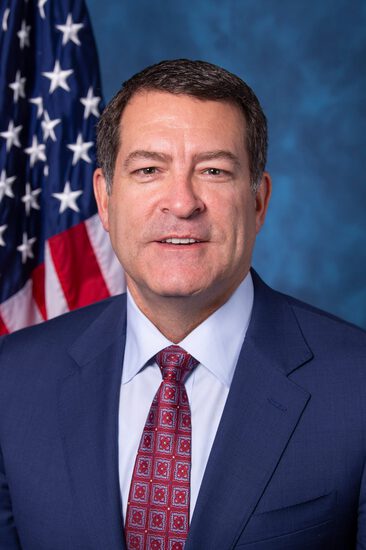
Rep. Mark E. Green
Sponsored bills
Maddy summaryHR 7311, the *Combatting International Drug Trafficking and Human Smuggling Partnership Act of 2024*, amends the Homeland Security Act to expand U.S. Customs and Border Protection (CBP) authority for overseas operations. It allows CBP officers to conduct joint operations with foreign governments to monitor, locate, and deter the trafficking of illegal drugs, human smuggling, terrorist threats, and other security risks entering the U.S. The bill also authorizes CBP to pay claims arising from these operations in foreign countries, using existing funds. This directly affects CBP and foreign governments partnering with the U.S. on border security efforts.
Maddy summaryThe Preserving Seniors’ Access to Physicians Act of 2023 increases the Medicare payment adjustment rate for physicians from 1.25% to 4.62%, directly affecting doctors who treat Medicare patients (primarily seniors). It also reduces the funding for the Medicaid improvement fund from $5,796,117,810 to $3,973,117,810. These changes impact Medicare providers and Medicaid programs, with the Medicare adjustment aimed at supporting physicians adjusting to payment changes. The bill does not specify how the Medicaid funding reduction relates to its stated goal of preserving seniors' access to physicians.
Maddy summaryHR 6177 prohibits federal funding from the Department of Health and Human Services (HHS) for researchers involved in studies or experiments involving minors that: (1) affirm a minor's gender identity differing from their sex assigned at birth, (2) provide medical/surgical services to help minors disassociate from their biological sex, or (3) use social interventions for the same purpose. The bill directly affects researchers seeking HHS grants for such studies, requiring them to certify they have never led such projects. It defines "sex" biologically at birth (based on reproductive biology and genetics) and "minor" as anyone under 18. The law bans funding for any federally-supported research meeting these criteria, regardless of the study's focus.
Maddy summaryThis bill prohibits the Department of Health and Human Services from finalizing, implementing, or enforcing the proposed "Safe and Appropriate Foster Care Placement Requirements for Titles IV-E and IV-B" rule (published September 28, 2023). It directly affects federal foster care programs by blocking a specific rule that would have required states to consider religious beliefs when placing children in foster care. The key mechanism is a clear statutory ban on the rule's implementation, preventing it from taking effect. The bill does not create new requirements but stops the enforcement of this particular federal regulation.
Maddy summaryThe Maximum Pressure Act (HR 6114) is a legislative proposal that would maintain and expand U.S. sanctions against Iran. The bill would codify existing sanctions, require Iran to meet 12 specific conditions before sanctions could be lifted (including ending support for terrorism, releasing hostages, and ending nuclear enrichment), and expand sanctions on Iran's Revolutionary Guard Corps and missile programs. It also establishes new reporting requirements for the U.S. government to monitor Iran's activities and the impact of sanctions. The legislation would require congressional review before any sanctions could be lifted or modified, preventing the executive branch from unilaterally easing restrictions.
Maddy summaryHR 5840, the Transportation Security Screening Modernization Act of 2024, simplifies the process for transportation workers to obtain multiple TSA security credentials. It requires the TSA to allow individuals to apply for and renew programs like the TWIC (Transportation Worker Identification Credential) and HAZMAT Endorsement through a single enrollment at any TSA center, with a combined fee lower than separate applications. The bill mandates coordinated expiration dates for all credentials and ensures state-issued commercial driver's licenses reflect the correct HAZMAT endorsement validity. These changes aim to reduce duplication and costs for workers needing multiple security clearances. The TSA must implement these changes within two years and publish details online.
Maddy summaryHR 5713, the Homeland Security Fentanyl Enforcement Act, authorizes Homeland Security Investigations (HSI) agents and designated state/local officers to enforce drug laws related to fentanyl trafficking under the Controlled Substances Act for five years. It requires the Government Accountability Office (GAO) to review and report on coordination between the Drug Enforcement Administration (DEA) and HSI in drug investigations within 18 months, including whether investigations followed established coordination policies. The bill mandates the Homeland Security Secretary and Attorney General to address any coordination failures found in the GAO report, prioritizing existing interagency task forces. This bill focuses on improving interagency coordination to combat fentanyl smuggling by transnational criminal organizations, without altering DEA's core authorities or creating new drug penalties.
Maddy summaryHR 5213 requires Medicare Advantage plans, Part D drug plans, and Medicare Administrative Contractors to base prior authorization decisions on evidence-based medical necessity standards, not arbitrary rules. It mandates input from practicing physicians when creating coverage rules, requires clear public posting of all preauthorization requirements on websites, and demands that coverage denials be reviewed by licensed physicians in the relevant specialty. This affects Medicare beneficiaries (primarily seniors and people with disabilities) by reducing arbitrary coverage denials for necessary care, while directly impacting healthcare providers and Medicare plans through new transparency and review requirements. The bill aims to streamline access to covered services by making coverage decisions more consistent, transparent, and clinically grounded.
Maddy summaryThis bill creates a presumption that minerals from the Democratic Republic of Congo (DRC) containing cobalt and lithium, mined with child or forced labor, cannot be imported into the United States. It requires the U.S. government to develop an enforcement strategy to identify and block such imports, including monitoring supply chains and working with international partners. The bill mandates diplomatic efforts to address child and forced labor in the DRC's mining sector and establishes sanctions against foreign entities that facilitate or engage in such labor practices. The focus is on minerals critical for electric vehicles and electronics, which are heavily sourced from the DRC and processed in China, with specific attention to Chinese mining companies like China Molybdenum that dominate the DRC's cobalt sector.