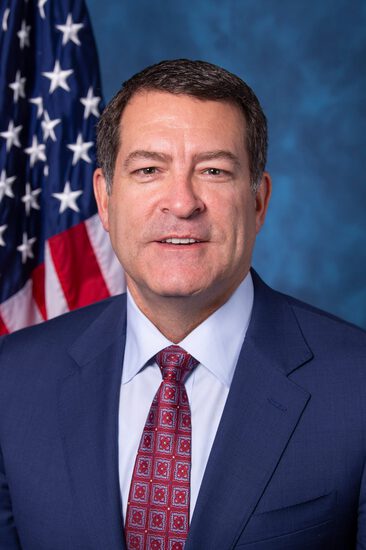
Photo of Mark E. Green
R United States House · District 7 · Tennessee

Rep. Mark E. Green

Compare
Total votes
2,375
all sessions
Attendance
94%
150 missed
Lower than 97% of chamber peers
With party
93%
of cast votes
Near the chamber average
Bipartisan score
4%
crosses aisle rarely
Near the chamber average
Sponsored
562
bills & resolutions
Lower than 95% of chamber peers
Committees
0
assignments
562 bills and resolutions

Sponsored bills

Total
562
Primary
95
Co-sponsor
467
This page
562
matching current filters
Co-sponsor HJRES 12
In committee · United States House · Co-sponsor
Proposing an amendment to the Constitution of the United States to limit the number of terms that a Member of Congress may serve.

Maddy summaryThis proposed constitutional amendment would limit Members of Congress to serving a maximum of three terms in the House of Representatives or two terms in the Senate. It directly affects current and future members by preventing those who have already served the maximum terms from seeking re-election. Key provisions include counting vacancies filled for more than a year (House) or three years (Senate) as a full term toward the limit, while excluding terms served before ratification from the count. As a constitutional amendment proposal, it requires approval by three-fourths of state legislatures to become law.

In committee Jan 6, 2025 1 co-sponsor
Co-sponsor HR 4563
In committee · United States House · Co-sponsor
ACE Act

Maddy summary# Summary of Proposed Legislation This comprehensive legislative proposal contains multiple sections addressing election integrity, campaign finance reform, cybersecurity, census operations, and related government functions. Key provisions include: 1. **Campaign Finance Reforms**: - Increased thresholds for political committee reporting requirements - Repeal of requirements for political committees to report donor identification - Exemption of uncompensated internet communications from contribution/expenditure treatment - Protection of donor privacy for tax-exempt organizations through the "Speech Privacy Act of 2023" 2. **Election Security**: - Establishment of a process for testing and monitoring cybersecurity vulnerabilities in election equipment - Requirements for the Secretary of Homeland Security to notify state officials about election cybersecurity incidents - Exclusive authority for the Election Assistance Commission regarding guidelines for voting system certification 3. **Census and Redistricting**: - Establishment of a permanent Census Monitoring Board with bipartisan composition to review census operations - Clarification of state authority over congressional redistricting maps - Provisions regarding the Speaker of the House's authority to join civil actions related to apportionment 4. **Other Key Provisions**: - Termination of the Disinformation Governance Board and prohibition on funding similar entities - Amendments to the Federal Election Campaign Act to increase reporting thresholds and exempt certain communications - Various technical corrections to existing campaign finance law The legislation appears to focus on enhancing election security, reducing regulatory burdens on political organizations, protecting donor privacy, and strengthening oversight of census operations while maintaining constitutional boundaries between federal and state authority.


In committee Jan 3, 2025 1 co-sponsor
Co-sponsor HR 24
In committee · United States House · Co-sponsor
Federal Reserve Transparency Act of 2025

Maddy summaryHR 24, the Federal Reserve Transparency Act of 2025, mandates a comprehensive audit of the Federal Reserve Board and Federal Reserve banks by the Government Accountability Office (GAO) within 12 months of enactment. The bill requires the GAO to submit a detailed report to Congress within 90 days of completing the audit, including findings, conclusions, and recommendations for legislative or administrative action. This audit replaces current limitations on reviewing Federal Reserve operations, particularly regarding entities like special purpose vehicles not previously subject to standard audits. The bill directly affects the Federal Reserve System by increasing congressional oversight of its financial activities and reporting mechanisms.

In committee Jan 3, 2025 1 co-sponsor
Co-sponsor HR 137
In committee · United States House · Co-sponsor
TCJA Permanency Act

Maddy summaryHR 137, the TCJA Permanency Act, makes permanent many tax provisions from the 2017 Tax Cuts and Jobs Act. It permanently increases the standard deduction for individual taxpayers, modifies income tax brackets, and makes permanent the child tax credit increase. The bill also permanently limits deductions for state and local taxes, mortgage interest, and miscellaneous itemized deductions. These changes affect most individual taxpayers who file federal income tax returns.

In committee Jan 3, 2025 1 co-sponsor
Co-sponsor HR 4818
In committee · United States House · Co-sponsor
Treat and Reduce Obesity Act of 2023

Maddy summaryThe Treat and Reduce Obesity Act of 2023 expands Medicare coverage for obesity treatment by allowing a wider range of healthcare providers - including nurse practitioners, dietitians, psychologists, and community-based counseling programs - to deliver intensive behavioral therapy for obesity, provided they coordinate with primary care providers. It also adds Medicare Part D coverage for medications used to treat obesity or for weight loss management in overweight individuals with related health conditions like diabetes or high blood pressure. These changes directly affect Medicare beneficiaries, particularly older adults (65+), who face higher obesity rates and associated costs, including $50 billion annually in Medicare spending for obesity-related care. The bill requires annual reports to Congress on implementation to improve coordination of obesity care across federal health programs.

In committee Dec 27, 2024 1 co-sponsor
Co-sponsor HR 4467
Signed into law · United States House · Co-sponsor
DHS Border Services Contracts Review Act

Maddy summaryThis bill requires the Department of Homeland Security (DHS) to review its use of contractor personnel for border security services along the U.S.-Mexico border. Specifically, DHS must assess contracts worth $50 million or more (in 2023 dollars) for "covered services," including whether contractors are necessary, efficient, and cost-effective compared to DHS employees. The review must include an analysis of contractor deployment, recommendations for improving contracting practices, and a 5-year strategy to enhance cost-effectiveness and avoid service gaps. DHS must submit the report to Congress within 180 days and provide periodic updates, but the bill does not authorize new funding for these activities.

Signed into law Dec 23, 2024 1 co-sponsor
Co-sponsor HR 9748
Passed · United States House · Co-sponsor
Research Security and Accountability in DHS Act

Maddy summaryThis bill requires the Department of Homeland Security (DHS) to develop a formal policy and process to protect sensitive research and development from unauthorized access or disclosure in its projects. It directly affects DHS research activities, particularly those managed by the Science and Technology Directorate. Key mechanisms include mandating a DHS policy for research security, requiring a GAO report on DHS compliance with existing national security guidelines (NSPM-33), and obligating DHS to brief Congress within 90 days on implementing the new safeguards. The bill focuses on procedural requirements for security oversight, not new funding or substantive policy changes.

Passed Dec 20, 2024 1 co-sponsor
Co-sponsor HR 5401
Passed · United States House · Co-sponsor
9/11 Memorial and Museum Act

Maddy summaryHR 5401, the 9/11 Memorial and Museum Act, provides a one-time federal grant of $5 million to $10 million to the National September 11 Memorial & Museum (operated by the World Trade Center Foundation). The grant funds the museum's operations, security, and maintenance, with specific requirements including free admission for veterans, first responders, and victims' families, dedicated weekly free public hours, and annual financial audits. The museum must also report annually to Congress on how the funds were used. This bill directly affects the museum's financial operations and access policies, not broader legislative changes.

Passed Dec 18, 2024 1 co-sponsor
Co-sponsor HR 8631
Passed · United States House · Co-sponsor
Decoupling from Foreign Adversarial Battery Dependence Act

Maddy summaryThis bill prohibits the Department of Homeland Security (DHS) from using federal funds to purchase batteries produced by specific Chinese companies starting October 1, 2027. It directly affects DHS procurement by banning purchases from entities like CATL, BYD, and Envision Energy, and any successors to these companies. The law defines "produced by" to include both final assembly and majority component sourcing, ensuring the restriction covers broader supply chains. Waivers are possible only if DHS certifies no national security risks, no alternatives exist, or purchases are for research - requiring congressional notification. The policy aims to reduce reliance on batteries from entities linked to national security concerns.

Passed Dec 17, 2024 1 co-sponsor
Co-sponsor HR 7991
In committee · United States House · Co-sponsor
Safeguarding American Workers’ Benefits Act

Maddy summaryThis bill modifies Social Security Number (SSN) requirements for claiming the Child Tax Credit and Earned Income Tax Credit. It specifies that qualifying SSNs must be issued to U.S. citizens (or under specific Social Security Act provisions) and issued before the tax return due date. The changes apply to tax years beginning after December 31, 2024, and update related tax code references to use "social security number" instead of "taxpayer identification number." These are technical adjustments to eligibility criteria, not new benefits or funding.

In committee Dec 17, 2024 1 co-sponsor
Showing 101 to 110 of 562 bills
Previous 1 … 10 11 12 … 57 Next