

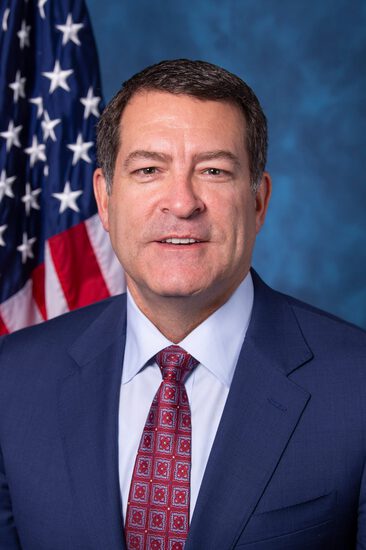
Photo of Mark E. Green
R United States House · District 7 · Tennessee

Rep. Mark E. Green

Compare
Total votes
2,375
all sessions
Attendance
94%
150 missed
Lower than 97% of chamber peers
With party
93%
of cast votes
Near the chamber average
Bipartisan score
4%
crosses aisle rarely
Near the chamber average
Sponsored
562
bills & resolutions
Lower than 95% of chamber peers
Committees
0
assignments
562 bills and resolutions

Sponsored bills

Total
562
Primary
95
Co-sponsor
467
This page
562
matching current filters
Primary HR 1129
In committee · United States House · Lead sponsor
Rural ER Access Act

Maddy summaryThe Rural ER Access Act removes a Medicare rule requiring off-campus emergency departments (ERs) to be located within 35 miles of their main hospital campus to qualify for the same billing and reimbursement as the main facility. This change directly affects rural hospitals and clinics operating off-campus ERs, which often face geographic barriers under the current 35-mile limit. By eliminating this location requirement, the bill allows these rural ERs to be treated as part of the main hospital for Medicare purposes, potentially expanding access to emergency care in remote areas. The regulation change must be implemented by the Secretary of Health and Human Services within 60 days of the bill’s enactment.

In committee Dec 17, 2024 0 co-sponsors
Primary HR 1128
In committee · United States House · Lead sponsor
Rural Health Care Access Act of 2023

Maddy summaryThe Rural Health Care Access Act of 2023 modifies the Medicare Rural Hospital Flexibility Program to simplify eligibility rules for rural hospitals. It removes two specific conditions hospitals previously needed to meet for designation (by deleting certain subclauses) and requires that any redesignation for the program must be completed before the bill’s enactment date. This directly affects rural hospitals relying on cost-based Medicare payments, which help cover their operating expenses. The bill streamlines administrative processes without changing the program’s core funding structure.

In committee Dec 17, 2024 0 co-sponsors
Co-sponsor HR 2
Passed · United States House · Co-sponsor
Secure the Border Act of 2023

Maddy summaryThe Secure the Border Act of 2023 is a comprehensive immigration bill that focuses on strengthening border security, reforming asylum processes, and updating employment verification systems. The bill requires the immediate resumption of border wall construction, mandates specific staffing levels for Border Patrol agents, and establishes new technology investment plans for Customs and Border Protection. It also introduces stricter asylum eligibility rules, expands penalties for visa overstays, and creates a new employment eligibility verification system that requires employers to check worker authorization status. Additionally, the bill includes provisions for family detention standards, child repatriation policies, and increased funding for border security operations while prohibiting certain types of funding for organizations that facilitate illegal immigration.

Passed Dec 17, 2024 1 co-sponsor
Primary HR 722
In committee · United States House · Lead sponsor
Western Hemisphere Nearshoring Act

Maddy summaryThe Western Hemisphere Nearshoring Act encourages U.S. companies to relocate manufacturing operations from China to Latin America or the Caribbean by providing financial incentives. It would use U.S. International Development Finance Corporation (DFC) funds to cover moving costs and workforce development for qualifying companies, while offering duty-free treatment for goods made in the region. Companies must create jobs in the new location, avoid foreign government control, and move operations within a specified timeframe to qualify for assistance. The bill also establishes a trust fund using tariffs from China to offset revenue losses from tax incentives for relocated manufacturing. This legislation aims to reduce U.S. dependence on China, create jobs for American workers, and foster economic development in the Western Hemisphere.

In committee Dec 17, 2024 0 co-sponsors
Co-sponsor HR 589
Passed · United States House · Co-sponsor
MAHSA Act

Maddy summaryHR 589, the MAHSA Act, imposes U.S. sanctions on Iran's Supreme Leader, President, and affiliated entities responsible for human rights abuses and terrorism. It targets the Supreme Leader's Office, the President's cabinet, security forces involved in the crackdown following Mahsa Amini's death, and entities financing abuses. The bill requires the President to annually determine and apply existing sanctions - like property blocking and visa bans - against these individuals and entities. This directly affects Iran's top leadership and security apparatus, aiming to hold them accountable for abuses including the Morality Police's role in Amini's detention and the subsequent violent suppression of protests.

Passed Dec 17, 2024 1 co-sponsor
Co-sponsor HR 7
In committee · United States House · Co-sponsor
No Taxpayer Funding for Abortion and Abortion Insurance Full Disclosure Act of 2023

Maddy summaryThis bill bans federal funding for abortions in most cases, prohibiting the use of taxpayer money for abortion services or health insurance plans covering abortion. Exceptions allow funding for abortions resulting from rape, incest, or when a pregnancy endangers a woman's life. It requires health insurance plans sold through the Affordable Care Act (ACA) marketplaces to clearly disclose any separate costs for abortion coverage and prohibits ACA subsidies from being used for plans that cover abortion (except in the specified exceptions). The law directly affects federal programs like Medicaid, ACA marketplace plans, and insurers offering health coverage to individuals using federal subsidies.

In committee Dec 17, 2024 1 co-sponsor
Co-sponsor HR 152
In committee · United States House · Co-sponsor
Hearing Protection Act

Maddy summaryHR 152, titled the "Hearing Protection Act," actually addresses firearm silencers (suppressors), not hearing protection. The bill removes federal registration requirements for silencers by directing the Attorney General to destroy all existing silencer records within 365 days. It also preempts state laws that tax, register, or impose recordkeeping requirements on silencers, making such state rules unenforceable. Additionally, the bill updates tax codes to include silencers as taxable items and clarifies their definition in firearm laws.

In committee Dec 17, 2024 1 co-sponsor
Co-sponsor HR 9769
Passed · United States House · Co-sponsor
Strengthening Cyber Resilience Against State-Sponsored Threats Act

Maddy summaryThis bill establishes a federal task force led by the Cybersecurity and Infrastructure Security Agency (CISA) and the FBI to coordinate responses against cyber threats from the People's Republic of China targeting U.S. critical infrastructure, specifically referencing state-sponsored actors like Volt Typhoon. The task force must produce an initial report within 540 days and annual reports for five years, assessing risks, needed resources, and potential disruptions to infrastructure in a conflict, including classified evaluations of threats to energy, transportation, and military operations. These reports will include recommendations for improving cybersecurity defenses and a public awareness campaign to help critical infrastructure owners (such as utility companies and transportation systems) access federal security resources. The task force will operate under exemptions from certain federal advisory and paperwork laws to streamline coordination.

Passed Dec 11, 2024 1 co-sponsor
Co-sponsor HR 9668
Passed · United States House · Co-sponsor
SHIELD Against CCP Act

Maddy summaryHR 9668, the SHIELD Against CCP Act, establishes a DHS Working Group to assess and coordinate efforts against specific threats posed by the Chinese Communist Party. The Working Group examines issues like immigration system exploitation (e.g., identity theft, human trafficking), predatory economic practices (e.g., forced labor, IP theft), and threats to critical infrastructure, including fentanyl trafficking and cybersecurity risks. It requires DHS to produce annual threat assessments for Congress, coordinate with federal and local partners, and report on program efficacy, with the Working Group terminating after seven years. The bill directly affects DHS operations and its collaboration with intelligence and fusion centers to address these security concerns.

Passed Dec 11, 2024 1 co-sponsor
Co-sponsor HR 5302
Signed into law · United States House · Co-sponsor
Michel O. Maceda Memorial Act

Maddy summaryThis bill designates the U.S. Customs and Border Protection Air and Marine Operations Marine Unit at 101 Km 18.5 in Cabo Rojo, Puerto Rico, as the "Michel O. Maceda Marine Unit" to honor Marine Interdiction Agent Michel O. Maceda, who was mortally wounded during a 2022 drug interdiction operation. The bill ensures all future government documents, maps, and references will use this new name for the unit. It does not change policies, funding, or operations - only commemorates Agent Maceda's service and sacrifice.

Signed into law Dec 11, 2024 1 co-sponsor
Showing 131 to 140 of 562 bills
Previous 1 … 13 14 15 … 57 Next