

Whistleblower Protection Improvement Act of 2021 This bill establishes, modifies, and expands certain whistleblower protections for federal employees, including with respect to petitions to Congress, whistleblower identity, and protected disclosures. For example, the bill prohibits personnel action against employees who exercise their right to petition or furnish information to Congress and specifically precludes the President, Members of Congress, members of the uniformed services, and other federal employees from interfering with this right. It also generally prohibits employees from disclosing the identity of whistleblowers to individuals outside of the government and allows the Inspector General to determine whether to investigate a referral if the referral is found to have been made in retaliation for whistleblowing activity. Employees may request corrective action from the Merit Systems Protection Board with respect to such prohibited practices and may file an action in court if the board does not render a final decision within 180 days of a request. The bill also expands the list of recipients to whom an employee may make a protected disclosure to include a supervisor in the employee's direct chain of command. It also includes personnel actions involving furloughs of more than 14 days but less than 30 days, and furloughs of 13 days or less that are not due to funding lapses, as appealable adverse actions that are subject to certain procedural requirements.
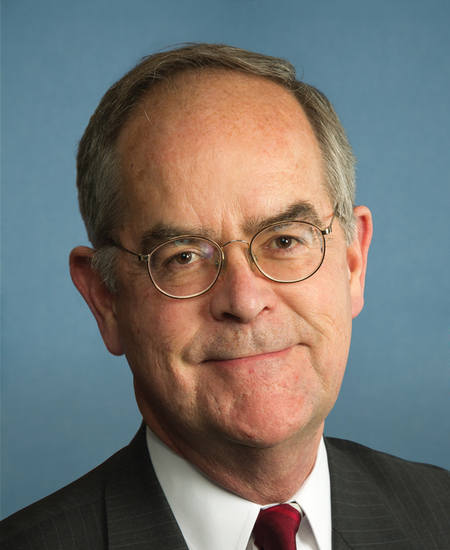
Rep. Jim Cooper
Sponsored bills
Improving Seniors' Timely Access to Care Act of 2022 This bill establishes several requirements and standards relating to prior authorization processes under Medicare Advantage (MA) plans. Specifically, MA plans must (1) establish an electronic prior authorization program that meets specified standards, including the ability to provide real-time decisions in response to requests for items and services that are routinely approved; (2) annually publish specified prior authorization information, including the percentage of requests approved and the average response time; and (3) meet other standards, as set by the Centers for Medicare & Medicaid Services, relating to the quality and timeliness of prior authorization determinations.
Bicameral Congressional Trade Authority Act of 2022 This bill requires congressional approval for a presidential import adjustment due to a national security threat from an import related to military equipment, energy resources, or critical infrastructure essential to national security. Specifically, the bill requires the President to submit a proposal to Congress, which Congress may approve by a joint resolution. Under current law, the President determines whether any adjustment of an import is necessary and must submit to Congress the reasons for any action taken or not taken. The Department of Defense (currently, the Department of Commerce) must investigate the effect of these imports on national security. The bill retroactively applies to any proposed action made four years before enactment of this bill. In general, any rate of duty modification occurring in the time period beginning six years before and ending the day before enactment of this bill must revert to the previous rate unless it receives congressional approval.
Harriet Tubman Bicentennial Commemorative Coin Act This bill directs the Department of the Treasury to mint and issue 50,000 $5 gold coins, 400,000 $1 silver coins, and 750,000 half-dollar clad coins emblematic of the legacy of Harriet Tubman as an abolitionist. The Secretary may issue coins under this bill only during the period of January 1, 2024, through December 31, 2024. All surcharges received by Treasury from the sale of such coins must be paid equally to the National Underground Railroad Freedom Center in Cincinnati, Ohio, and The Harriet Tubman Home, Inc. in Auburn, New York, for the purpose of accomplishing and advancing their missions.
National World War II Memorial Commemorative Coin Act This bill directs the Department of the Treasury to mint and issue up to 50,000 $5 coins, 400,000 $1 silver coins, and 750,000 half-dollar clad coins in commemoration of the National World War II Memorial in the District of Columbia. The design of the coins shall be emblematic of the memorial and the service and sacrifice of American soldiers and civilians during World War II. All surcharges received from the sale of such coins shall be paid to the Friends of the National World War II Memorial to support the National Park Service in maintaining and repairing the memorial, and for educational and commemorative programs.
Assault Weapons Ban of 2022 This bill makes it a crime to knowingly import, sell, manufacture, transfer, or possess a semiautomatic assault weapon (SAW) or large capacity ammunition feeding device (LCAFD). The prohibition does not apply to a firearm that is (1) manually operated by bolt, pump, lever, or slide action, except for certain shotguns; (2) permanently inoperable; (3) an antique; (4) only capable of firing rimfire ammunition; or (5) a rifle or shotgun specifically identified by make and model. The bill also exempts from the prohibition the following, with respect to a SAW or LCAFD: importation, sale, manufacture, transfer, or possession related to certain law enforcement efforts, or authorized tests or experiments; importation, sale, transfer, or possession related to securing nuclear materials; and possession by a retired law enforcement officer. The bill permits continued possession, sale, or transfer of a grandfathered SAW, which must be securely stored. A licensed gun dealer must conduct a background check prior to the sale or transfer of a grandfathered SAW between private parties. The bill permits continued possession of, but prohibits sale or transfer of, a grandfathered LCAFD. Newly manufactured LCAFDs must display serial number identification. Newly manufactured SAWs and LCAFDs must display the date of manufacture. The bill also allows a state or local government to use Edward Byrne Memorial Justice Assistance Grant Program funds to compensate individuals who surrender a SAW or LCAFD under a buy-back program.
Keeping Girls in School Act This bill authorizes the U.S. Agency for International Development (USAID) to enter into agreements to address social, cultural, health, and other barriers that adolescent girls face in accessing quality secondary education. The USAID shall seek to ensure that such activities meet various requirements related to monitoring and evaluating outcomes, collecting data, and using specified indicators and methodologies for international basic education. The Department of State shall periodically update and report to Congress a publicly available U.S. global strategy to empower adolescent girls, and the USAID shall periodically report to Congress on the activities initiated under this bill and efforts to monitor and evaluate such activities.
Original Slavery Remembrance Day Resolution of 2021 This resolution supports the designation of a Slavery Remembrance Day and condemns slavery and its progenies.
Shirley Chisholm Congressional Gold Medal Act This bill provides for the posthumous presentation of a Congressional Gold Medal in commemoration of Shirley Chisholm, in recognition of her activism, independence, and groundbreaking achievements in politics, election as the first African American woman in Congress, and campaign to be the first African American to gain the nomination of a major political party for President of the United States. Following its award, the gold medal shall be given to the Smithsonian Institution where it shall be available for display and research.
Maddy summaryHRES 1282 is a non-binding House resolution expressing support for designating July as "Disability Pride Month." It recognizes that over 61 million U.S. adults live with disabilities and connects the designation to the anniversary of the Americans with Disabilities Act (signed July 26, 1990). The resolution urges Americans to observe the month with celebrations and actively work to prevent discrimination against people with disabilities. It does not create new laws or funding but formally endorses public recognition of disability pride.