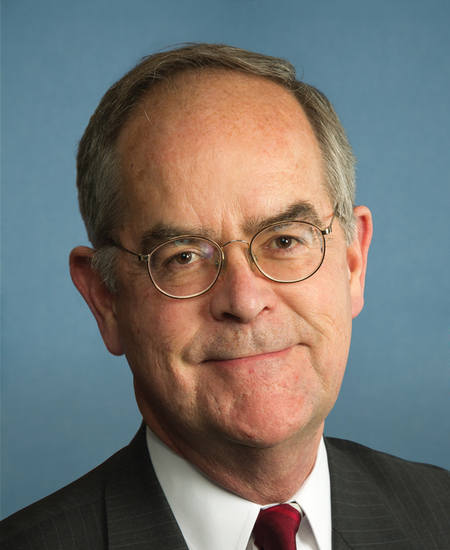
Photo of Jim Cooper
D United States House · District 5 · Tennessee

Rep. Jim Cooper

Compare
Total votes
958
all sessions
Attendance
99%
9 missed
Near the chamber average
With party
99%
of cast votes
Higher than 82% of chamber peers
Bipartisan score
0%
crosses aisle rarely
Lower than 83% of chamber peers
Sponsored
486
bills & resolutions
Near the chamber average
Committees
0
assignments
486 bills and resolutions

Sponsored bills

Total
486
Primary
10
Co-sponsor
476
This page
486
matching current filters
Co-sponsor HR 3716
In committee · United States House · Co-sponsor
Children’s Protection Act of 2021

Children's Protection Act of 2021 This bill requires federal agencies to analyze the impact of any proposed and final rule that may negatively affect the health outcomes of a substantial number of children, including the impact of the rule on access to health insurance, health care, and behavioral health care services.

In committee Nov 1, 2022 1 co-sponsor
Co-sponsor HR 3621
In committee · United States House · Co-sponsor
Neighbors Not Enemies Act of 2021

Neighbors Not Enemies Act of 2021 This bill repeals provisions authorizing the President to apprehend and remove from the United States the citizens of a particular nation, if the United States has declared war against that nation or that nation has threatened an invasion against the United States.

In committee Nov 1, 2022 1 co-sponsor
Co-sponsor HR 3548
In committee · United States House · Co-sponsor
Keeping Our Promise Act

Keeping Our Promise Act This bill authorizes issuing visas to certain individuals who were previously refused a diversity immigrant visa or admission into the United States because of certain executive orders or the COVID-19 public health emergency. (Diversity immigrant visas are available to eligible immigrants from countries with relatively low rates of immigration to the United States.) Specifically, this bill applies to individuals who were refused such a visa solely due to certain executive orders from 2017 to 2020, including orders which suspended the entry of individuals from certain countries. The bill also applies to diversity visa applicants who, because of the COVID-19 emergency, were (1) unable to receive a visa interview despite requesting one, or (2) unable to be admitted into the United States despite being approved for a visa. The Department of State must notify each individual covered under this bill of the individual's visa eligibility. To retain eligibility, an individual must respond to the State Department's notice within one year of the notice. An individual may also lose eligibility if the State Department determines that the applicant fails to meet certain requirements. The bill also relaxes certain annual numerical limits for individuals obtaining a visa under this bill. An individual who was a child when initially selected for a visa shall be treated as a child for the purposes of a visa application under this bill.

In committee Nov 1, 2022 1 co-sponsor
Co-sponsor HR 3480
In committee · United States House · Co-sponsor
Extreme Risk Protection Order Act of 2021

Extreme Risk Protection Order Act of 2021 This bill establishes grants to support the implementation of extreme risk protection order laws at the state and local levels, extends federal firearms restrictions to individuals who are subject to extreme risk protection orders, and expands related data collection. Extreme risk protection order laws, or red flag laws, generally allow certain individuals (e.g., law enforcement officers or family members) to petition a court for a temporary order that prohibits an at-risk individual from purchasing and possessing firearms. Among its provisions, the bill directs the Office of Community Oriented Policing Services within the Department of Justice to establish a grant program to help states, local governments, Indian tribes, and other entities implement extreme risk protection order laws; extends federal restrictions on the receipt, possession, shipment, and transportation of firearms and ammunition to individuals who are subject to extreme risk protection orders; and requires the Federal Bureau of Investigation to compile (and later destroy) records from federal, tribal, and state courts and other agencies that identify individuals who are subject to extreme risk protection orders.

In committee Nov 1, 2022 1 co-sponsor
Co-sponsor HR 6889
Passed · United States House · Co-sponsor
Credit Union Board Modernization Act

Credit Union Board Modernization Act This bill revises the frequency of meetings required to be held by a credit union's board of directors. Specifically, the bill requires monthly meetings for new credit unions during their first five years and for credit unions with a low soundness rating. All other credit unions must hold at least six meetings annually, with at least one meeting held during each fiscal quarter. Currently, all credit union boards must meet at least once a month.

Passed Oct 11, 2022 1 co-sponsor
Co-sponsor HR 6825
Passed · United States House · Co-sponsor
Nonprofit Security Grant Program Improvement Act of 2022

Nonprofit Security Grant Program Improvement Act of 2022 This bill modifies the Nonprofit Security Grant Program of the Department of Homeland Security and reauthorizes appropriations for such program through FY2028. The Federal Emergency Management Agency (FEMA) must establish an office, headed by a senior FEMA official, to administer the program. Office responsibilities include those related to outreach, engagement, education, and technical assistance. FEMA must also publish grant guidelines and may prohibit states from closing application processes before the publication of the guidelines. FEMA must seek to enter into a contract or other agreement with an independent research organization for the conduct of a study that analyzes and reports on (1) the effectiveness of the program for preparedness against terrorism and other threats; (2) the risk-based formula and allocations under the program; and (3) the risk profile of and any identifiable factors leading to the low participation of traditionally underrepresented groups and states under the program.

Passed Sep 27, 2022 1 co-sponsor
Co-sponsor HR 4118
Passed · United States House · Co-sponsor
Break the Cycle of Violence Act

Break the Cycle of Violence Act This bill establishes federal grant programs and related entities to support violence intervention initiatives. Specifically, the bill directs the Department of Health and Human Services (HHS) to award grants for coordinated community violence intervention initiatives in communities disproportionately impacted by homicides and community violence. HHS must also establish several related entities, including an Office of Community Violence Intervention to administer programs and activities related to violence intervention; the Community Violence Intervention Advisory Committee to advise and assist the office and HHS; and the National Community Violence Response Center to provide training and technical assistance, coordinate research, and develop data collection policies. Additionally, the bill directs the Department of Labor to award grants for job training and workforce programs in communities disproportionately affected by gun violence to connect youth ages 16 to 24 to in-demand occupations.

Passed Sep 27, 2022 1 co-sponsor
Co-sponsor HR 1456
Passed · United States House · Co-sponsor
Peace Corps Reauthorization Act of 2022

Peace Corps Reauthorization Act of 2022 This bill reauthorizes through FY2024 and modifies operations of the Peace Corps. Changes include increasing the readjustment allowance paid to volunteers when their service terminates and providing statutory authority for an executive order that grants returned volunteers noncompetitive eligibility for federal civil-service positions. Additionally, the bill entitles returned volunteers to sixty days of health care benefits. The Peace Corps must also provide volunteers with information about enrolling in U.S. health plans before service termination and mental health care during and after service. The bill also includes provisions to address involuntary termination of Peace Corps service in emergencies, including by expediting re-enrollment of involuntarily terminated volunteers. The Peace Corps must also adequately insure volunteers' safety and must coordinate with the Department of State to periodically update agreements concerning the security of Peace Corps volunteers and staff abroad. The bill also authorizes Peace Corps to recruit domestically based volunteers to serve in the United States at the request of another agency or to provide services in a host country virtually, modifies the Peace Corps National Advisory Council's membership and functions, expands whistleblower protections for volunteers, increases the rate of pay that applies to a volunteer's workers compensation claim, requires Peace Corps to implement a zero tolerance drug use policy regarding volunteer involvement with illegal drugs, and emphasizes the use of the internet in Peace Corps programs. Furthermore, the bill requires reporting, including on the provision of mental health services to volunteers.


Passed Sep 20, 2022 1 co-sponsor
Showing 41 to 50 of 486 bills
Previous 1 … 4 5 6 … 49 Next