

Improving Digital Identity Act of 2021 This bill establishes the Improving Digital Identity Task Force to establish a government-wide effort to develop secure methods for governmental agencies to validate identity attributes to protect the privacy and security of individuals and support reliable, interoperable digital identity verification in the public and private sectors. The National Institute of Standards and Technology (NIST) shall develop and periodically update a framework of standards, methodologies, procedures, and processes as a guide for federal, state, and local governments to follow when providing services to support digital identity verification. The Department of Homeland Security (DHS) shall award grants to states to upgrade systems that provide drivers' licenses or other types of identity credentials to support the development of highly secure, interoperable state systems that enable digital identity verification. The Government Accountability Office shall submit to Congress a report that includes (1) an analysis of legal and regulatory requirements with respect to the collection and retention of Social Security numbers by nongovernmental organizations, and (2) a recommendation on the necessity and effectiveness of any such legal and regulatory requirement analyzed and the use of a form of identification other than a Social Security number. DHS shall issue binding operational directives to federal agencies to implement (1) the Digital Identity Guidelines published by NIST; and (2) the memorandum of the Office of Management and Budget issued on May 21, 2019, which includes the subject Enabling Mission Delivery through Improved Identity, Credential, and Access Management .
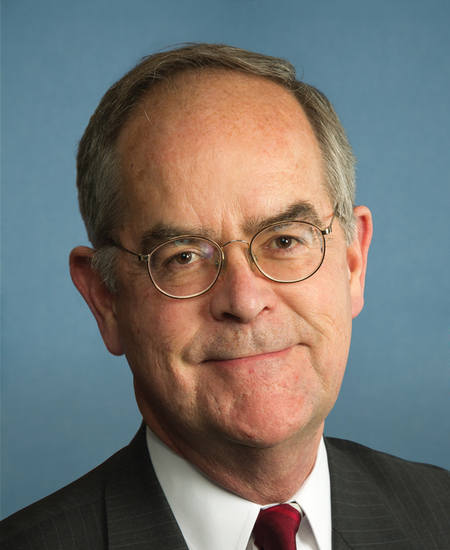
Rep. Jim Cooper
Sponsored bills
Ensuring Women's Right to Reproductive Freedom Act This bill prohibits anyone acting under state law from interfering with a person's ability to access out-of-state abortion services. ( Abortion services includes the use of any drugs that are approved to terminate pregnancies and any health care services related to an abortion, whether or not provided at the same time or on the same day.) Specifically, the bill prohibits any person acting under state law from preventing, restricting, impeding, or retaliating against health care providers who provide legal abortion services to out-of-state residents, any person or entity who helps health care providers to provide such services, any person who travels to another state to obtain such services, any person or entity who helps another person travel to another state to obtain such services, or the movement in interstate commerce of drugs that are approved to terminate pregnancies. The Department of Justice may enforce this bill through civil actions; the bill also establishes a private right of action for violations.
Access for Veterans to Records Act of 2022 This bill directs the Office of the Archivist of the United States to submit to Congress a comprehensive plan for reducing the backlog of requests for records from, and improving the efficiency and responsiveness of operations at, the National Personnel Records Center. Such plan must include an estimate of the number of backlogged record requests for veterans; target time frames to reduce the backlog; a detailed plan for using existing funds to improve technology infrastructure, including secure access to appropriate agency federal records, to prevent future backlogs; actions to improve customer service for requesters; measurable goals with respect to the comprehensive plan and metrics for tracking progress toward such goals; and strategies to prevent future record request backlogs, including backlogs caused by an event that prevents employees of the center from reporting to work in person. The office must submit updates of such plan at specified intervals.
This bill bars state or local officials from prohibiting or restricting the possession, sale, purchase, transportation, or use of contraceptives (i.e., drugs or devices that are primarily used to prevent pregnancy). Individuals or the Department of Justice may bring civil actions for violations of this bill.
Save America’s Forgotten Equines Act of 2021 or the SAFE Act of 2021 This bill prohibits the transporting, receiving, possessing, purchasing, selling, or donation by a person of an equine (e.g., horse) that the person has reason to believe will be slaughtered for human consumption.
This resolution celebrates the 50th anniversary of the Federal Pell Grant program and expresses support for the designation of National Federal Pell Grant Day.
This resolution recognizes the exemplary service of the soldiers of the 30th Infantry Division of the Army, known as "Old Hickory," during World War II.
This resolution recognizes the historical significance to the nation of Juneteenth Independence Day (commemorating the end of slavery in the United States).
This resolution expresses that the House of Representatives supports the designation of National Tire Safety Week; expresses strong support for the goals and ideals of National Tire Safety Week and efforts to reduce tire-related accidents, fatalities, and injuries; and encourages the people of the United States to participate in National Tire Safety Week events and activities and educate themselves and others on the importance of regularly inspecting and maintaining a vehicle's tires.
Prohibit Wildlife Killing Contests Act of 2022 This bill makes it unlawful for any persons, except as provided below, to organize, sponsor, conduct, or participate in wildlife killing contests on public lands. This bill shall not apply to field trials, wildlife killing contests that exclusively target ungulates (e.g., deer) or birds of the orders Galliformes (e.g., turkeys) or Anatidae (e.g., ducks), or lethal control actions by state or federal agencies that target wildlife classified as invasive by the National Invasive Species Information Center.