

Maddy summaryHR 1525, the FAIR Act of 2023, reforms federal civil forfeiture laws to require all property seizures to go through a court process rather than allowing agencies to take property without judicial review. It raises the evidence standard from "preponderance of the evidence" to "clear and convincing evidence" for the government to prove forfeiture, and mandates courts to review cases within 7 days of seizure. The bill also requires courts to appoint attorneys for low-income individuals unable to afford legal representation and ensures property owners receive timely notice of their rights. These changes directly affect individuals whose property is seized in civil forfeiture cases, particularly those with limited financial means.
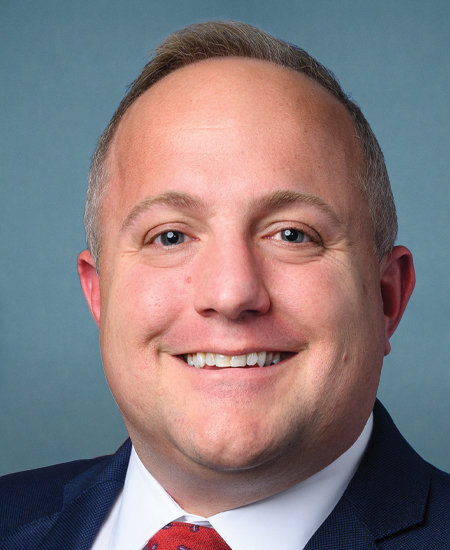
Rep. Russell Fry
Sponsored bills
Short Line Railroad Relief Act This bill authorizes the Department of Transportation to provide emergency grants or enter into contracts and other agreements for capital projects for short line railroads. A project must protect, repair, reconstruct, or replace short line railroad equipment and facilities in danger of suffering catastrophic damage, or that have suffered catastrophic damage, as a result of an emergency. An emergency includes a natural disaster affecting a wide area or a catastrophic failure from any external cause that results in the declaration of an emergency or a major disaster.
Maddy summaryHR 3792 extends U.S. security funding for Israel through 2028 (Section 3) and expands energy cooperation to include advanced nuclear technologies and carbon capture (Section 5). It requires annual reports on regional security partnerships involving Israel (Section 6) and ensures countries in the Abraham Accords can access U.S. development programs (Section 8). The bill also mandates reports on diplomatic efforts against ICC investigations targeting the U.S. and Israel (Section 10) and encourages people-to-people programs to strengthen the Abraham Accords (Sections 7, 9). These provisions directly affect Israel’s diplomatic engagement, security partnerships, and economic cooperation in the Middle East.
Maddy summaryHR 3176, the Veterans Health Care Freedom Act, creates a 3-year pilot program allowing eligible veterans (enrolled in VA care) to choose any provider within the VA healthcare system or approved non-VA facilities, removing prior location restrictions for VA care. Veterans can select primary and specialty care providers freely, with VA coordinating care through a designated primary provider. After the pilot, these expanded choices become permanent policy, requiring the VA to offer full provider selection without geographic or administrative barriers. The bill implements these changes using existing VA funding without new appropriations.
Maddy summaryThis bill requires that AM radio receivers be included as standard equipment in all new motor vehicles (such as cars and trucks) sold in the United States, with a rule to be issued by the Department of Transportation within one year. The rule must ensure AM radio is easily accessible on the dashboard and allows manufacturers to use digital AM radio technology instead of traditional AM. During the one-year period between the bill's enactment and the rule's effective date, manufacturers must clearly label vehicles without AM radio. The bill also directs a study to evaluate whether an alternative system could deliver emergency alerts as reliably as AM radio across the country, especially during crises.
Maddy summaryHR 3497, the Uranium Miners and Workers Act of 2023, expands eligibility for compensation under the Radiation Exposure Compensation Act (RECA) to include uranium miners, millers, ore transporters, and core drillers who worked in specified states between 1942 and 1978 and later developed certain cancers or kidney diseases. The bill redirects $475 million from unobligated coronavirus relief funds (from acts like the CARES Act and American Rescue Plan) to the RECA trust fund to pay claims. It also extends the RECA program's funding period by 4 years and adjusts the deadline for submitting claims to 4 years after the bill's enactment. This law directly affects former uranium industry workers who developed radiation-related illnesses.
Maddy summaryThis bill allows current federal law enforcement officers to purchase retired handguns from their agency within six months of the weapon being declared surplus. Officers must be in good standing with their agency and buy the handgun at its fair market value, considering the weapon's age and condition. The program requires the General Services Administrator to establish the purchasing system within one year of the bill's enactment. It directly affects active federal law enforcement officers who are retiring or leaving service and wish to retain their issued firearms.
National Law Enforcement Officers Remembrance, Support and Community Outreach Act This bill directs the Department of Justice (DOJ) to establish a National Law Enforcement Officers Remembrance, Support, and Community Outreach Program. The bill further directs DOJ to award a grant under the program to the National Law Enforcement Officers Memorial Fund for the expenses associated with community outreach, public education, and officer safety and wellness programs operated by the of the National Law Enforcement Officers Memorial Fund and National Law Enforcement Museum.
Maddy summaryHR 3256, the Preventing Executive Climate Overreach Act, would eliminate the legal effect of Executive Order 14096. This order, issued by the President to advance environmental justice in federal programs, would no longer be enforceable. The bill's key provision directly states that the executive order "shall have no force or effect." As a result, the administration would be unable to implement environmental justice policies based on that order.
Maddy summaryHR 3175, the Regulation Reduction Act of 2023, requires federal agencies to repeal two existing regulations before issuing a new rule, and three for "major rules" (those with significant economic impact). For major rules, the new rule's cost must not exceed the cost of the repealed rules, and the Office of Management and Budget must certify this. Agencies must also submit a 90-day review to Congress identifying costly, ineffective, duplicative, or outdated regulations. This bill directly affects federal agencies and the businesses, states, and local governments subject to federal regulations.