

Maddy summaryThis bill, HR 1282 (Major Richard Star Act), expands benefits for certain military retirees by allowing them to receive both veterans' disability compensation and military retirement pay simultaneously. It specifically affects combat-related disabled retirees under Chapter 61 of the military retirement system who have fewer than 20 years of service. The key change removes the automatic reduction of military retirement pay when these retirees also receive disability compensation, as amended in Section 1413a(b)(3) of Title 10. Technical updates to the law’s structure and effective date (starting after enactment) complete the provisions.
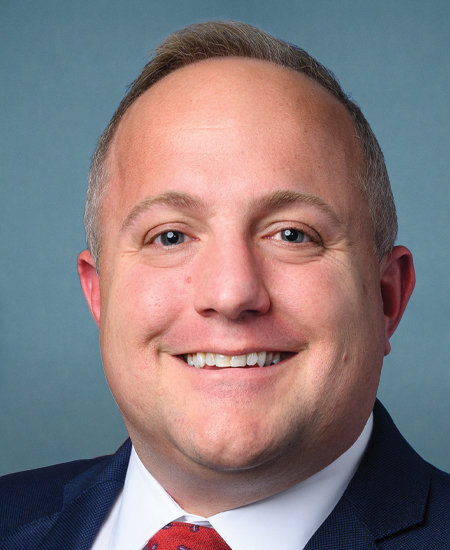
Rep. Russell Fry
Sponsored bills
Maddy summaryThe Project Safe Neighborhoods Reauthorization Act of 2023 extends federal funding for the Project Safe Neighborhoods (PSN) program through fiscal years 2024-2028, replacing its previous authorization period. The bill directly affects state, local, tribal, and federal law enforcement agencies, prosecutors, and community groups that receive PSN grants to reduce violent crime. Key provisions allow grantees to use funds for hiring crime analysts, covering overtime for officers and assistants, purchasing technology for crime reduction, and supporting multi-jurisdictional task forces. It also requires annual reports from the Attorney General detailing fund usage, community outreach, and violent crime statistics (including murder, robbery, and assault) in each program area. The program operates across all 94 U.S. federal judicial districts and territories.
Maddy summaryHJRES 44 is a congressional resolution seeking to block a 2021 rule by the Bureau of Alcohol, Tobacco, Firearms, and Explosives (ATF). The rule classified firearms with stabilizing braces as "short-barreled rifles," which would have required additional licensing and regulation. This resolution uses a specific legal process (under Title 5, U.S. Code) to formally disapprove the ATF rule, meaning the rule would no longer be in effect. It directly affects firearm owners, manufacturers, and dealers who would have been subject to the rule’s requirements.
Maddy summaryHR 4292 designates the U.S. Postal Service facility at 774 Sea Island Pkwy in Saint Helena Island, South Carolina, as the "Laura Matilda Towne Post Office Building." The bill updates all federal references to this location to reflect the new name. This is a ceremonial designation with no substantive policy changes or impact on services, regulations, or affected individuals.
Maddy summaryHR 4253 designates the U.S. Postal Service facility at 307 N Goose Creek Blvd in Goose Creek, South Carolina, as the "Lucille Simmons Whipper Post Office Building." The bill updates all official federal references (laws, maps, documents) to use this new name. It is a purely commemorative measure with no policy changes or direct impact on citizens or services. This bill serves only to honor Lucille Simmons Whipper through the building's name.
Maddy summaryHR 288, the Separation of Powers Restoration Act of 2023, amends federal law to change how courts review agency actions. It requires federal courts to decide de novo (anew) all legal questions - including interpretations of laws and the Constitution - when reviewing agency decisions, rather than deferring to agency interpretations. This applies to all judicial reviews of agency actions under existing law, unless a specific law explicitly exempts such cases. The bill directly affects federal courts, agencies, and parties involved in litigation over agency rules or enforcement. It aims to shift interpretive authority from agencies to courts in administrative law cases.
Maddy summaryThis bill requires all U.S. flags displayed on federal property or purchased by federal agencies to be 100% made in the United States, meaning all materials and manufacturing must occur domestically. It directly affects federal agencies (including military departments, legislative/judicial branches, and U.S.-owned corporations) and their procurement of flags for display on government property. Key provisions include a 90-day implementation for new flag purchases and a 2-year phase-in for display requirements, with a separate mandate for the FTC to study and report on country-of-origin labeling enforcement for flags within one year. The bill does not apply to private entities or flags displayed off federal property.
Maddy summaryThis bill prohibits providing, facilitating, or possessing wireless devices (like cell phones) in U.S. detention facilities (e.g., prisons, jails) if such actions violate existing federal or state laws. It imposes civil fines up to $50,000 per violation (capped at $1 million total) or criminal fines up to $50,000 for intentional violations. The law explicitly excludes lawful law enforcement activities and state enforcement powers, and defines "detention facility" broadly to include all correctional and penal institutions. It applies to conduct occurring after enactment.
Pre-Pilot Pathway Act This bill directs the Department of Transportation (DOT) to establish an apprenticeship program with flight schools in order to establish a commercial pilot pipeline; DOT must issue any necessary regulations to implement the program within one year of the bill's enactment. Each flight school participating in the program may select up to eight applicants per academic year to serve as apprentices. DOT must take appropriate actions to develop methods to incentivize pilots, including retired pilots, to become flight school instructors. This includes developing pathway programs for pilots to gain initial qualification or concurrent qualification as certified flight instructors.
Maddy summaryHR 1640, the Save Our Gas Stoves Act, prevents the Department of Energy from implementing energy efficiency standards for gas stoves that would make them unavailable in the U.S. market. It amends federal law to require that any new standard for gas stoves must not result in the unavailability of gas stove types, directly affecting gas stove manufacturers and consumers who rely on these appliances. The bill specifically blocks the implementation of the 2023 proposed rule (Energy Conservation Program: Energy Conservation Standards for Consumer Conventional Cooking Products) and any similar rule. This is a policy change focused on maintaining the availability of gas stoves by altering the criteria for energy standard approval.