

Maddy summaryHR 4003, the Let Freedom Sing Act, removes permit requirements for singing the national anthem in specific public areas of the U.S. Capitol, including National Statuary Hall, when it does not disrupt government operations. The bill directly affects individuals who wish to sing the anthem in these federally owned spaces without prior authorization. It prohibits Capitol Police or the Sergeant at Arms from requiring permits for such singing and overrides local D.C. code restrictions in these areas. The law explicitly states singing the anthem in designated Capitol spaces is not considered disruptive protest under the First Amendment.
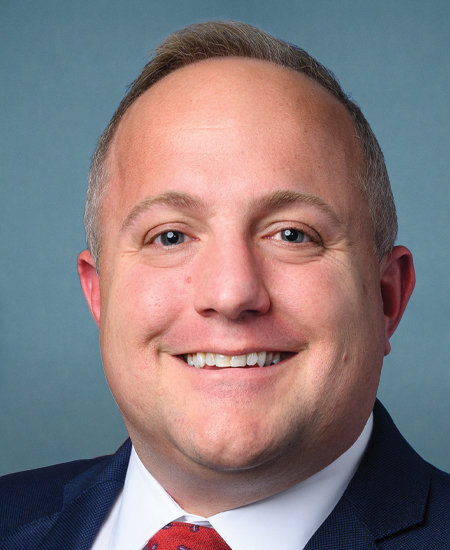
Rep. Russell Fry
Sponsored bills
Maddy summaryThis bill requires the Comptroller General to submit a comprehensive report to Congress within one year of enactment, detailing the economic and social impacts of the fentanyl crisis. The report must cover effects on labor markets (by race/gender), industry sectors, federal tax revenue, healthcare programs (Medicare/Medicaid), housing instability, and state finances. It also mandates data on federally assisted rental housing access for people with drug convictions, underage fentanyl overdose deaths, and federal actions to support states. The bill does not create new policies or funding but directs data collection for congressional review.
Maddy summaryThe Child Online Safety Modernization Act of 2023 updates federal law to replace "child pornography" with "child sexual abuse material" across numerous statutes and legal definitions. It modernizes the CyberTipline reporting system to better identify and locate minors involved in cases of child sexual abuse material. The bill makes technical amendments to ensure consistent terminology in legal proceedings related to online child exploitation. These changes aim to improve law enforcement effectiveness in addressing online child sexual exploitation while maintaining legal clarity.
Maddy summaryHR 5130, the "Finish It Act," requires the Department of Defense to use stored border wall construction materials (valued at approximately $300 million) for building permanent barriers along the U.S.-Mexico border within 30 days of the bill's enactment. It mandates that states receiving materials certify they will use them exclusively for border barriers, with penalties for unused materials (requiring repayment of the original cost) and imposes a 1% budget cut for every two days of delay in implementation. The bill also demands a detailed report from the Department of Defense within 90 days, including internal communications about storage costs and contracts with private landowners. This legislation directly affects the Department of Defense and border states, focusing on redirecting existing resources rather than creating new funding or construction.
Maddy summaryHCONRES 57 is a non-binding concurrent resolution expressing Congress's support for Israel. It states three key points: (1) that Israel is not a racist or apartheid state, (2) that Congress rejects antisemitism and xenophobia, and (3) that the U.S. will remain a steadfast supporter of Israel. This resolution does not create new laws or alter policies - it simply records the expressed sentiment of Congress. It directly affects the U.S. government's public stance on Israel, with no legal effect on citizens or other entities.
This resolution condemns Iran for the 1988 massacre of political prisoners. It also urges the Biden Administration and U.S. allies to publicly condemn the massacre and to pressure Iran to provide information to the families of the victims.
Maddy summaryHR 3933, the TAP Promotion Act, requires standardized presentations about Veterans Affairs (VA) benefits during military transition counseling for service members separating from the armed forces. These presentations must be approved by the VA, delivered by authorized veterans service organizations (VSOs), and include information on how VSOs assist with VA claims - without encouraging membership in specific organizations. The bill mandates a one-hour limit per presentation and requires the VA to submit annual reports to Congress detailing which VSOs presented, attendance numbers, and recommendations for improvement. This policy directly affects service members preparing for civilian life and the VSOs providing these transition resources.
Maddy summaryThis bill directs the U.S. Treasury to mint commemorative coins marking the Marine Corps' 250th anniversary in 2025. It authorizes three coin types: $5 gold coins (max 50,000), $1 silver coins (max 400,000), and half-dollar coins (max 750,000), with surcharges of $35, $10, and $5 respectively. The surcharge proceeds will fund the Marine Corps Heritage Center's educational programs, with no net cost to taxpayers as the Treasury must recover all minting costs through the surcharges. The coins can only be issued during 2025, and the Treasury must ensure all costs are covered before distributing funds to the Heritage Foundation.
Maddy summaryThe Taiwan Tax Agreement Act of 2023 authorizes the President to negotiate a tax agreement with Taiwan through the American Institute in Taiwan (AIT), aiming to reduce double taxation and prevent tax evasion for U.S. and Taiwanese businesses and investors engaged in cross-border trade and investment. The agreement must follow standard U.S. tax treaty practices (like the 2016 Model Convention), exclude entities based in China or without a U.S. tax treaty, and include anti-evasion measures. Before taking effect, Congress must approve the agreement via a specific concurrent resolution that simply states approval without debate or amendments.
Maddy summaryHR 4721, the Main Street Tax Certainty Act, makes a permanent the 20% tax deduction for eligible small business owners under Section 199A of the tax code. This provision directly affects pass-through business owners (like S-corps, partnerships, and sole proprietorships) who qualify for the deduction. The bill achieves this by removing the temporary expiration language (subsection (i)) from the existing tax code provision. The key change is ending the need for annual congressional extensions of this deduction, providing long-term tax certainty for small businesses.