

Maddy summaryThis bill bans federal funding for abortions in most cases, prohibiting the use of taxpayer money for abortion services or health insurance plans covering abortion. Exceptions allow funding for abortions resulting from rape, incest, or when a pregnancy endangers a woman's life. It requires health insurance plans sold through the Affordable Care Act (ACA) marketplaces to clearly disclose any separate costs for abortion coverage and prohibits ACA subsidies from being used for plans that cover abortion (except in the specified exceptions). The law directly affects federal programs like Medicaid, ACA marketplace plans, and insurers offering health coverage to individuals using federal subsidies.
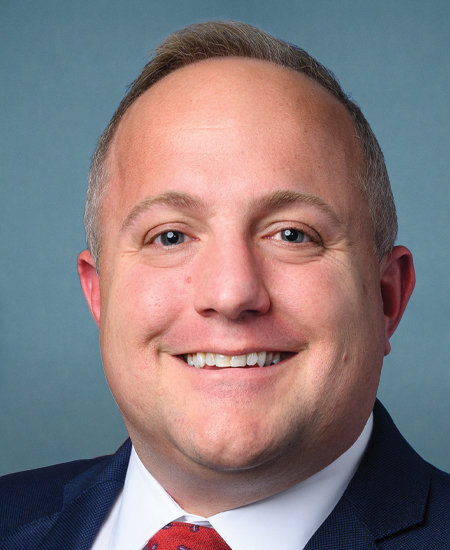
Rep. Russell Fry
Sponsored bills
Maddy summaryThe Trafficking Survivors Relief Act of 2024 enables victims of human trafficking to seek to vacate certain convictions or expunge arrests related to offenses they committed as a direct result of being trafficked. It establishes a court process where victims can file motions showing their criminal activity was trafficking-related, with courts required to find by preponderance of evidence that the offense was directly tied to trafficking. If granted, the court must expunge all related records, return any fines paid, and treat the individual as if the offense never occurred. The bill also adds a "human trafficking defense" that creates a presumption of duress for trafficking victims in prosecutions. It requires reports on implementation and training for U.S. attorneys on trafficking indicators.
Maddy summaryThe Grant Transparency Act of 2023 requires federal agencies to clearly disclose how they evaluate competitive grant applications in their funding notices. Specifically, agencies must describe their rating systems, explain any weighted scoring methods (including how much each criterion is weighted), and detail other merit-based evaluation approaches. The law also mandates standardized reporting of basic application data, including the number of applications received and the city/state locations of all submitting organizations. This applies only to future notices of funding opportunity issued after the law takes effect (120 days post-enactment), does not create new funding, and does not override existing legal requirements for specific grant programs.
Maddy summaryHR 8704 establishes a $10 million grant program administered by the National Fish and Wildlife Foundation to reduce harmful interactions between ocean users (like fishermen, tourism operators, and shipping companies) and North Atlantic right whales and other large cetaceans. The program funds research on avoidance technologies, awareness campaigns about existing whale protections, and infrastructure to share management information. Eligible recipients include states, nonprofits, businesses in maritime sectors, and tribal governments, with priority given to projects that reduce whale harm, involve collaboration among ocean users, and support U.S. small businesses. The bill also freezes existing vessel strike reduction rules until 2030 and requires biennial reports on grant effectiveness.
Maddy summaryHR 2892, the WARN Act, directs the Comptroller General to study how local alert systems deliver weather emergency information during events like storms or power outages. The study will evaluate different alert methods - including social media - and develop best practices for clearer, faster public notifications. It requires a report to Congress within one year, but the bill itself creates no new laws or directly affects any group. This is a procedural study bill focused on improving future emergency communication systems.
Maddy summaryThis bill repeals outdated and rarely enforced federal criminal statutes that impose penalties for trivial or obsolete actions, such as writing a check under $1, wearing postal uniforms, or sledding on Capitol grounds. It specifically targets provisions in the U.S. Code covering offenses like removing postage stamps, selling colored margarine without triangular packaging, or discarding produce without cause. The bill eliminates these specific legal provisions, directly affecting individuals who might otherwise face prosecution under these archaic laws, though such prosecutions are extremely uncommon today. The change streamlines the criminal code by removing provisions with no modern enforcement relevance.
Maddy summaryHR 10180 amends the National Marine Sanctuary Act to prevent the Secretary from requiring additional permits for undersea fiber optic cables already authorized by federal or state agencies. It directly affects cable companies operating in national marine sanctuaries who hold existing federal or state permits for installation, operation, or maintenance. The key provision prohibits the National Oceanic and Atmospheric Administration from imposing new authorization requirements for these activities if a valid permit from another agency is already in place. The bill also requires the Secretary to coordinate with other agencies through existing interagency cooperation mechanisms to streamline this process. This change simplifies regulatory requirements for existing cable operations without altering environmental protections.
Maddy summaryHR 8706, the "Dismantle DEI Act of 2024," would prohibit federal agencies from maintaining diversity, equity, and inclusion (DEI) offices, programs, or training by requiring the closure of existing DEI offices within 90 days and banning federal funding for DEI-related activities. The bill defines "prohibited diversity, equity, and inclusion practices" as those that discriminate based on race, color, ethnicity, religion, biological sex, or national origin, or require training that asserts a particular group is inherently superior or inferior. It would rescind several executive orders related to racial equity and gender inclusion, and prohibit the use of federal funds for DEI-related activities across all federal agencies, contractors, and grant recipients. The bill contains limited exceptions for Equal Employment Opportunity offices and disability rights enforcement offices as historically organized and operated.
Maddy summary# Summary of Proposed Higher Education Act Amendments This document outlines significant proposed amendments to the Higher Education Act of 1965, primarily as part of the "College Cost Reduction Act." The key elements include: ## Accreditation Reform - Major overhaul of accreditation standards, requiring accrediting agencies to demonstrate independence from trade associations - New requirements for accrediting agencies to assess student achievement outcomes, including median value-added earnings relative to median total price charged - Introduction of an "Alternative Quality Assurance Experimental Site Initiative" to test non-accredited institutions - Protections for religious institutions, including a new process for appealing accreditation decisions related to religious mission - Removal of "litmus tests" that would require institutions to support specific political viewpoints ## Student Success Initiatives - Establishment of "Postsecondary Student Success Grants" to increase participation, retention, and completion rates for high-need students - Focus on evidence-based practices, with tiered requirements (tier 1, 2, and 3 reforms) - Mandatory inclusion of high-need student populations (low-income, first-generation, military-connected, etc.) - Requirements for institutions to report on completion rates, retention rates, and student demographics ## Regulatory Changes - Repeal of numerous existing regulations including: * Closed school discharges * Borrower defense to repayment * Pre-dispute arbitration * False certification requirements * Ability-to-benefit rules * Financial responsibility regulations - New restrictions on incentive compensation for recruiters - Changes to third-party servicer definitions and regulations ## Transfer and Credit Policies - New requirement that institutions cannot deny transfer credit based solely on the source of accreditation - Requirements for transparent transfer policies - Changes to reverse transfer policies ## Other Key Provisions - Modifications to the National Advisory Committee on Institutional Quality and Integrity (NACIQI) - New definitions for "total price" and "value-added earnings" - Changes to the process for institutions to change accrediting agencies - New requirements for institutions to report on student outcomes The overall focus of these proposed amendments is to reduce regulatory burden on institutions, promote transparency, improve student outcomes (particularly for high-need students), modernize accreditation processes, and protect religious institutions' rights in accreditation decisions.
Maddy summaryHRES 1566 is a symbolic House resolution honoring all U.S. veterans on Veterans Day 2024. It recognizes the service and sacrifice of the estimated 15.8 million veterans living in the U.S. as of 2023, including those who served in conflicts from World War II to post-9/11. The resolution calls on the American public to observe Veterans Day to acknowledge veterans' role in preserving national freedom. As a non-binding resolution, it has no direct policy impact but formally expresses congressional recognition of veterans' contributions.