

Maddy summaryThis bill provides one-time financial assistance to U.S. farmers growing specific crops (like corn, soybeans, wheat, cotton, and rice) during the 2024 crop year if their expected costs exceed expected returns. Payments equal 60% of the difference between the expected cost of production per acre (based on USDA cost forecasts) and the expected gross return per acre (based on projected farm prices and yields). Payments are calculated using actual planted acreage plus 50% of acreage prevented from planting due to natural disasters, with annual caps of $175,000 or $350,000 depending on the farm’s primary income source. The program uses existing USDA data sources and applies standard farm payment limits.
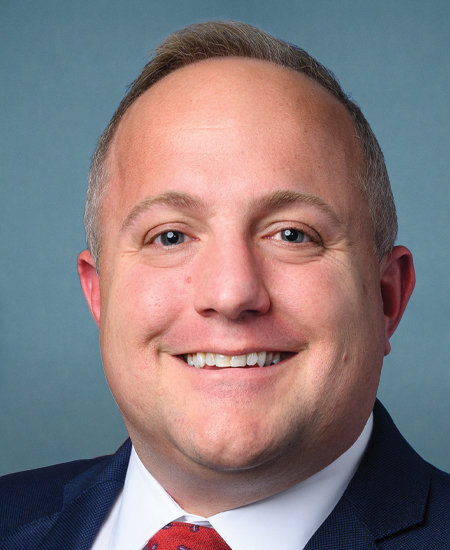
Rep. Russell Fry
Sponsored bills
Maddy summaryThis non-binding resolution (HRES 1533) expresses the U.S. House of Representatives' continued support for Israel one year after the October 7, 2023, attacks. It condemns Hamas' attacks against Israel and calls on Hamas to immediately cease violence, release all living hostages, and return the bodies of deceased hostages. The resolution does not create new laws or policies but formally reaffirms congressional sentiment toward U.S.-Israel relations and the response to the Hamas attacks. It was introduced by 13 House members on October 4, 2024, and referred to the Foreign Affairs Committee.
Maddy summaryThe SIMSA Act of 2024 creates a new Schedule A for controlled substances in the U.S. Controlled Substances Act, targeting imported substances with chemical structures similar to existing controlled substances that produce comparable effects on the central nervous system. The Attorney General can temporarily place substances in Schedule A for up to 5 years (with possible 180-day extensions), requiring a review for permanent scheduling within 3 years. The bill increases penalties for violations involving Schedule A substances (up to 20 years in prison for first offenses, 30 years for repeat offenses) and requires specific labeling using IUPAC nomenclature. It also includes provisions for research on substances newly added to Schedule A and allows for sentencing review if such substances are later descheduled.
Maddy summaryThis bill amends VA regulations to require the Department of Veterans Affairs to cover both the purchase price and shipping costs for adaptive vehicles delivered to veterans. It directly affects veterans who receive VA-funded adaptive vehicles under Section 3902 of Title 38, U.S. Code. The key change updates the payment mechanism so veterans no longer bear the cost of shipping the vehicle to their location. This policy change simplifies the process by ensuring full delivery costs are covered in a single VA payment.
Maddy summaryHJRES 136 is a resolution seeking to block an Environmental Protection Agency (EPA) rule that would have set new emissions standards for light and medium-duty vehicles sold in 2027 and later model years. The EPA rule, published in April 2024, aimed to require vehicle manufacturers to meet stricter pollution limits for these vehicles. If passed, this resolution would cancel the rule, preventing the EPA from enforcing the new standards. It uses a congressional process that allows Congress to reject agency rules with a simple majority vote.
Maddy summaryThis bill restricts federal funding for jurisdictions that limit cooperation with federal immigration enforcement. It defines a "sanctuary jurisdiction" as any state or local government that prohibits sharing immigration status information or complying with federal detainer requests (except for crime victims/witnesses). Starting after enactment, such jurisdictions lose eligibility for federal funds intended to provide food, shelter, healthcare, legal services, or transportation to undocumented immigrants. The law directly affects cities and states with specific immigration policies, not the immigrants themselves.
Maddy summaryHJRES 144 is a congressional disapproval resolution targeting a specific rule issued by the Bureau of Alcohol, Tobacco, Firearms, and Explosives (ATF) on April 19, 2024. The resolution seeks to block the ATF's rule that redefined the term "engaged in the business" for firearm dealers, which would have affected how federal licensing requirements apply to certain sellers. If enacted, this resolution would nullify the rule, preventing it from taking effect under procedures in Title 5 of the U.S. Code. The bill directly impacts firearm dealers operating under the current regulatory framework and the ATF's enforcement authority.
Maddy summaryHR 9697 (PERIMTR Act of 2024) reallocates $3 billion from unobligated funds in the Inflation Reduction Act to the U.S. Secret Service. This funding expands Secret Service protection standards currently used for the President to cover Vice Presidents, major presidential and vice presidential candidates (as defined by law), and former presidents. The bill requires the Secret Service to apply identical agent staffing, equipment, and protocols for these additional protectees as it does for the President. This is a funding mechanism change, not a new policy requiring congressional action beyond the reallocation.
Maddy summaryThis bill (HJRES 163) is a congressional disapproval resolution targeting an Environmental Protection Agency (EPA) rule finalized on May 9, 2024. The EPA rule established new emissions standards for greenhouse gases from fossil fuel power plants (both new and existing) and repealed a previous rule called the Affordable Clean Energy Rule. The resolution would block this EPA rule from taking effect by invoking the Congressional Review Act (Chapter 8 of Title 5, U.S. Code). If passed, it would prevent the EPA rule from being enforced, directly affecting fossil fuel power plant operators and the EPA’s regulatory authority over emissions.
Maddy summaryHJRES 133 is a congressional resolution seeking to block an Environmental Protection Agency (EPA) rule titled "Greenhouse Gas Emissions Standards for Heavy-Duty Vehicles-Phase 3." This rule, published in the Federal Register on April 22, 2024, established new emissions requirements for large trucks and commercial vehicles. The resolution, if passed, would prevent the EPA rule from taking effect by formally disapproving it under standard congressional review procedures. The measure directly affects the EPA’s regulatory authority and vehicle manufacturers who would have been required to comply with the proposed standards.