

Maddy summaryHR 8282, the "Illegitimate Court Counteraction Act," imposes U.S. sanctions on foreign individuals or entities supporting the International Criminal Court (ICC) in investigating or prosecuting "protected persons." Protected persons include U.S. military personnel, officials, and allied personnel (from non-ICC member countries) who are not under ICC jurisdiction. The bill requires the President to block assets and deny visas to targeted foreign persons and their immediate family members within 60 days of the ICC attempting such actions. It mandates congressional notification of sanctions and allows termination if the ICC ceases all such efforts against protected persons. The law focuses on restricting U.S. economic and travel access to ICC supporters targeting specific U.S. and allied personnel.
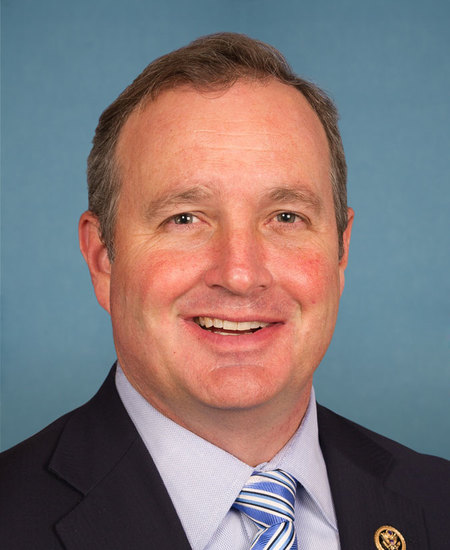
Rep. Jeff Duncan
Sponsored bills
Maddy summaryHR 9526, the "No Amnesty for Hamas Sympathizers Act," blocks immigration protections for Palestinians from specific territories. It nullifies a 2024 policy granting deferred enforced departure and prohibits Temporary Protected Status (TPS), asylum, refugee status, parole, and other pathways for individuals who habitually resided in Palestinian-administered areas of Judea/Samaria or Gaza, or hold Palestinian Authority passports. The bill adds these individuals to lists of those who are automatically inadmissible and deportable under immigration law. It directly affects Palestinians meeting these geographic or document criteria seeking U.S. immigration benefits. The bill makes no reference to Hamas in its provisions, focusing solely on geographic residence and travel documents.
Maddy summaryThis bill amends an existing reporting requirement in the 2023 National Defense Authorization Act. It changes the provision to require the Department of Homeland Security to submit annual reports on counter-illicit cross-border tunnel operations, rather than just one report after developing a strategic plan. The bill does not create new programs or alter border security policy; it only modifies the frequency of required reporting. This procedural change directly affects the Department of Homeland Security's reporting obligations.
Maddy summaryHJRES 167 cancels a U.S. Department of Agriculture rule that would have allowed electronic eartags as official identification for cattle and bison. The resolution directs that the rule published in the Federal Register on May 9, 2024 (89 Fed. Reg. 39540), has no force or effect. This directly affects ranchers and farmers who would have been required to use electronic identification systems for livestock. The bill halts the implementation of this specific regulatory change without creating new requirements.
Maddy summaryThe SAFER at the Border Act prohibits the U.S. Department of Homeland Security from temporarily admitting (paroling) certain individuals at the border. It defines "known terrorists" (those arrested, charged, or convicted for terrorism), "suspected terrorists" (reasonably suspected of terrorism), and "special interest aliens" (those with potential terrorism links based on travel patterns). The bill explicitly bans parole for these individuals, even for humanitarian reasons or public benefit, and also prohibits parole for refugees. Additionally, it allows states to sue the Department of Homeland Security if they suffer financial harm exceeding $100 from the parole of such individuals.
Maddy summaryThis resolution aims to block a rule issued by the National Highway Traffic Safety Administration (NHTSA) that sets new fuel efficiency standards for passenger cars, light trucks (starting in 2027), and heavy-duty pickup trucks/vans (starting in 2030). If passed, it would prevent this specific rule from taking effect by disapproving it under a congressional review process. The rule directly affects vehicle manufacturers by requiring them to meet these updated fuel economy targets for future model years. This is a procedural resolution, not a new law, focused solely on halting the implementation of the existing NHTSA rule.
Freedom from Unfair Gun Taxes Act of 2024 This bill prohibits states or localities from imposing a levy or collecting an excise tax on the sale of a firearm, ammunition, or any part or component thereof, by a manufacture or retailer.
Maddy summaryThis bill defines "sex," "male," and "female" in federal law based on biological characteristics present at birth, specifically referencing reproductive anatomy (e.g., sperm production for males, egg production for females). It mandates that all federal agencies, courts, and laws interpret these terms strictly according to this biological definition, excluding self-identification or gender identity. The bill directly affects how federal programs, regulations, and legal decisions interpret terms like "sex," "gender," and "gender identity" in all federal contexts. Key provisions clarify that "gender" refers only to biological sex differences and explicitly states that gender identity does not override these definitions.
Maddy summaryHR 9191, the "No Union Time on the Taxpayer's Dime Act," amends 5 U.S.C. § 7131 to eliminate paid "official time" for federal employees performing union-related activities. The bill requires that any work employees do for labor organizations must occur during non-duty hours, not during regular work time. This directly affects federal workers who are union members, as it would end the practice of using paid work hours for union business. The key provision changes the existing rule to ensure union activities are conducted outside of standard work schedules, shifting the cost from taxpayers to employees' personal time.
Maddy summaryThe Respect State Housing Laws Act amends the CARES Act by removing subsection (c) of Section 4024, which governed notice requirements for housing assistance programs. This change eliminates a specific federal notice provision that applied to tenants and landlords receiving CARES Act housing aid. The bill directly affects the administrative process for housing assistance under the CARES Act, streamlining or removing a requirement for notice delivery. It modifies an existing provision without creating new policy or altering broader housing protections.