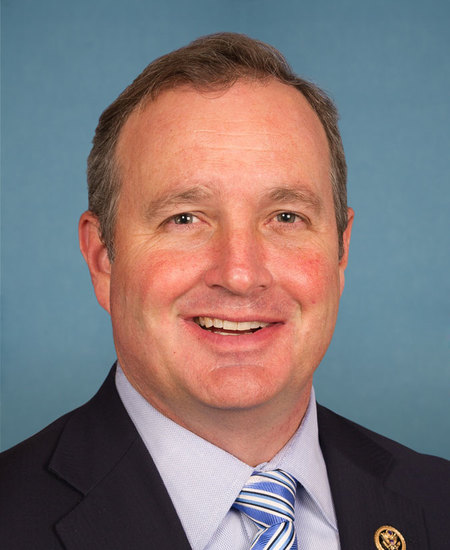
Photo of Jeff Duncan
R United States House · District 3 · Former member · South Carolina

Rep. Jeff Duncan

Compare
Total votes
2,168
all sessions
Attendance
98%
50 missed
Near the chamber average
With party
91%
of cast votes
Near the chamber average
Bipartisan score
5%
crosses aisle rarely
Higher than 75% of chamber peers
Sponsored
949
bills & resolutions
Near the chamber average
Committees
0
assignments
949 bills and resolutions

Sponsored bills

Total
949
Primary
55
Co-sponsor
894
This page
949
matching current filters
Co-sponsor HR 6021
In committee · United States House · Co-sponsor
We’re Not Paying You To Break Our Laws Act

We're Not Paying You To Break Our Laws Act This bill prohibits making federal funds available to pay for any settlement agreement in any civil action brought as a result of actions taken to enforce the April 6, 2018, Department of Justice memorandum pertaining to the prosecution of cases of improper entry into the United States.

In committee Nov 1, 2022 1 co-sponsor
Co-sponsor HR 5895
In committee · United States House · Co-sponsor
Ending Payments to Non-American Citizens Act

Ending Payments to Non-American Citizens Act This bill prohibits making amounts from the Judgment Fund available to an alien who is not a lawful permanent resident unless specifically authorized by law. (The Judgment Fund is an account for paying judgments and settlements against the United States.)

In committee Nov 1, 2022 1 co-sponsor
Co-sponsor HR 5854
In committee · United States House · Co-sponsor
Illegal Immigrant Payoff Prohibition Act

Illegal Immigrant Payoff Prohibition Act This bill prohibits the payment of a settlement to an alien for a civil action brought against the United States in connection with the alien's inadmissibility to, or unlawful presence in, the United States.

In committee Nov 1, 2022 1 co-sponsor
Co-sponsor HR 5840
In committee · United States House · Co-sponsor
Muslim Brotherhood Terrorist Designation Act of 2021

Muslim Brotherhood Terrorist Designation Act of 2021 This bill requires the Department of State to submit to Congress a detailed report indicating whether the Muslim Brotherhood meets the criteria to be designated a foreign terrorist organization. If the report determines that the Muslim Brotherhood does not meet such criteria, it must provide a detailed justification as to which criteria have not been met.

In committee Nov 1, 2022 1 co-sponsor
Co-sponsor HR 5773
In committee · United States House · Co-sponsor
Stop Settlement Slush Funds Act of 2021

Stop Settlement Slush Funds Act of 2021 This bill prohibits the federal government from entering into or enforcing a settlement agreement on behalf of the United States that provides for a payment to any person or entity other than the United States. The bill provides exceptions to allow payments that (1) remedy actual harm (including to the environment) caused by the party making the payment, or (2) constitute a payment for services rendered in connection with the case. Government officials or agents who violate this prohibition may be removed from office or required to forfeit to the government any money they hold for such purposes to which they may otherwise be entitled. Agencies must report annually for seven years to the Congressional Budget Office about the parties, funding sources, and distribution of funds for their settlement agreements permitted by the exceptions in this bill. The Office of Inspector General for each agency must also report annually on any settlement agreements that violate the bill's requirements.

In committee Nov 1, 2022 1 co-sponsor
Co-sponsor HR 5759
In committee · United States House · Co-sponsor
BE GONE Act

Better Enforcement of Grievous Offenses by unNaturalized Emigrants Act or the BE GONE Act This bill expands, for immigration purposes, the definition of aggravated felony to include sexual abuse, sexual assault, and aggravated sexual violence. (Under current law, a conviction for an aggravated felony is grounds for deportation and may bar an individual from other immigration-related benefits.)

In committee Nov 1, 2022 1 co-sponsor
Co-sponsor HR 5572
In committee · United States House · Co-sponsor
SECURE America Act

Safeguards Ensuring Criminal and Unvetted Refugees don't Enter America Act or the SECURE America Act This bill imposes restrictions on the admission of aliens, including refugees, and addresses related issues. Specifically, no refugees may be admitted until Congress enacts a joint resolution setting the maximum number of refugees allowed to be admitted in a particular fiscal year. Currently, that number is set each fiscal year by the President. The Department of Homeland Security (DHS) must notify Congress at least 30 days before determining that an alien or class of aliens is eligible for refugee status. Congress may nullify the determination by enacting a joint resolution of disapproval. Further, an alien shall be inadmissible for holding certain beliefs, such as (1) believing that a system of religious law should be implemented in the United States, (2) believing that the alien does not need to learn English if the alien is not already fluent, or (3) any belief that the Department of State determines is incompatible with the principles of the United States. DHS may not parole into the United States an alien who does not have status under immigration law. Currently, DHS may provide parole in certain instances, including for urgent humanitarian reasons. Federal agencies must notify a state at least 30 days before resettling a refugee in that state. The refugee may not be resettled in that state if the state expresses disapproval. An alien who has committed a crime of violence (generally one involving the use or threat of physical violence against person or property) may not be eligible for refugee status and must be removed.

In committee Nov 1, 2022 1 co-sponsor
Co-sponsor HR 5398
In committee · United States House · Co-sponsor
Defending Students’ Civil Rights Act of 2021

Defending Students' Civil Rights Act of 2021 This bill prohibits the use of critical race theory or critical race pedagogy in any federally funded program or activity. Specifically, the bill includes the use of critical race theory or critical race pedagogy as a violation of Title VI of the Civil Rights Act of 1964, which prohibits discrimination based on race, color, or national origin in federally funded programs or activities. The bill defines critical race pedagogy as the separation of students or teachers, or the assignment of characteristics or assumptions, based on race, color, or national origin. The bill defines critical race theory as a curriculum that establishes specified principles relating to race or sex, including that (1) one race or sex is inherently superior to another, (2) the United States is fundamentally racist or sexist, and (3) an individual bears responsibility for the past actions of others of the same race or sex.

In committee Nov 1, 2022 1 co-sponsor
Co-sponsor HR 5171
In committee · United States House · Co-sponsor
Freedom From Union Violence Act of 2021

Freedom From Union Violence Act of 2021 This bill revises the federal criminal statute commonly known as the Hobbs Act, which prohibits the obstruction of interstate commerce by robbery or extortion (or by attempting or conspiring to commit robbery or extortion). Currently, an extortion offense includes obtaining property of another with consent through the wrongful use of force, violence, or fear. Typically, violations are investigated by the Federal Bureau of Investigation and prosecuted by the U.S. Attorney's Office. First, this bill broadens the scope of prohibited conduct by (1) eliminating the requirement that the means used to obtain property (i.e., the use of force, violence, or fear) must be wrongful, and (2) expanding extortion to include obtaining property of another by wrongful use of fear not involving force or violence. Second, the bill explicitly states that the maximum fine is $100,000. Third, the bill exempts from the federal prohibition conduct that (1) is incidental to peaceful picketing during a labor dispute, (2) consists solely of minor bodily injury or damage to property, and (3) is not part of a pattern of violent conduct or of a coordinated violent activity. A violation involving exempted conduct is subject to prosecution only by state and local authorities.


In committee Nov 1, 2022 1 co-sponsor
Co-sponsor HR 5136
In committee · United States House · Co-sponsor
Teleabortion Prevention Act of 2021

Teleabortion Prevention Act of 2021 This bill restricts the use of telehealth for chemical abortions (also known as medication abortions). Specifically, it requires a provider who dispenses or prescribes medication for a chemical abortion to physically examine the patient, be physically present at the location of the chemical abortion, and schedule a follow-up visit. The bill provides an exception for a chemical abortion that is necessary to save the life of a mother whose life is endangered by a physical disorder, illness, injury, or condition. The bill establishes criminal penalties—a fine, a prison term of up to two years, or both—for a provider who does not comply with the requirements. A patient who undergoes a chemical abortion may not be prosecuted.

In committee Nov 1, 2022 1 co-sponsor
Showing 531 to 540 of 949 bills
Previous 1 … 53 54 55 … 95 Next