

Maddy summaryHR 277 would require Congress to approve major federal regulations before they take effect. Major rules are defined as those with significant economic impact ($100 million+ annually), major cost increases for consumers or industries, or significant adverse effects on competition, employment, or innovation. Agencies must submit detailed information about these rules to Congress, including cost-benefit analyses, before they can take effect. Congress would have 70 session days to approve the rule with a joint resolution; if they don't act within that timeframe, the rule would not take effect. This would increase congressional oversight of federal regulations and require more detailed information about proposed rules before they become law.
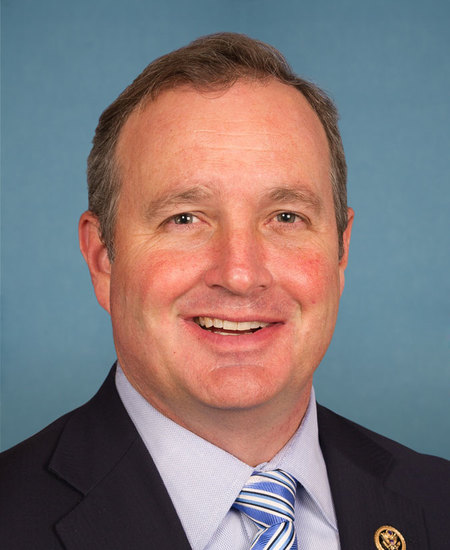
Rep. Jeff Duncan
Sponsored bills
Maddy summaryThis bill bans displaying any flag other than the U.S. flag on the exterior or in hallways of public buildings, including government offices, military installations, and embassies. Exceptions allow specific flags like POW/MIA memorials, visiting diplomats' national flags, a member of Congress's home state flag, military unit flags, tribal flags, or local jurisdiction flags. It directly affects how public buildings display flags, requiring exclusive use of the U.S. flag in designated areas. The bill applies to all public buildings under federal definition, with limited exceptions for historical, diplomatic, or local displays.
Maddy summaryHR 288, the Separation of Powers Restoration Act of 2023, amends federal law to change how courts review agency actions. It requires federal courts to decide de novo (anew) all legal questions - including interpretations of laws and the Constitution - when reviewing agency decisions, rather than deferring to agency interpretations. This applies to all judicial reviews of agency actions under existing law, unless a specific law explicitly exempts such cases. The bill directly affects federal courts, agencies, and parties involved in litigation over agency rules or enforcement. It aims to shift interpretive authority from agencies to courts in administrative law cases.
Maddy summaryHJRES 69 is a resolution seeking to disapprove an Environmental Protection Agency (EPA) rule published on June 5, 2023, which established a "Federal Good Neighbor Plan" for the 2015 ozone air quality standards. The rule aimed to address ozone pollution crossing state lines, particularly affecting southeastern states and industries subject to the 2015 ozone standards. This resolution would block the rule from taking effect by invoking the Congressional Review Act, preventing it from being enforced. If enacted, it would directly stop the EPA from implementing this specific plan, impacting states and businesses that would have had to comply with the rule.
Maddy summaryThis bill prohibits providing, facilitating, or possessing wireless devices (like cell phones) in U.S. detention facilities (e.g., prisons, jails) if such actions violate existing federal or state laws. It imposes civil fines up to $50,000 per violation (capped at $1 million total) or criminal fines up to $50,000 for intentional violations. The law explicitly excludes lawful law enforcement activities and state enforcement powers, and defines "detention facility" broadly to include all correctional and penal institutions. It applies to conduct occurring after enactment.
Maddy summaryHRES 518 is a non-binding House resolution expressing support for parental rights in education and sports. It opposes labeling parents as "extreme" for seeking age-appropriate school curriculum (like avoiding sexual orientation discussions for young children) and for wanting biological males excluded from women’s sports. The resolution also states opposition to weakening Title IX protections and affirms that parents - not government - should have final say in their children’s education. As a procedural resolution, it does not create new laws but formally states the House’s position on these issues.
Maddy summaryThis bill redesignates a specific street area in Washington, D.C. (between International Drive, Van Ness Street, and International Place, NW) and the address 3505 International Place, NW as "Tiananmen Square Memorial Boulevard." It requires the General Services Administrator to install new street signs matching DC's Metro station style at designated locations. The bill has no policy impact beyond administrative naming changes and does not affect any legislation, regulations, or residents.
Maddy summaryHR 1640, the Save Our Gas Stoves Act, prevents the Department of Energy from implementing energy efficiency standards for gas stoves that would make them unavailable in the U.S. market. It amends federal law to require that any new standard for gas stoves must not result in the unavailability of gas stove types, directly affecting gas stove manufacturers and consumers who rely on these appliances. The bill specifically blocks the implementation of the 2023 proposed rule (Energy Conservation Program: Energy Conservation Standards for Consumer Conventional Cooking Products) and any similar rule. This is a policy change focused on maintaining the availability of gas stoves by altering the criteria for energy standard approval.
Maddy summaryHJRES 42 is a congressional resolution disapproving the District of Columbia Council's approval of the *Comprehensive Policing and Justice Reform Amendment Act of 2022* (D.C. Act 24-781), which the Council enacted on January 19, 2023. This resolution, introduced by 18 House members on March 9, 2023, formally expresses Congress's objection to the DC law but does not alter the law itself or its implementation in the District. The resolution targets the DC Council’s action under the Home Rule Act, requiring Congress to formally disapprove such local legislation before it takes effect. It affects DC’s local policing policies but does not directly change federal law or impact residents beyond this procedural disapproval.
This resolution declares that the life of each human person begins at fertilization and calls upon Congress to enact legislation to enforce the Fourteenth Amendment's guarantee of equal protection for unborn children nationwide.