

Maddy summaryHR 6619, the PATROL Act, prevents the federal government from suing states for building border barriers. It specifically blocks the Attorney General from filing civil lawsuits under the 1899 Act against states that construct physical barriers (like walls, fences, or buoys) along the border to stop illegal entry or protect state territory. The law directly affects states building such barriers and the federal government’s legal authority to challenge those actions. This is a procedural change that removes a legal obstacle for states pursuing border security measures.
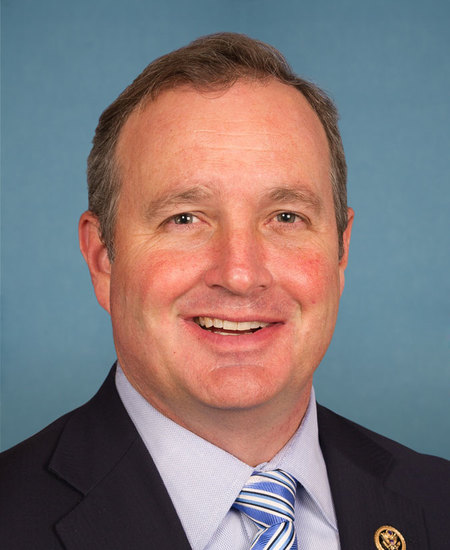
Rep. Jeff Duncan
Sponsored bills
Maddy summaryThis bill restricts warrantless surveillance of U.S. persons by amending the Foreign Intelligence Surveillance Act. It limits who can conduct queries of U.S. person data (capping at five personnel per FBI field office), prohibits using such queries for law enforcement without proper authorization, and requires documentation of all queries. The bill creates exceptions for emergencies, consent, and cybersecurity, but prohibits using metadata results to access protected communications. It also limits how information acquired under Section 702 can be used in criminal proceedings, requiring specific approvals for such use.
Maddy summaryHR 6600, "Tyler’s Law," requires the Secretary of Health and Human Services to study how often hospital emergency departments test for fentanyl during overdose cases, along with the costs, benefits, risks, and patient privacy impacts. The study must be completed within one year of the bill’s enactment, followed by guidance issued within six months on whether fentanyl testing should become routine. This guidance will address how hospitals can inform clinicians about testing protocols and how fentanyl testing might affect future overdose risks and patient health outcomes. The bill directly affects hospitals and emergency departments treating overdose patients, focusing on improving data-driven practices for fentanyl detection.
Maddy summaryThe No Kill Switches in Cars Act (HR 6563) repeals Section 24220 of the Infrastructure Investment and Jobs Act, which had authorized the use of "kill switches" in vehicles to disable them if a driver was impaired by alcohol or drugs. This repeal removes the federal requirement for vehicle manufacturers to incorporate or allow such technology, directly affecting automotive safety regulations and manufacturers' compliance obligations. The bill eliminates a specific statutory provision without introducing new requirements, changing federal policy by withdrawing permission for kill switches in cars. As a procedural repeal, it focuses solely on removing an existing provision from the Infrastructure Investment and Jobs Act.
Maddy summaryHR 6615 establishes a Special Inspector General within the Department of Education to monitor college admissions practices following the Supreme Court's *Students for Fair Admissions* ruling. The inspector general investigates allegations of race-based discrimination in admissions or financial aid at colleges receiving federal student aid, ensuring compliance with the 14th Amendment and Title VI of the Civil Rights Act. Institutions found violating these rules could lose eligibility for federal funding, and the inspector general must report quarterly to Congress on investigations, violations, and institutional cooperation. The position is funded with $25 million and will sunset after 12 years. This directly affects all colleges receiving federal aid under the Higher Education Act.
Maddy summaryHR 6625, the Chinese Spy Balloon Assessment Act, requires the Secretary of Defense to submit a report to Congress within 90 days of the bill's enactment. The report must detail the national security effects of surveillance conducted by China via a high-altitude balloon shot down in U.S. airspace in February 2023, including impacts on military installations and an analysis of recovered technology's country of origin. This bill directly affects the Department of Defense and Congress by mandating a specific, time-bound assessment of a single incident. It does not create new policies or funding but establishes a procedural requirement for transparency about the 2023 balloon event. The report must be unclassified, though it may include a classified annex.
Maddy summaryHR 6612, the Birthright Citizenship Act of 2023, clarifies who qualifies for U.S. citizenship at birth under the 14th Amendment. It amends immigration law to define that a child born in the U.S. is "subject to the jurisdiction" for citizenship if one parent is a U.S. citizen, a lawful permanent resident living in the U.S., or an active-duty military member. The bill directly affects children born in the U.S. to parents in these specific categories, ensuring they meet the citizenship definition without altering the constitutional right itself. It explicitly states this definition applies only to births occurring after the law's enactment, leaving existing citizenship status unaffected for those born before. The bill aims to codify existing constitutional principles through specific, narrow criteria for parental status.
Maddy summaryHRES 905 is a House resolution commemorating the 200th anniversary of the Monroe Doctrine, first articulated by President James Monroe in 1823. The resolution formally recognizes the doctrine's historical significance in establishing U.S. policy against foreign colonization in the Western Hemisphere and its enduring influence on U.S. foreign policy. It resolves that the House will "commemorate" the anniversary, "reassert" the U.S. position against foreign malign influence threatening Western Hemisphere democracies, and "recognize" the doctrine's principles as a foundational element of U.S. foreign policy. This is a purely ceremonial resolution with no new policy or funding implications.
Maddy summaryHR 6558, titled the "END the DEEP STATE Act," requires the Office of Personnel Management (OPM) to withdraw a specific proposed rule titled "Upholding Civil Service Protections and Merit System Principles" (published in the Federal Register on September 18, 2023). The bill directly affects OPM by mandating the withdrawal of this proposed rule and prohibiting the agency from finalizing, implementing, or enforcing it or any substantially similar rule. The key mechanism is a mandatory withdrawal of the 2023 proposed rule, which aimed to strengthen civil service protections and merit-based hiring standards. This is a procedural bill focused on halting a specific regulatory action, not on creating new policy.
Maddy summaryThis bill would amend the census law to exclude non-citizen residents from the population count used to determine congressional representation. It directly affects states with significant non-citizen populations, as their number of House seats could decrease in future apportionments. The key provision changes the statutory language to explicitly exclude "individuals who are not citizens of the United States" from the population figure. This change would apply starting with the 2030 census and all subsequent decennial counts.