

Maddy summaryHR 6417 amends the existing "Ending Importation of Russian Oil Act" to ban imports of energy products (classified under Harmonized Tariff Schedule chapter 27) produced at any refinery using crude oil originating in Russia. This directly affects U.S. importers and companies bringing in such refined petroleum products. The key provision prohibits these imports regardless of where the refinery is located, targeting oil that has been "laundered" through foreign processing. The bill updates the existing law by adding this origin-based import ban as a new section.
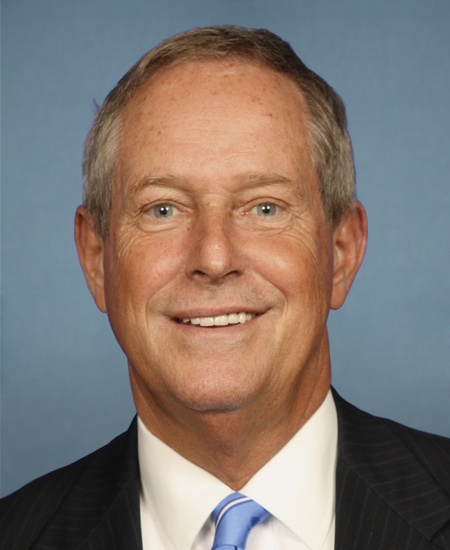
Rep. Joe Wilson
Sponsored bills
Maddy summaryThis bill directs the Architect of the Capitol to create a time capsule for the U.S. Semiquincentennial (250th anniversary of independence). Congressional leadership will determine its contents, including representative materials about the Semiquincentennial, copies of key legislative milestones, and a message to future Congress. The capsule will be sealed on the Capitol's West Lawn by July 4, 2026, and remain unopened until July 4, 2276, when it will be presented to the 244th Congress for their consideration. The bill is procedural and does not affect citizens or change existing laws.
Maddy summaryThe Maximum Pressure Act (HR 6114) is a legislative proposal that would maintain and expand U.S. sanctions against Iran. The bill would codify existing sanctions, require Iran to meet 12 specific conditions before sanctions could be lifted (including ending support for terrorism, releasing hostages, and ending nuclear enrichment), and expand sanctions on Iran's Revolutionary Guard Corps and missile programs. It also establishes new reporting requirements for the U.S. government to monitor Iran's activities and the impact of sanctions. The legislation would require congressional review before any sanctions could be lifted or modified, preventing the executive branch from unilaterally easing restrictions.
Maddy summaryHR 6020, the Honor Our Living Donors Act, amends federal law to ensure living organ donors are fully reimbursed for qualifying expenses without considering the recipient's income. It prohibits organ recipients from having their income factored into reimbursement calculations and requires the Secretary to annually report whether current funding covers all donor expenses, including estimates of unmet needs. This bill directly affects living organ donors and the federal reimbursement program under the Public Health Service Act.
Maddy summaryHR 5967, the Unemployment Integrity Act of 2023, requires unemployment claimants to participate in job-seeking activities to maintain benefits. Specifically, it mandates that claimants respond to work-related requests, attend reemployment interviews, and comply with reasonable requests like drug testing or skills assessments. The bill also requires states to conduct a study on increasing random audits of unemployment claims and mandates that states adopt these new requirements to receive federal funds for extended unemployment benefits. These changes apply to weeks beginning one year after the bill's enactment, with adjustments for states holding biennial legislative sessions. The law directly affects individuals claiming unemployment benefits by linking eligibility to active job-seeking participation.
Maddy summaryThis bill requires health insurance plans (both private and Medicare) to cover routine patient costs for children with rare pediatric diseases participating in approved clinical trials, even when care is provided by non-network providers. Specifically, it mandates that insurers apply the same copay or coinsurance rate for non-participating providers as they would for in-network providers during clinical trial participation. The law expands the definition of "routine costs" to include consultation and referral services related to these trials and updates Medicare coverage rules to align with this requirement. These changes apply to plans beginning January 1, 2024, directly affecting families of children with rare pediatric cancers enrolled in qualifying clinical trials.
Maddy summaryThis bill imposes U.S. sanctions on foreign individuals and entities that facilitate North Korea's transfer of arms or material support to Russia for use in Russia's invasion of Ukraine. It targets those responsible for such transfers, including foreign financial institutions enabling significant transactions related to these activities, requiring property blocks and visa restrictions. The bill also amends existing North Korea sanctions to explicitly require halting such material support and mandates the President to submit regular reports to Congress on North Korea's involvement and U.S. strategies to counter it.
Maddy summaryThis bill creates an exemption for Medicare Advantage plan physicians who had at least 90% of their prior authorization requests approved for specific services in the previous year. These doctors would be exempt from needing pre-approval for those same services in subsequent plan years, reducing administrative delays for patients. The exemption continues until revoked (based on updated approval rates) or the physician opts out. It also requires plans to allow providers to discuss treatment plans with a qualifying physician during the authorization process.
Maddy summaryHR 4847, the Safeguarding Syria Sanctions Act, prohibits the Treasury Department from extending or renewing any temporary licenses allowing transactions with Syria's Assad regime for earthquake relief after the initial 180-day period. It directly affects the Treasury Department (which must halt new licenses) and humanitarian groups relying on exemptions, though existing pre-earthquake humanitarian licenses remain in effect. The bill mandates that Treasury notify Congress 15 days before any changes to Syria sanctions regulations, including new licenses or authorizations. Its core purpose is to maintain existing U.S. sanctions against the Assad regime and its allies (Russia/Iran), preventing potential exploitation of relief efforts for regime gain.
Maddy summaryThis bill creates a presumption that minerals from the Democratic Republic of Congo (DRC) containing cobalt and lithium, mined with child or forced labor, cannot be imported into the United States. It requires the U.S. government to develop an enforcement strategy to identify and block such imports, including monitoring supply chains and working with international partners. The bill mandates diplomatic efforts to address child and forced labor in the DRC's mining sector and establishes sanctions against foreign entities that facilitate or engage in such labor practices. The focus is on minerals critical for electric vehicles and electronics, which are heavily sourced from the DRC and processed in China, with specific attention to Chinese mining companies like China Molybdenum that dominate the DRC's cobalt sector.