

Maddy summaryThis bill, HR 1097 (Everett Alvarez, Jr. Congressional Gold Medal Act of 2023), authorizes the award of a Congressional Gold Medal to Everett Alvarez, Jr., in recognition of his service as a U.S. Navy pilot and Vietnam War prisoner of war. It directly honors Alvarez, who was the first U.S. pilot shot down in the Vietnam War, spent over 8.5 years in captivity, and later served in the Peace Corps and Veterans Administration. The bill’s key mechanism is directing the U.S. Mint to strike a gold medal bearing his name and image, with bronze duplicates available for sale to cover costs. It does not create new policies or affect any group beyond the honoree.
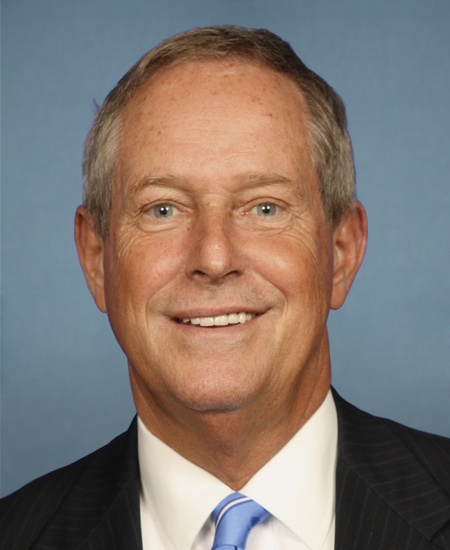
Rep. Joe Wilson
Sponsored bills
Maddy summaryThe FOCA Act of 2023 requires federal agencies to stop mandating or banning contractor agreements with labor organizations (like union contracts) in construction project bids and contracts. It directly affects federal contractors, subcontractors, and agencies managing construction projects funded by the government. The bill prohibits favoring or penalizing contractors based on their labor affiliation status, aiming to promote fair competition and reduce costs. It also mandates updates to federal contracting rules within 60 days of enactment to implement these changes.
Maddy summaryThe VALOR Act of 2024 establishes specific criteria for determining when a democratically elected government is in power in Venezuela, requiring free and fair elections with international observers, respect for human rights, release of political prisoners, and restoration of democratic institutions. The bill authorizes sanctions against the Maduro regime, including financial restrictions on debt instruments, cryptocurrency transactions, and blocking property of the Venezuelan government. It creates mechanisms for the U.S. to provide humanitarian and democracy-building assistance through independent NGOs once a democratically elected government is recognized, with safeguards to ensure aid reaches the people of Venezuela. The bill requires regular reporting to Congress on sanctions implementation, assistance programs, and foreign entities doing business with the Maduro regime.
Maddy summaryThis bill requires Medicare Advantage plans to implement electronic prior authorization systems by 2027 and publish detailed data on their approval and denial rates for medical services by 2026. It directly affects Medicare Advantage plans (private insurers offering Medicare coverage) and their enrollees (seniors 65+), mandating transparency about prior authorization decisions, processing times, and appeal outcomes. Key provisions include requiring plans to report annual statistics on request approvals/denials, average processing times, and use of technology, with this data published publicly by the Centers for Medicare & Medicaid Services. The bill also sets timelines for plan responses to prior authorization requests and mandates reports to Congress on implementation and impacts.
Maddy summaryThe MEGOBARI Act directs the U.S. government to investigate and address democratic backsliding in Georgia. It requires reports within 90 days on Georgian corruption tied to Russian interests, sanctions evasion, and Russian intelligence assets, followed by potential sanctions against Georgian officials deemed responsible for undermining democracy or advancing Russian-style laws. The bill also establishes a U.S. democracy monitoring task force in Georgia and links additional U.S. aid - including trade negotiations, visa liberalization, economic packages, and defense support - to Georgia's progress toward fair elections and a free political environment. These provisions directly affect Georgia's government officials (who could face sanctions) and Georgia's eligibility for U.S. assistance. The bill does not impose new sanctions but mandates U.S. agencies to identify and sanction specific Georgian individuals under existing legal authorities.
Maddy summary# Summary of Proposed Legislation This document outlines a comprehensive U.S. legislative proposal with several key components: 1. **Research Restrictions**: - Requires certification from Federal research grant recipients that they are not Chinese citizens or participants in Chinese talent programs - Prohibits employment of Chinese nationals in federally funded research - Requires institutions receiving Federal assistance to agree not to knowingly employ individuals participating in Chinese talent programs 2. **Foreign Gifts and Contracts Disclosure**: - Mandates disclosure of foreign gifts/contracts over $50,000 to universities - Requires public reporting of restricted/conditional gifts/contracts - Creates a searchable public database of foreign gifts to universities - Requires institutions to maintain policies regarding foreign gifts to faculty and staff 3. **Investment Restrictions**: - Restricts tax-exempt organizations from holding investments in "disqualified Chinese companies" (defined as corporations incorporated in China or with significant Chinese government ownership) - Requires annual reporting on such investments - Allows limited waivers with public disclosure 4. **Taiwan Policy**: - Prohibits U.S. government from recognizing PRC claims to sovereignty over Taiwan without Taiwan's consent - Requires U.S. government to treat Taiwan's democratically elected government as the legitimate representative of the people of Taiwan - Requires a strategy to protect U.S. businesses from Chinese coercion efforts 5. **Additional Provisions**: - Requires participants in Chinese talent programs to register as agents of the Chinese government - Amends economic espionage laws to include education and research - Mandates disclosure of certain funds received by visa holders The legislation represents a significant effort to limit Chinese influence in U.S. academic institutions, research, and business sectors while establishing a more robust policy framework regarding Taiwan.
Maddy summaryThis bill (HR 7397) would define "essential health system" in federal law to specifically include certain hospitals serving high numbers of low-income patients. It targets non-Federal, non-profit hospitals that meet one of three criteria: having Medicaid disproportionate share status, serving at least 35% low-income Medicare patients, or receiving significant uncompensated care payments under Medicare. The definition applies to hospitals already designated under existing Medicaid and Medicare programs. This is a technical clarification to standardize how these hospitals are identified in federal statutes.
Maddy summaryThe Preserving Seniors’ Access to Physicians Act of 2023 increases the Medicare payment adjustment rate for physicians from 1.25% to 4.62%, directly affecting doctors who treat Medicare patients (primarily seniors). It also reduces the funding for the Medicaid improvement fund from $5,796,117,810 to $3,973,117,810. These changes impact Medicare providers and Medicaid programs, with the Medicare adjustment aimed at supporting physicians adjusting to payment changes. The bill does not specify how the Medicaid funding reduction relates to its stated goal of preserving seniors' access to physicians.
Maddy summaryThis bill allows the U.S. government to seize assets from Russian and Belarusian entities linked to Ukraine aggression without court trials, using expanded definitions of eligible property under existing sanctions. It targets assets belonging to sanctioned individuals, property involved in violating export controls (like military equipment transfers), or assets tied to Russia/Belarus's invasion of Ukraine. Seized assets would fund Ukraine's reconstruction, with the law set to expire three years after enactment. The process requires presidential emergency declarations and Attorney General certifications to ensure assets qualify under the defined criteria.
Maddy summaryThis bill establishes new disability classifications (medical improvement expected, likely, possible, or not expected) to help determine when individuals might be able to return to work. It requires periodic disability reviews (every 5 years for "medical improvement possible," every 10 years for "medical improvement not expected") and limits benefits for those with expected or likely improvement to 23 or 59 months, respectively. The bill creates a "Return to Work" process allowing eligible individuals to gradually return to employment while receiving adjusted benefits, with benefits reduced by 50% of earnings above substantial gainful activity levels. Additionally, it increases funding for disability reviews and creates a tax credit for employers hiring disability beneficiaries.