This bill prohibits using federal funds to support or facilitate (1) Russia's participation in a Group of Seven (G-7) proceeding, or (2) a reconstituted Group of Eight (G-8) that includes Russia. (The G-7 is an informal group consisting of seven of the world's largest advanced economies. In 2014, the G-8 became the G-7 when Russia 's membership was suspended following Russia's annexation of the Crimea region of Ukraine.)
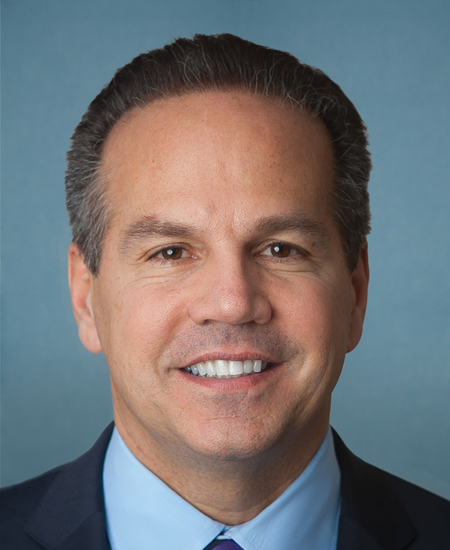
Rep. David N. Cicilline
Sponsored bills
Ensuring Lasting Smiles Act This bill requires private health insurance plans to cover diagnosis and treatment of congenital anomalies and birth defects, such as reconstructive services and items. Coverage must include services and items that functionally improve, repair, or restore any body part that is medically necessary for normal bodily functions or appearance, as determined by the treating physician. Coverage limits and cost-sharing requirements for such services and items may not be more restrictive than those applicable to all medical and surgical benefits under the plan.
Marijuana Opportunity Reinvestment and Expungement Act or the MORE Act This bill decriminalizes marijuana. Specifically, it removes marijuana from the list of scheduled substances under the Controlled Substances Act and eliminates criminal penalties for an individual who manufactures, distributes, or possesses marijuana. The bill also makes other changes, including the following: replaces statutory references to marijuana and marihuana with cannabis , requires the Bureau of Labor Statistics to regularly publish demographic data on cannabis business owners and employees, establishes a trust fund to support various programs and services for individuals and businesses in communities impacted by the war on drugs, imposes an excise tax on cannabis products produced in or imported into the United States and an occupational tax on cannabis production facilities and export warehouses, makes Small Business Administration loans and services available to entities that are cannabis-related legitimate businesses or service providers, prohibits the denial of federal public benefits to a person on the basis of certain cannabis-related conduct or convictions, prohibits the denial of benefits and protections under immigration laws on the basis of a cannabis-related event (e.g., conduct or a conviction), establishes a process to expunge convictions and conduct sentencing review hearings related to federal cannabis offenses, directs the Government Accountability Office to study the societal impact of state legalization of recreational cannabis, directs the National Highway Traffic Safety Administration to study methods for determining whether a driver is impaired by marijuana, directs the National Institute for Occupational Safety and Health to study the impact of state legalization of recreational cannabis on the workplace, and directs the Department of Education to study the impact of state legalization of recreational cannabis on schools and school-aged children.

This resolution expresses support for the designation of Dr. John E. Fryer Day and encourages governmental support for the teaching of lesbian, gay, bisexual, transgender, and queer history.
This resolution recognizes the accomplishments and example of Cesar Estrada Chavez. The resolution also encourages the people of the United States to commemorate his legacy and to always remember his rallying cry, "Si, se puede!" (which means "Yes, we can!").
Children's Act for Responsible Employment and Farm Safety of 2022 or the CARE Act of 20 22 This bill revises labor provisions for protecting child workers, including those employed in agriculture, and increases the civil penalties for violations of such provisions and imposes new criminal penalties for violations resulting in the death or serious injury or illness of a child worker. Specifically, the bill revises the definition of oppressive child labor to prohibit the employment of children under 14 years of age and imposes new employer reporting requirements for work-related injuries or deaths of agricultural employees under the age of 18. The Department of Labor must analyze, collect, and report on data concerning children under the age of 18 who are employed in agriculture and each work-related injury, illness, or death of any such child. Labor must also revise regulations to prohibit the employment of a child under the age of 18 as a pesticide handler.
Securing a Strong Retirement Act of 2022 This bill makes various changes with respect to employer-sponsored retirement plans, including providing for the automatic enrollment of employees in certain plans and increasing the age at which participants are required to begin receiving mandatory distributions.
Emmett Till Antilynching Act This bill makes lynching a federal hate crime offense. Specifically, the bill imposes criminal penalties—a fine, a prison term of up to 30 years, or both—on an individual who conspires to commit a hate crime offense that results in death or serious bodily injury or that includes kidnapping or an attempt to kidnap, aggravated sexual abuse or an attempt to commit aggravated sexual abuse, or an attempt to kill.
This resolution supports the goals and ideals of National Women's History Month and recognizes the women and organizations that continue to promote the teaching of women's history.
Equitable Community Access to Pharmacist Services Act This bill expands Medicare coverage to permanently include services provided by a pharmacist, including incidental services and supplies, related to testing, drug regimens, and vaccines for COVID-19, influenza, and certain other illnesses. Specifically, the bill provides for continued coverage of pharmacist services relating to testing and vaccines for COVID-19 and influenza, as well as coverage of testing for respiratory syncytial virus and streptococcal pharyngitis (i.e., strep throat) and the initiation of drug regimens that are used to treat COVID-19, influenza, or strep throat. It also generally provides for coverage of pharmacist services during a public health emergency or to address health equity. A pharmacist, or the facility with which the pharmacist is contracted or employed, may present a claim for reimbursement of 85% (or 100% during a declared emergency) of the applicable amount. A pharmacist may not bill an individual for such a service other than for the applicable deductible or coinsurance amounts.