Creating a Respectful and Open World for Natural Hair Act of 2022 or the CROWN Act of 2022 This bill prohibits discrimination based on a person's hair texture or hairstyle if that style or texture is commonly associated with a particular race or national origin. Specifically, the bill prohibits this type of discrimination against those participating in federally assisted programs, housing programs, public accommodations, and employment. Persons shall not be deprived of equal rights under the law and shall not be subjected to prohibited practices based on their hair texture or style. The bill provides for enforcement procedures under the applicable laws.
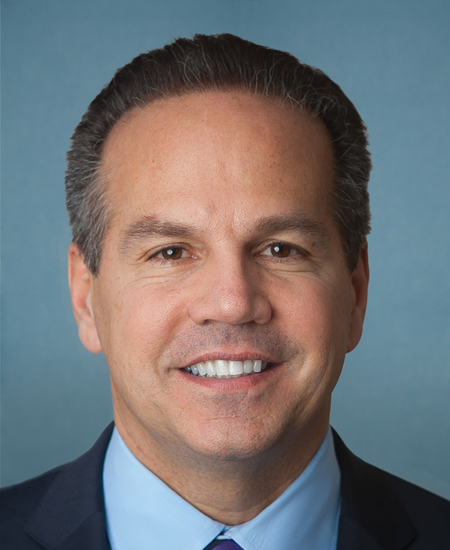
Rep. David N. Cicilline
Sponsored bills
Forced Arbitration Injustice Repeal Act of 2022 or the FAIR Act of 2022 This bill prohibits a predispute arbitration agreement from being valid or enforceable if it requires arbitration of an employment, consumer, antitrust, or civil rights dispute.
This resolution recognizes the important role of local nutrition programs supported through the Older Americans Act of 1965 in addressing senior hunger, malnutrition, and isolation.
Dr. Lorna Breen Health Care Provider Protection Act This bill establishes grants and requires other activities to improve mental and behavioral health among health care providers. Specifically, the Department of Health and Human Services (HHS) must award grants to hospitals, medical professional associations, and other health care entities for programs to promote mental health and resiliency among health care providers. In addition, HHS may award grants for relevant mental and behavioral health training for health care students, residents, or professionals. Additionally, HHS must conduct a campaign to (1) encourage health care providers to seek support and treatment for mental and behavioral health concerns, and (2) disseminate best practices to prevent suicide and improve mental health and resiliency among health care providers. HHS must also study and develop policy recommendations on improving mental and behavioral health among health care providers, removing barriers to accessing care and treatment, and identifying strategies to promote resiliency. Furthermore, the Government Accountability Office must report on the extent to which relevant federal grant programs address the prevalence and severity of mental health conditions and substance use disorders among health care providers.
This resolution expresses that the House of Representatives condemns the continued use of unlawful and indiscriminate violence against civilian populations by Russia, its allies, and any other parties to the military invasion of Ukraine by Russia; urges that the global community hold Vladimir Putin and the Russian government accountable for war crimes committed during the invasion of Ukraine; urges the United States and its allies to continue providing defense security assistance and humanitarian aid to Ukraine as Ukrainians defend themselves against Russia's invasion of their country; supports the continued use of sanctions against Russia and its allies until Russia ends its invasion of Ukraine and recognizes Ukraine's internationally recognized borders and political independence; and stands in solidarity with the people of Ukraine who are fighting for their freedom and democracy.
This resolution condemns the violence and killing of 14 individuals on Bloody Sunday 50 years ago in Northern Ireland and supports justice for the victims and their families. The resolution urges the full implementation of the Good Friday Agreement to ensure peace and stability in Ireland. The resolution recognizes the findings of the Bloody Sunday Inquiry, also known as the Saville Inquiry, and calls upon the United Kingdom to support the prosecutions of individuals who committed unjustifiable crimes on Bloody Sunday based on the evidence collected. Finally, this resolution urges the European Union, including the Republic of Ireland, and the United Kingdom to act in good faith with regard to negotiations around Brexit and implementation of the Northern Ireland Protocol.
Supporting Children's Mental Health Care Access Act of 2022 This bill reauthorizes through FY2027 two grant programs that support pediatric mental and behavioral health services and interventions. First, it reauthorizes and makes changes to a grant program for states, localities, and Indian tribes for statewide or regional telehealth access programs to promote the integration of behavioral health in pediatric primary care. Specific changes include allowing a nonprofit organization to receive the grant if the state (1) does not apply for the grant, and (2) supports the nonprofit's receipt of it. Additionally, recipients may use grant funds to support schools and emergency departments. Second, the bill reauthorizes a grant program for human services agencies and nonprofits to develop and maintain infant and early childhood mental health promotion, intervention, and treatment programs.
Autonomy for Disabled Veterans Act This bill increases the maximum amount authorized under the Home Improvements and Structural Alterations (HISA) grant program to $10,000 for veterans with a service-connected disability and $5,000 for those with disabilities that are not service-connected. The HISA grant program provides medically necessary improvements and structural alterations to veterans' (or service members') primary residence for specified purposes (e.g., allowing for entrance to their home). The bill requires the Department of Veterans Affairs to increase the dollar amount of the grant in accordance with inflation as determined by the Consumer Price Index.
LIHTC Financing Enabling Long-term Investment in Neighborhood Excellence Act or the LIFELINE Act This bill permits states, territories, or tribal governments to use State and Local Fiscal Recovery Funds to finance qualified low-income housing projects (i.e., projects for residential rental property meeting certain income tests) with loans obligated by December 31, 2024, and having maturities of 30 or more years.
Consolidated Appropriations Act, 2022 This bill provides appropriations to federal agencies for the remainder of FY2022, provides supplemental appropriations for activities to support Ukraine, and modifies or establishes various programs that address a wide range of policy areas. The bill includes the 12 regular appropriations bills that fund federal agencies for FY2022. These bills include the Agriculture, Rural Development, Food and Drug Administration, and Related Agencies Appropriations Act, 2022; the Commerce, Justice, Science, and Related Agencies Appropriations Act, 2022; the Department of Defense Appropriations Act, 2022; the Energy and Water Development and Related Agencies Appropriations Act, 2022; the Financial Services and General Government Appropriations Act, 2022; the Department of Homeland Security Appropriations Act, 2022; the Department of the Interior, Environment, and Related Agencies Appropriations Act, 2022; the Departments of Labor, Health and Human Services, and Education, and Related Agencies Appropriations Act, 2022; the Legislative Branch Appropriations Act, 2022; the Military Construction, Veterans Affairs, and Related Agencies Appropriations Act, 2022; the Department of State, Foreign Operations, and Related Programs Appropriations Act, 2022; and the Transportation, Housing and Urban Development, and Related Agencies Appropriations Act, 2022. The bill provides supplemental appropriations for several federal agencies to assist Ukraine in responding to the attack by Russia. For example, the bill provides funding for emergency food assistance, migration and refugee assistance, defense equipment, economic assistance, and enforcing sanctions against Russia. In addition, the bill reauthorizes several expiring programs and authorities, including the National Flood Insurance Program; several immigration-related authorities and programs; the Department of Agriculture's livestock mandatory reporting program; the special assessment on nonindigent people or entities convicted of certain criminal offenses (e.g., sexual abuse and trafficking); the authority for the Department of Health and Human Services to make certain appointments for the National Disaster Medical System; the temporary scheduling order issued by the Drug Enforcement Administration to place fentanyl-related substances in Schedule I of the Controlled Substances Act; the Temporary Assistance for Needy Families (TANF) program; the U.S. Anti-Doping Agency; programs and activities under the Violence Against Women Act that seek to prevent and respond to domestic violence, sexual assault, dating violence, and stalking; intelligence activities and programs; and the National Aeronautics and Space Administration's (NASA's) enhanced-use leasing authority. The bill also includes several additional provisions that address a wide range of policy issues and programs, including: the regulation of synthetic nicotine; Medicare, Medicaid, and other health programs; fraud targeting the elderly; deceptive acts or practices targeting Native Americans; carbon monoxide poisoning; salaries for certain Department of Veterans Affairs (VA) medical positions; VA cemetery grants; credit union governance; the replacement of the London Interbank Offered Rate (LIBOR) benchmark interest rate; recovery and assistance efforts for Haiti; reporting requirements and law enforcement activities related to cybercrimes; the Trans-Sahara Counterterrorism Partnership Program; the EB-5 immigrant investor visa program; and the normalization of relations between Israel and Arab countries.