Safe Workplaces Act This bill requires the Occupational Safety and Health Administration (OSHA) to promulgate an occupational safety and health standard on reducing the threat of workplace violence, including firearm violence. Additionally, the National Institute for Occupational Safety and Health must study and make recommendations about ways to reduce workplace violence. OSHA must consider those recommendations when promulgating the workplace safety and health standard.
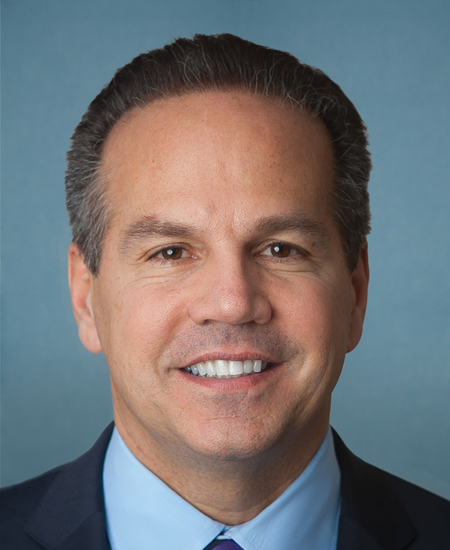
Rep. David N. Cicilline
Sponsored bills
Maddy summaryHRES 1045 (2022) is a symbolic resolution supporting National Youth HIV/AIDS Awareness Day (observed April 10). It calls on federal, state, and local entities to recognize the day and encourages efforts to address HIV disparities among youth, including promoting inclusive sex education, removing outdated HIV criminalization laws, and supporting youth-friendly healthcare access. The resolution does not create new laws or allocate funding but affirms existing policies like the Ryan White HIV/AIDS Program and the Affordable Care Act's protections for young people living with HIV. It focuses on raising awareness and reducing stigma rather than mandating specific actions.
Targeting Resources for Equitable Access to Treatment for Long COVID Act or the TREAT Long COVID Act This bill requires the Department of Health and Human Services to award competitive grants to create or expand the capacity of clinics that treat patients with persistent, long-term symptoms following recovery from acute COVID-19 (i.e., Long COVID). Eligible recipients include federally qualified health centers, rural health clinics, urban Indian health centers, and state and local health departments.
No Child Left Inside Act of 2022 This bill provides support for environmental literacy and environmental education programs in elementary and secondary schools, including by directing the Department of Education to award grants for (1) implementing state environmental literacy plans, and (2) establishing or expanding outdoor school education programs.
Burma Unified through Rigorous Military Accountability Act of 2022 or the BURMA Act of 2022 This bill imposes sanctions pertaining to Burma (Myanmar) and addresses related issues. The President must impose property- and visa-blocking sanctions on certain foreign persons (i.e., an individual or entity), including those that (1) knowingly operate in Burma's defense sector, (2) are responsible for or complicit in undermining Burma's democratic processes, or (3) are senior leaders in Burma's military or government. The Department of the Treasury must prohibit or impose strict conditions on certain accounts used to facilitate transactions for such sanctioned persons. The President may impose sanctions on Myanma Oil and Gas Enterprise if such sanctions would support certain objectives, including reducing the Burmese military's ability to undermine democracy in Burma. Before removing certain foreign persons from a list of specially designated nationals and blocked persons (commonly known as the SDN list), the President must certify to Congress that the person in question has not knowingly engaged in certain activities, such as supporting terrorism. The bill authorizes Department of State and U.S. Agency for International Development activities in Burma and the surrounding region to support democracy activists, humanitarian assistance, and reconciliation efforts. The State Department may (1) continue to assist organizations supporting political prisoners in Burma, and (2) provide assistance to entities investigating crimes against humanity. The President must direct U.S. representatives to the United Nations to vote and advocate for certain actions related to Burma, such as cutting off assistance to Burma's government.

This resolution supports and encourages Americans who choose to exercise their free speech rights by boycotting companies that do not provide life-saving or health-related goods and services to the Russian people yet continue to operate in Russia. The resolution also condemns companies that continue to operate in Russia and provide financial benefits to the Putin regime that enable his ability to continue waging war in Ukraine. Finally, the resolution commends companies that have already suspended operations in or withdrawn from markets in Russia in response to the Putin regime's unlawful invasion of Ukraine.
Maddy summaryHRES 1034 is a non-binding resolution supporting Mathematics and Statistics Awareness Month, observed each April. It recognizes math and statistics as foundational to STEM fields, innovation in areas like medicine and cybersecurity, and daily life applications. The resolution urges the House to celebrate these disciplines, highlight their importance to U.S. economic prosperity, and acknowledge ongoing efforts to increase diversity in math and statistics education and careers. It does not create new laws or programs but formally endorses the annual observance.
Federal Contracting for Peace and Security Act This bill requires executive agencies to terminate their contracts with companies conducting business operations in Russia. This requirement ends when Russia takes steps to restore the safety, sovereignty, and condition of Ukraine. The bill shall not apply to the procurement of products or services for (1) the benefit, either directly or through the efforts of regional allies, of Ukraine; or (2) humanitarian purposes to meet basic human needs. The bill provides for a waiver where in the national interest of the United States.
This resolution reaffirms unequivocal support for the North Atlantic Treaty Organization (NATO) as an alliance founded on democratic principles. The resolution urges NATO to continue to provide unwavering support to the people of Ukraine as they fight for their sovereignty, territorial integrity, and a democratic future. The resolution calls on the President to use the voice and vote of the United States to adopt a new Strategic Concept for NATO that is clear about its support for shared democratic values and committed to enhancing NATO's capacity to strengthen democratic institutions within NATO member, partner, and aspirant countries. Finally, the resolution calls on the President to use the voice and vote of the United States to establish a Center for Democratic Resilience within NATO headquarters.
Educators Expense Deduction Modernization Act of 2022 This bill increases the tax deduction for the expenses of eligible educators from $250 to $1,000, An eligible educator is, with respect to any taxable year, an individual who is a kindergarten through grade 12 teacher, instructor, counselor, principal, or aide in a school for at least 900 hours during a school year.