

Leading Against White Supremacy Act of 2022 This bill establishes a standard for determining whether a person engaged in a white supremacy inspired hate crime. The bill also sets forth the elements of related conspiracies. Specifically, the bill states that a person engaged in a white supremacy inspired hate crime when white supremacy ideology motivated the actions that constituted a crime or were undertaken in furtherance of activity that would have constituted a crime. Additionally, the bill sets forth the elements of an offense involving the conspiracy to engage in a white supremacy inspired hate crime. Finally, the bill authorizes the Department of Justice to investigate, prosecute, and maintain records of white supremacy inspired hate crimes and related conspiracies.
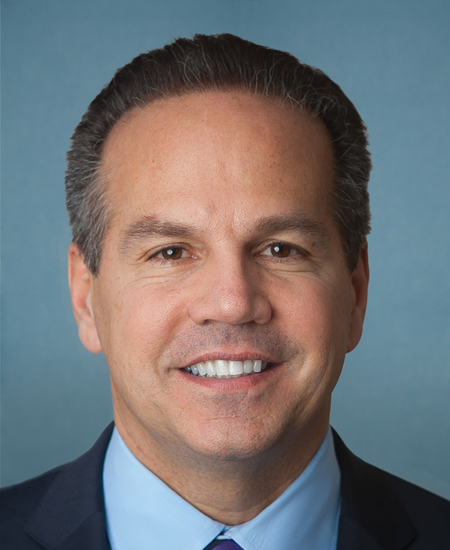
Rep. David N. Cicilline
Sponsored bills
Competition and Transparency in Digital Advertising Act This bill limits certain large digital advertising companies from owning multiple types of advertising exchanges or brokerages and imposes certain duties with respect to the interests of the customers of such brokerages. Advertising exchanges and brokerages generally facilitate advertisers and publishers in buying and selling advertising inventory through an automated bidding process. Specifically, companies with more than $20 billion in annual digital advertising revenue are prohibited from owning more than one type of service within the digital advertising marketplace. For example, a company, such as Google, may not own a digital advertising exchange and provide software that assists publishers of online advertisements in selling advertising space on their websites. Additionally, companies with more than $5 billion in annual digital advertising revenue that provide brokerage services to buyers or sellers of digital advertisements must act in the best interest of their brokerage customers. The bill also establishes transparency and privacy requirements for such brokerages. The bill provides for enforcement of these requirements by the Department of Justice, state attorneys general, and private right of action.
Justice for Victims of War Crimes Act This bill broadens the scope of individuals who are subject to federal prosecution for war crime offenses. Currently, the federal war crimes statute provides federal jurisdiction over war crime offenses committed anywhere (i.e., inside or outside the United States) if the victim or offender is a member of the Armed Forces or a U.S. national. First, this bill extends federal jurisdiction over war crime offenses committed anywhere to offenses where (1) the victim or offender is an alien lawfully admitted for permanent residence; or (2) the offender is present in the United States, regardless of the nationality of the victim or the offender. Second, the bill expands federal jurisdiction over war crime offenses to include offenses that occur in whole or in part within the United States, regardless of whether the victim or offender is a member of the Armed Forces, a U.S. national, or an alien lawfully admitted for permanent residence.
International Press Freedom Act of 2022 This bill establishes programs to address international threats to press freedom and allows qualifying threatened journalists to be admitted into the United States. The bill establishes an Office on International Press Freedom within the Department of State. The office's duties shall include (1) advocating for freedom of the press and freedom of expression abroad, (2) advising on U.S. policy on advancing such freedoms abroad, and (3) representing the United States in matters relating to such freedoms. The bill also establishes the At-Risk Journalists Fund. The State Department shall use the fund to support journalists operating in restrictive environments and provide emergency assistance to journalists who have been threatened. If the assistance provided through the fund is insufficient to protect the safety of an alien journalist who has been threatened, the journalist may receive a foreign media nonimmigrant visa upon meeting certain qualifications. The State Department must prioritize the review of a visa application for such a threatened journalist. Similarly, the Department of Homeland Security must consider providing humanitarian parole to threatened journalists and provide an admission preference to certain threatened journalists (generally if the journalist's life or safety is at risk and if paroling the journalist would further U.S. foreign policy or national security interests). The Department of Justice must provide training to all officials adjudicating refugee cases about issues involving freedom of the press. The State Department must also provide training on such issues to certain Foreign Service officers working overseas.
Oil and Gas Industry Antitrust Act This bill requires the Federal Trade Commission to investigate and report on whether the price of gasoline is being manipulated by reducing refinery capacity or by any other form of market manipulation. The report must include a long-term strategy for the commission and Congress to address manipulation of oil and gas markets during times of national or international crisis or emergency.
This bill requires states to prioritize additional groups (i.e., victims of firearm violence or the family members of victims of homicide) for state victim assistance formula grants.
Strengthen and Tackle Opportunities to Prevent Violence Act of 2022 or the STOP Violence Act of 2022 This bill allows funds under the Antiterrorism and Emergency Assistance Program to be used for efforts to prepare against mass violence and protect public assembly facilities.
Generic Substitution Noninterference Act This bill prohibits drug manufacturers from helping or directing health care providers to limit prescriptions to brand-name drugs when generic versions are available. The Federal Trade Commission and states may enforce this bill through civil actions.
21st Century Courts Act of 2022 This bill provides for the establishment of a code of conduct for Supreme Court Justices, judges of the courts of appeals, judges of the district courts, and judges of the Court of International Trade. The bill also requires court proceedings to be recorded and published on the internet.
Open App Markets Act This bill establishes rules related to the operation of an app store by a covered company (i.e., the owner or controller of an app store with more than 50 million U.S. users). An app is a software application or electronic service that may be run or directed by a user on a computer or mobile device. An app store is a publicly available website, software application, or other electronic service that distributes apps from third-party developers to users. The bill prohibits a covered company from (1) requiring developers to use an in-app payment system owned or controlled by the company as a condition of distribution or accessibility, (2) requiring that pricing or conditions of sale be equal to or more favorable on its app store than another app store, or (3) taking punitive action against a developer for using or offering different pricing terms or conditions of sale through another in-app payment system or on another app store. A covered company may not interfere with legitimate business communications between developers and users, use non-public business information from a third-party app to compete with the app, or unreasonably prefer or rank its own apps (or those of its business partners) over other apps. The bill provides for enforcement of its provisions by the Federal Trade Commission and the Department of Justice, as well as through suits brought by developers that are injured by reason of anything prohibited by this bill.