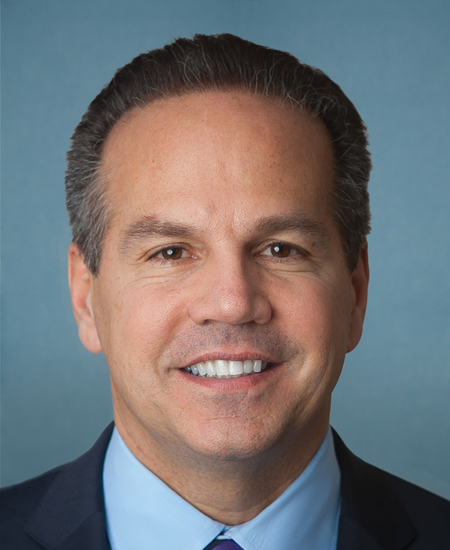
This resolution expresses the sense of the House of Representatives that (1) lesbian, gay, bisexual, transgender, queer, intersex, and asexual (LGBTQIA+) rights are human rights and protected by the U.S. Constitution; (2) LGBTQIA+ Pride Month should be celebrated; and (3) all Americans should be treated equally regardless of sexual orientation or gender identity.
Rep. David N. Cicilline
Sponsored bills
This resolution addresses issues involving LGBTQI+ identifying people. Specifically, the resolution calls on the Department of State, the U.S. Agency for International Development, and other federal agencies to include the promotion of equal rights for LGBTQI+ identifying people in their work; condemns discrimination, persecution, and violence against LGBTQI+ identifying people; calls on governments across Europe and Eurasia to foster safe and equitable environments for all people; and urges the U.S. government to increase funding for LGBTQI+ human rights organizations in Europe and Eurasia.
Maddy summaryHRES 437 is a symbolic House resolution designating June 4, 2021, as "National Gun Violence Awareness Day" and June 2021 as "National Gun Violence Awareness Month." It does not create new laws or policies but calls on the public to wear orange, increase awareness of gun violence, and focus on community safety efforts during summer months. The resolution references statistics on gun deaths and honors Hadiya Pendleton, a 15-year-old victim of gun violence, to highlight the issue. It has no direct legal effect on individuals or communities but aims to promote public discussion.
Student Borrower Bankruptcy Relief Act of 2022 This bill allows student loans to be discharged in bankruptcy. Under current law, these loans are only dischargeable if such debt imposes an undue hardship on the debtor.
Maddy summaryHR 8936, the Circuit Court Judgeships Act of 2022, authorizes additional judgeships for specific U.S. Courts of Appeals. It adds 1 judge to the First, Sixth, and Eighth Circuits; 7 to the Second; 2 to the Fourth; 13 to the Fifth; 16 to the Ninth; and 10 to the Eleventh Circuit. The bill amends a table in federal law to reflect these increased judicial staffing levels. This change directly affects the operational capacity of these federal appellate courts by expanding their bench size.
Providing Real Opportunities and Lifelong Investments For Everyone Act of 2022 or the PRO-LIFE Act of 2022 This bill establishes new, and modifies existing, programs related to maternal and child health, tax credits and other benefits for parents and caregivers, and support for childcare infrastructure. The bill requires multi-agency efforts to improve maternal health and reduce maternal mortality, particularly among racial and ethnic minority groups, veterans, and other vulnerable populations, by addressing both health-related factors and the social determinants of health (i.e., nonmedical factors that influence health outcomes, such as housing, food security, transportation, and environmental conditions). Additionally, the bill permanently extends the Children's Health Insurance Program (CHIP) and related measures. Further, the bill (1) sets up a family medical leave insurance benefit that entitles employees to a monthly benefit payment for a period of qualified caregiving; and (2) imposes a tax on employers, employees, and self-employed individuals to fund the benefits. The bill also increases the amount of the child tax credit and makes the credit fully refundable and payable in advance on a monthly basis. In addition, the Department of Labor must carry out a program to certify and recognize employers that implement family-friendly workplace programs (e.g., providing paid family and sick leave or subsidizing childcare). The bill also requires support for childcare infrastructure, for example by establishing grants for childcare facilities and scholarship and loan repayment programs for childcare educators.

Competitive Prices Act This bill makes a consciously parallel pricing coordination (i.e., a tacit agreement among two or more persons to raise, lower, change, maintain, or manipulate pricing for the purchase or sale of reasonably interchangeable products or services) a prohibited form of price fixing.
Governing Unaccredited Representatives Defrauding VA Benefits Act or the GUARD VA Benefits Act This bill imposes criminal penalties and/or fines on individuals for directly or indirectly soliciting, contracting for, charging, or receiving any unauthorized fee or compensation with respect to the preparation, presentation, or prosecution of any claim for Department of Veterans Affairs benefits. The attempted commission of such offenses is also punishable by fine or imprisonment.
Law Enforcement De-Escalation Training Act of 2022 This bill directs the Department of Justice (DOJ) to develop scenario-based training curricula (or identify existing curricula) that includes topics such as alternatives to the use of force, de-escalation tactics, and safely responding to an individual experiencing a mental, behavioral health, or suicidal crisis. The bill also directs DOJ to make grants to states for costs associated with providing the training to law enforcement officers or mental health professionals.
Maddy summaryThe Supreme Court Tenure Establishment and Retirement Modernization Act of 2022 would require the President to nominate one Supreme Court justice every other year (during the first and third years after a Presidential election), with Senate confirmation. New justices would serve an 18-year term before automatically retiring, while current justices would be deemed retired in order of their service duration (starting with the longest-serving) as new appointments occur. If the Court's membership falls below the required number due to vacancies, the most recently retired justice under this system would serve as an associate justice until the full complement is restored. This bill directly affects the appointment process, term lengths, and retirement mechanics for all Supreme Court justices.