

Maddy summaryThe Pell Grant Preservation and Expansion Act of 2026 aims to increase financial aid for college students by raising the maximum Pell Grant amount to $15,000 by the 2031-2032 award year and ensuring the program is fully funded through mandatory spending rather than annual appropriations. The bill also expands eligibility for students who receive means-tested government benefits by automatically assigning them a lower financial need score, while simultaneously allowing Dreamer students - undocumented immigrants who meet specific criteria such as graduating high school or serving in the military - to qualify for federal aid. Additional provisions restore the total number of semesters a student can receive Pell Grants from 12 to 18 and adjust the rules for satisfactory academic progress to reduce penalties for students who struggle to meet grade requirements. Finally, the legislation restores Pell Grant eligibility for some students who previously received outside scholarships and sets the law's effective date for July 1, 2026.
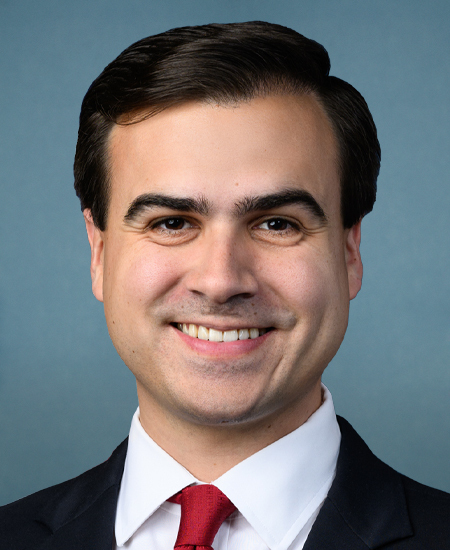
Rep. Pablo José Hernández
Sponsored bills
Maddy summaryThe Protect Local Funding Act prohibits federal agencies from finalizing, implementing, or enforcing a specific proposed rule regarding federal financial assistance scheduled for publication in May 2026. This legislation directly affects the Office of Management and Budget and other federal agencies by legally blocking them from acting on that particular regulation. By preventing the enforcement of this rule, the bill aims to stop a specific administrative action that could impact how federal funds are distributed. The measure does not alter existing funding programs but rather serves as a procedural barrier to a future regulatory change.
Maddy summaryThe Postsecondary Student Success Act of 2026 creates a competitive grant program to help colleges improve graduation rates for high-need students, including those from low-income backgrounds, first-generation families, and military-connected individuals. To receive funding between 2027 and 2032, eligible institutions must submit plans detailing how they will use evidence-based strategies, such as better advising, accelerated learning options, and improved transfer pathways, to support student retention and completion. The law requires that at least 20 percent of the available funds go to projects using the most rigorously tested methods and mandates that 2 percent be reserved specifically for Tribal Colleges and Universities. Additionally, the Department of Education must evaluate the effectiveness of these programs and report the results to Congress within 18 months of the bill's enactment.
Maddy summaryThe Puerto Rico Democratic Self-Determination Act establishes a mandatory, two-round plebiscite in 2027 to allow eligible voters in Puerto Rico to choose among four political status options: independence, current Commonwealth status, statehood, or sovereignty in free association with the United States. If a majority vote is not achieved in the initial election, a runoff will be held to select between the two most popular choices, with the results triggering specific transition procedures for each outcome. Under the independence and free association paths, the bill outlines steps for drafting a new constitution, electing officers, and a presidential proclamation that would transfer sovereignty and end U.S. territorial control. For the statehood option, the President would issue a proclamation admitting Puerto Rico as the 51st state, while the Commonwealth option would create a joint commission to negotiate reforms to the current relationship. The legislation also details how federal laws, including tax codes and immigration rules, would change depending on the chosen status and ensures that existing economic benefits and social security rights are protected during any transition.
Maddy summaryThe Careworker Visa Act of 2026 establishes a new visa category for foreign nationals to work as caregivers in private homes or small businesses with fewer than 25 employees, addressing a shortage of childcare, eldercare, and disability support workers. To qualify, employers must be certified by the Department of Labor, pay a prevailing wage determined by local standards, and file a petition that includes proof of financial stability and tax compliance. The visa allows workers to stay for initial three-year periods that can be renewed, includes a 90-day grace period for changing employers, and provides a pathway to permanent residency after meeting specific criteria. The legislation also strengthens protections against wage theft and retaliation by creating a dedicated office to handle complaints and prohibiting employers from using immigration status to control workers.
Maddy summaryThis bill authorizes the U.S. Mint to produce commemorative $5 gold and $1 silver coins marking the 25th anniversary of the September 11, 2001, terrorist attacks. The coins must feature designs honoring victims and first responders (including the inscription "Never Forget") and will be sold only during 2027-2028. All surcharges ($35 per gold coin, $10 per silver coin) collected from sales will fund the National September 11 Memorial and Museum at the World Trade Center, with no net cost to the federal government. The coins are legal tender but primarily intended for collectors, not circulation.
Maddy summaryThis bill reauthorizes and strengthens the Civil Rights Cold Case Records Collection program. It establishes that all federal, state, and local government records related to historical civil rights cases must carry a presumption of immediate public disclosure, with full access intended for public understanding. Key provisions include allowing the Review Board to reimburse state/local governments for digitizing or copying records to add to the national collection, removing an exception that previously blocked state records from being included, and extending the Review Board's term from 7 to 11 years. The bill directly affects government agencies holding these records and the public seeking historical transparency about civil rights cases.
Maddy summaryThe Extinction Prevention Act of 2026 establishes four separate conservation funds to provide financial assistance for protecting threatened and endangered species in specific regions. The bill creates funds for butterflies in North America, plants in the Pacific Islands, freshwater mussels in the United States, and desert fish in the Southwest, with each fund managed by the Secretary of the Interior. Eligible applicants, such as state agencies, nonprofits, and research institutions, can apply for competitive grants to support habitat protection, research, and management plans, while federal agencies are restricted to partnering roles rather than leading projects. Each fund is authorized to receive $5 million annually from 2027 through 2032, and the Secretary must submit annual reports to Congress detailing project outcomes and the status of the species.
Maddy summaryThis bill, known as the HUD Data Privacy Act of 2026, restricts how the Department of Housing and Urban Development can share personal information with other agencies or third parties. It mandates that data collected from individuals receiving federal housing assistance be used solely to verify their eligibility for benefits or to determine the amount of aid they receive. The law includes specific exceptions for sharing deidentified data for research, ongoing criminal investigations, or preventing immediate threats to life, while explicitly prohibiting the use of this information for immigration enforcement purposes.
Maddy summaryThis bill would amend federal law to strengthen penalties for organized retail crime by expanding definitions of theft to include digital goods, gift cards, and setting a $5,000 aggregate value threshold for charges over a 12-month period. It would establish a new "Organized Retail and Supply Chain Crime Coordination Center" under Homeland Security to coordinate Federal, State, local, and Tribal law enforcement efforts against cross-jurisdictional theft groups. The Center would share information with retailers, transportation companies, and law enforcement agencies, track crime trends, and produce annual reports on organized retail crime. This legislation directly affects retailers, supply chain businesses, and law enforcement agencies, while targeting organized crime groups responsible for a 93% increase in larceny incidents and rising safety concerns for retail employees. The bill aims to address significant financial losses and supply chain disruptions noted in the National Retail Federation's 2023 data.