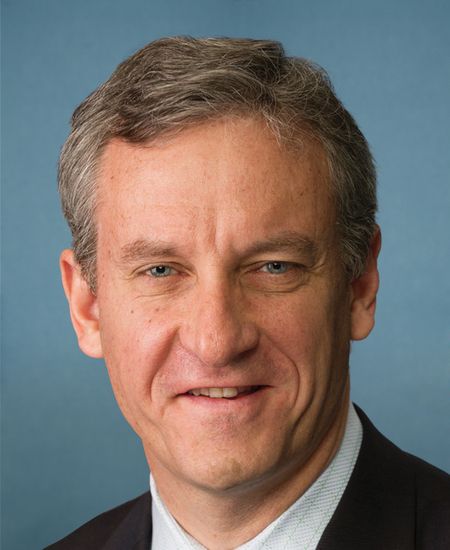
Photo of Matt Cartwright
D United States House · District 8 · Pennsylvania

Rep. Matt Cartwright

Compare
Total votes
2,168
all sessions
Attendance
97%
63 missed
Near the chamber average
With party
96%
of cast votes
Near the chamber average
Bipartisan score
2%
crosses aisle rarely
Near the chamber average
Sponsored
756
bills & resolutions
Near the chamber average
Committees
0
assignments
756 bills and resolutions

Sponsored bills

Total
756
Primary
103
Co-sponsor
653
This page
756
matching current filters
Co-sponsor HR 3183
In committee · United States House · Co-sponsor
EATS Act of 2023

Maddy summaryThis bill removes a barrier for college students seeking food assistance by amending the SNAP program rules. It directly affects students enrolled at least half-time in recognized colleges or training programs, who were previously automatically ineligible unless they met separate requirements. The key change eliminates the prior restriction (in section 6(e)) that barred most higher education students from SNAP, allowing them to qualify under the new provision in section 3(m)(5)(F). The changes take effect January 2, 2024.

In committee Jun 1, 2023 1 co-sponsor
Co-sponsor HR 3036
In committee · United States House · Co-sponsor
Increased TSP Access Act of 2023

Maddy summaryHR 3036, the Increased TSP Access Act of 2023, amends conservation program rules to expand access to third-party providers (TSPs) who offer technical assistance to farmers on conservation practices. It creates new pathways for non-Federal entities like agricultural cooperatives or professional associations to certify TSPs, streamlines certification processes (requiring Secretary review within 10 business days), and sets payment rates for TSPs equivalent to government-provided technical assistance. The bill mandates public reporting on certification numbers, payment details, and a target utilization rate for TSPs to improve conservation program delivery. It directly affects farmers participating in USDA conservation programs by increasing options for technical support and requiring transparency in how TSPs are certified and compensated.

In committee Jun 1, 2023 1 co-sponsor
Co-sponsor HR 3702
In committee · United States House · Co-sponsor
Access Technology Affordability Act of 2023

Maddy summaryThis bill creates a new tax credit for expenses related to "qualified access technology for the blind" under the Internal Revenue Code. It allows taxpayers to claim a credit of up to $2,000 per year (adjusted for inflation) for costs paid for hardware, software, or IT that converts visual information into formats usable by blind individuals, covering the taxpayer, their spouse, or a dependent who is blind. The credit is limited to $2,000 over any three consecutive tax years per blind individual and expires after 2028. It directly affects blind individuals and their families who purchase qualifying assistive technology. The credit cannot be claimed for expenses already covered by other tax deductions or credits.

In committee May 25, 2023 1 co-sponsor
Co-sponsor HR 3031
In committee · United States House · Co-sponsor
America's Red Rock Wilderness Act

Maddy summaryThis bill would designate approximately 1.7 million acres of public land in Utah's Colorado Plateau and Great Basin regions as wilderness areas, protecting them from development while preserving traditional uses by Indigenous communities. It establishes specific wilderness areas across Utah's red rock canyons, including the Great Basin Wilderness Areas, Grand Staircase-Escalante Wilderness Areas, and others, with detailed acreage for each designated zone. The bill includes administrative provisions for managing these areas, such as maintaining existing livestock grazing rights, setting road setbacks to protect wilderness character, and reserving water rights for the wilderness areas. This legislation directly affects how the Bureau of Land Management administers public lands in Utah and defines the boundaries for public use of these designated wilderness areas.

In committee May 22, 2023 1 co-sponsor
Primary HRES 415
In committee · United States House · Lead sponsor
Expressing support for the designation of May as "National Bladder Cancer Awareness Month".

Maddy summaryThis resolution expresses the U.S. House of Representatives' support for designating May as "National Bladder Cancer Awareness Month." It does not create new laws or funding but calls on the public, advocacy groups, researchers, and those affected by bladder cancer to promote awareness and support during May. The resolution cites that bladder cancer affects over 800,000 families in the U.S., is among the top diagnosed cancers, and early detection improves survival rates. Its goal is to encourage community activities that raise public knowledge about the disease and support for patients and research.

In committee May 19, 2023 0 co-sponsors
Co-sponsor HR 3312
In committee · United States House · Co-sponsor
Moms Matter Act

Maddy summaryHR 3312, the Moms Matter Act, establishes a $25 million annual grant program (2024-2027) for community organizations, health providers, and local governments to address maternal mental health and substance use disorders. It prioritizes funding for initiatives in areas with high maternal mortality rates, health disparities, or health professional shortage areas, focusing on evidence-based services like integrated mental health care in prenatal settings, postpartum support, stigma reduction, and provider training. The bill also creates a $15 million annual workforce program (2024-2028) to diversify maternal mental health providers through scholarships, training in bias/racism, and recruitment in underserved communities. These grants directly affect pregnant and postpartum individuals in high-risk demographic groups and aim to improve access to specialized care through concrete program requirements.

In committee May 19, 2023 1 co-sponsor
Co-sponsor HR 3305
In committee · United States House · Co-sponsor
Black Maternal Health Momnibus Act

Maddy summary# Comprehensive Summary: Maternal Health and Vaccination Legislation This proposed legislation establishes a comprehensive framework to improve maternal health outcomes across multiple dimensions, with a strong focus on equity and addressing systemic disparities. The bill is organized into 13 titles covering various aspects of maternal health care. ## Key Focus Areas 1. **Maternal Health Equity**: The legislation emphasizes reducing racial and ethnic disparities in maternal health outcomes, with specific provisions targeting communities of color and underserved populations. 2. **Incarcerated Mothers**: Includes provisions to end shackling of pregnant individuals in correctional facilities and establishes programs for maternal health care in prisons and jails. 3. **Technology and Telehealth**: Creates grant programs for telehealth models, technology-enabled collaborative learning, and digital tools to improve access to maternal care. 4. **Climate Change Impact**: Addresses how climate change affects maternal and infant health, with a focus on vulnerable populations. 5. **Public Health Emergencies**: Establishes protocols for maternal care during public health crises like pandemics. 6. **Vaccinations**: Expands maternal vaccination awareness and equity campaigns. ## Major Provisions **Maternal Vaccination Campaign (Title XIII)**: - Expands awareness campaigns to specifically target pregnant and postpartum individuals - Allocates $17 million annually (2024-2028) for vaccination outreach - Includes specific efforts to increase vaccination rates among racial/ethnic minority groups **Technology and Telehealth (Titles IX)**: - $6 million annually for technology-enabled collaborative learning models - $6 million annually for digital tools to promote equity in maternal health - Creates a demonstration project for alternative payment models in maternal care **Climate Change and Maternal Health (Title XII)**: - $100 million for a grant program to protect vulnerable mothers and babies from climate change risks - $5 million for education and training at health profession schools - Establishes a National Institutes of Health Consortium on Birth and Climate Change Research **Incarcerated Mothers (Title VIII)**: - Requires 25% grant reduction for states that don't restrict restraints on pregnant incarcerated individuals - Establishes model programs in Bureau of Prisons facilities for pregnant and postpartum incarcerated individuals - $10 million annually for State and local prison and jail programs **Public Health Emergency Response (Title XI)**: - $100 million for data collection on maternal health during public health emergencies - $30 million for expanding maternal mortality reviews - $45 million for Pregnancy Risk Assessment Monitoring System (PRAMS) - $15 million for research on public health emergencies' impact on maternal health ## Cross-Cutting Themes - **Equity Focus**: Nearly every provision includes specific measures to address racial and ethnic disparities - **Data Collection**: Strong emphasis on collecting and analyzing demographic data - **Community Involvement**: Requires input from community-based organizations and affected populations - **Interagency Coordination**: Mandates collaboration between multiple federal agencies - **Long-Term Investment**: All funding is allocated for 5-year periods (2024-2028) The legislation represents a comprehensive, multi-faceted approach to improving maternal health outcomes in the United States, with particular attention to vulnerable populations and systemic barriers that contribute to poor maternal health outcomes.


In committee May 19, 2023 1 co-sponsor
Co-sponsor HR 3539
In committee · United States House · Co-sponsor
Public Safety Employer-Employee Cooperation Act

Maddy summaryThis bill establishes federal standards for labor-management cooperation between public safety employers (state and local governments) and public safety workers (law enforcement officers, firefighters, and emergency medical services personnel). It requires the Federal Labor Relations Authority to determine if states substantially provide rights like collective bargaining, union representation, and binding arbitration for these workers. States found lacking would need to follow federal bargaining procedures after a two-year transition period or following the next legislative session. The bill explicitly respects existing state laws that provide comparable or better rights to public safety workers. It also prohibits strikes or work stoppages that would disrupt emergency services.

In committee May 18, 2023 1 co-sponsor
Co-sponsor HCONRES 44
In committee · United States House · Co-sponsor
Urging the establishment of a United States Commission on Truth, Racial Healing, and Transformation.

Maddy summaryHCONRES 44 is a non-binding congressional resolution urging the creation of a U.S. Commission on Truth, Racial Healing, and Transformation. It does not establish the commission itself but calls for its formation to acknowledge historical injustices against Black, Indigenous, and other people of color - including systemic discrimination in housing, Social Security, the GI Bill, and land policies - and to address ongoing racial inequities. The resolution emphasizes the need to dismantle the "belief in a hierarchy of human value" and promote racial healing as a national priority. It complements ongoing efforts like H.R. 40 (a bill to study reparations) but does not create new legal requirements or funding.

In committee May 17, 2023 1 co-sponsor
Co-sponsor HR 3449
In committee · United States House · Co-sponsor
Eric’s Law

Eric's Law This bill modifies procedures with respect to capital sentencing hearings involving a defendant who is serving a life sentence for murder and, while serving the life sentence, is convicted of another murder. If a jury at a capital sentencing hearing does not reach a unanimous recommendation on the defendant's sentence and there is a motion by the attorney for the government, the court must order a new special sentencing hearing and impanel a new jury. If the new jury at the special sentencing hearing does not reach a unanimous recommendation on the defendant's sentence, then the court is prohibited from imposing a death sentence.

In committee May 17, 2023 1 co-sponsor
Showing 251 to 260 of 756 bills
Previous 1 … 25 26 27 … 76 Next