

Maddy summaryHR 82, the Social Security Fairness Act of 2023, repeals two provisions that reduce Social Security benefits for certain government workers. It eliminates the Government Pension Offset (GPO), which cuts spousal or survivor benefits for people with pensions from jobs not covered by Social Security (like federal or state government roles), and the Windfall Elimination Provision (WEP), which lowers retirement benefits for those with similar pensions. The law takes effect for benefits paid after December 2023, requiring the Social Security Administration to adjust benefit calculations to remove these reductions. This change directly affects public-sector employees who previously had their Social Security benefits reduced due to their government pensions.
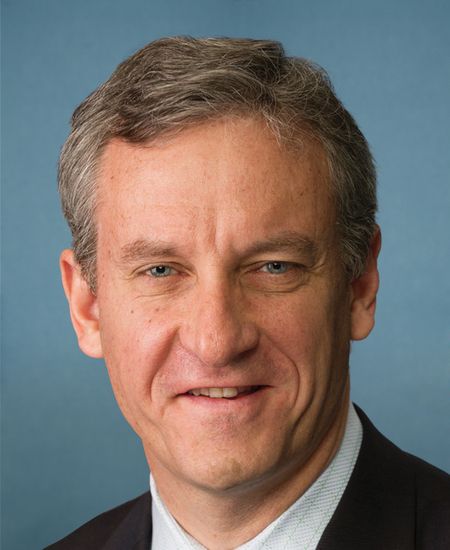
Rep. Matt Cartwright
Sponsored bills
Maddy summaryHR 7417 is a naming bill that would designate the United States Postal Service facility at 135 West Spring Street in Titusville, Pennsylvania as the "Edwin L. Drake Post Office Building." This bill does not change any laws or policies but simply provides a formal name for an existing post office location. The bill directly affects the USPS facility in Titusville by establishing its official name. This type of bill is purely ceremonial and affects no specific groups or policies beyond the naming of the building.
Maddy summaryThis bill (HR 4955) names a Department of Veterans Affairs community-based outpatient clinic in Monroeville, Pennsylvania, as the "Henry Parham VA Clinic." It directly affects the Monroeville VA clinic by changing its official name to honor Henry Parham, an African-American soldier who served in the segregated 320th Barrage Balloon Battalion during the D-Day invasion of Normandy in 1944. The bill makes no policy changes or funding adjustments - it only updates the clinic’s official designation and all references to it in government records to reflect this new name. The renaming commemorates Parham as the last surviving African-American combat veteran of the D-Day landings, who later volunteered at VA facilities in Pittsburgh.
Maddy summaryThe Treat and Reduce Obesity Act of 2023 expands Medicare coverage for obesity treatment by allowing a wider range of healthcare providers - including nurse practitioners, dietitians, psychologists, and community-based counseling programs - to deliver intensive behavioral therapy for obesity, provided they coordinate with primary care providers. It also adds Medicare Part D coverage for medications used to treat obesity or for weight loss management in overweight individuals with related health conditions like diabetes or high blood pressure. These changes directly affect Medicare beneficiaries, particularly older adults (65+), who face higher obesity rates and associated costs, including $50 billion annually in Medicare spending for obesity-related care. The bill requires annual reports to Congress on implementation to improve coordination of obesity care across federal health programs.
Maddy summaryThis bill, HR 1097 (Everett Alvarez, Jr. Congressional Gold Medal Act of 2023), authorizes the award of a Congressional Gold Medal to Everett Alvarez, Jr., in recognition of his service as a U.S. Navy pilot and Vietnam War prisoner of war. It directly honors Alvarez, who was the first U.S. pilot shot down in the Vietnam War, spent over 8.5 years in captivity, and later served in the Peace Corps and Veterans Administration. The bill’s key mechanism is directing the U.S. Mint to strike a gold medal bearing his name and image, with bronze duplicates available for sale to cover costs. It does not create new policies or affect any group beyond the honoree.
Maddy summaryThis bill extends funding for the National Landslide Preparedness Act through 2028, replacing the previous 2021-2024 authorization period. It directly affects existing federal landslide preparedness programs by continuing their current funding structure without new requirements. The key change is simply updating the program's authorization period in two specific sections of the law (sections 3(h) and 5(e)). The bill does not create new policies or alter how landslide preparedness activities are conducted.
Maddy summaryThe Pharmacists Fight Back Act (HR 9096) sets new rules for Pharmacy Benefits Managers (PBMs) working with federal health care programs like Medicare Part D and Medicaid. It requires PBMs to reimburse in-network pharmacies at a rate covering the drug's actual cost plus a small fee (capped at $25), and to reduce patient cost-sharing by at least 80% of rebates received from drug manufacturers. The bill bans PBMs from steering patients to specific pharmacies, charging patients more than pharmacies are paid, or using rebates to lower pharmacy payments after claims are processed. It also mandates public reporting of drug pricing data to improve transparency, ensuring patients and pharmacies receive fairer treatment under federal health programs.
Maddy summaryHR 8796, the "Stop Comstock Act," removes outdated restrictions from federal law that previously banned the distribution of materials related to contraception and abortion as "obscene" or "indecent." The bill amends Title 18 and the Tariff Act by deleting references to "indecent," "immoral," "unlawful abortion," and "procuring abortion" from provisions governing obscene materials. It clarifies that the law only prohibits "obscene materials" in commerce, eliminating broad restrictions on reproductive health information. This directly affects internet platforms, healthcare providers, and individuals sharing reproductive health resources by removing legal barriers to their distribution.
Maddy summaryThe HEAR Act of 2024 would require Medicare to cover hearing rehabilitation services and hearing aids for eligible beneficiaries. It defines hearing rehabilitation to include assessments, counseling, and fitting of hearing aids, while defining hearing aids as FDA-approved devices (excluding over-the-counter options). Coverage applies to Medicare beneficiaries with hearing loss who have not received hearing aids in the past three years and whose hearing has deteriorated, as confirmed by a comprehensive assessment. The bill amends Medicare to include these services as standard benefits, removing prior exclusions that previously limited coverage. This policy change directly affects older adults and people with disabilities who rely on Medicare for hearing care.
Maddy summaryHR 7393 would create a 35% refundable tax credit for homeowners with disabilities or blindness, or those aged 65+ with qualifying Social Security or veterans benefits, to cover costs of home accessibility modifications like ramps, widened doorways, and bathroom adaptations. The credit is capped at $15,000 per year (with carryover for prior years) and phases out for higher earners (e.g., $400,000 modified AGI for joint filers). Eligibility requires physician certification of disability and improvements to the primary residence, with income limits and documentation requirements. The credit applies to tax years beginning after December 31, 2025.