Promoting Responsible Emergency Protocols for All Students Act or the PREP for All Students Act of 2022 This bill establishes the Council on Emergency Response Protocols. The council must, among other duties, provide guidelines for states, early child care and education settings, local educational agencies, and institutions of higher education to use in developing and implementing emergency response protocols (e.g., gun violence response and prevention protocols, natural disaster preparedness procedures, and fire drills) that are inclusive and accessible.
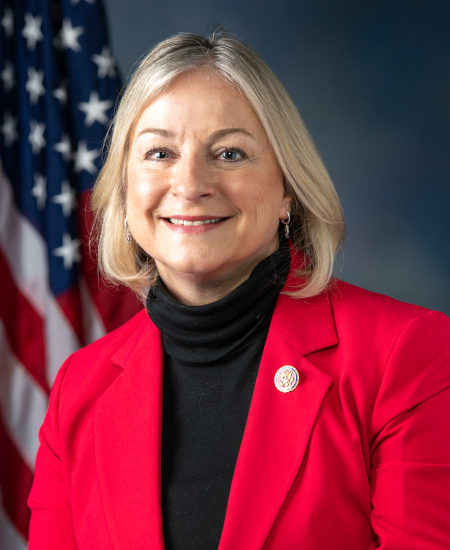
Rep. Susan Wild
Sponsored bills
Cattle Price Discovery and Transparency Act of 2022 This bill requires the Department of Agriculture (USDA) to take various actions to address transparency in contract terms and pricing in the cattle industry. Among these requirements, USDA must maintain a publicly available library or catalog of contracts entered into between meat packers and livestock producers for the purchase of cattle, including any schedules of premiums or discounts associated with the contracts and other specific details. USDA must make this information available to producers and other interested parties in a monthly report. The bill further requires USDA to establish five to seven regions encompassing the entire continental United States that reasonably reflect similar fed cattle purchase practices for processing plants and establish mandatory minimums for each region (i.e., the minimum percentage of cattle purchases that are required to be made through approved pricing mechanisms from producers that are not packers). Under the bill, approved pricing mechanisms are generally purchases of fed cattle made through a negotiated purchase, through a negotiated grid purchase, at a stockyard, or through trading systems or platforms where multiple buyers and sellers can regularly make and accept bids and offers. The bill also establishes a maximum penalty for mandatory minimum violations by covered packers. Under the bill, a covered packer is a packer that has slaughtered an average of 5% or more of the number of fed cattle slaughtered nationally during the immediately preceding five calendar years.
Health Care Providers Safety Act of 2022 This bill authorizes the Department of Health and Human Services to award grants to health care providers for security services and other expenses related to physical security and cybersecurity.
Student Veteran Work Study Modernization Act This bill requires the Department of Veterans Affairs (VA) to implement a five-year pilot program to expand eligibility for the work-study allowance program to individuals who are pursuing programs of rehabilitation, education, or training at a rate equal to at least half of that required of a full-time student. To offset the cost of the program, the bill extends from January 14, 2031, to January 23, 2031, the end of the period for certain VA housing loan fee rates under the VA home loan program.
This resolution expresses that the House of Representatives condemns the unjust detention and indicting of Russian opposition leader Vladimir Vladimirovich Kara-Murza; urges the U.S. government and other allied governments to work to secure the immediate release of Vladimir Vladimirovich Kara-Murza, Alexei Navalny, and other Russian citizens imprisoned for opposing the regime of Vladimir Putin and the war against Ukraine; and calls on the President to increase support provided by the U.S. government for those advocating for democracy and independent media in Russia.
Community Services Block Grant Modernization Act of 2022 This bill reauthorizes the Community Services Block Grant program through FY2032 and otherwise modifies the program. The program supports various antipoverty activities, primarily through formula-based allotments to states, Indian tribes, and territories. In particular, the bill makes changes to the program's administration and leadership; performance measurement; and allotments to states and territories. The bill also expands eligibility for services and activities funded by the program to 200% of the federal poverty line (FPL). Under current law, eligibility is generally set at the FPL.
Rights for the Transportation Security Administration Workforce Act of 2022 or the Rights for the TSA Workforce Act of 2022 This bill modifies the workplace rights, protections, and benefits applicable to Transportation Security Administration (TSA) personnel. Specifically, the bill by December 31, 2022, eliminates personnel authorities of the Department of Homeland Security (DHS) and the Department of Transportation governing the conditions of employment for TSA employees, thus making TSA employees subject to the personnel management system applicable to other federal employees; sets forth transition rules that protect the pay rates, leave rights, and other rights of TSA employees; and requires DHS to consult with the exclusive representative of TSA screening employees to carry out the conversion of those positions. The bill also permits the TSA to consult with organizations representing federal air marshals to address concerns, including mental health and suicide rates; directs the TSA to ensure its employees are provided proper guidance regarding prevention and protections against COVID-19; requires the TSA to provide a one-time bonus payment of $3,000 to each TSA employee carrying out duties that require substantial contact with the public during the COVID-19 national emergency; and requires the Government Accountability Office to report on implementation of the bill, TSA recruitment efforts, and specified TSA personnel policies.

Alzheimer's Accountability and Investment Act This bill requires the National Institutes of Health to annually submit, beginning in FY2024, an estimate of its budget and personnel needs for carrying out initiatives pursuant to the National Alzheimer's Project. This project supports coordination of federal planning, research, and other efforts to address Alzheimer's disease and related dementias.
NAPA Reauthorization Act This bill extends through 2035 and makes other changes to the National Alzheimer's Project. This project supports coordination of federal planning, programs, and other efforts to address Alzheimer's disease and related dementias. In particular, the bill incorporates a focus on promoting healthy aging and reducing risk factors associated with cognitive decline. The bill also expands the membership of the Advisory Council on Alzheimer's Research, Care, and Services to include (1) a researcher with experience recruiting and retaining diverse clinical trial participants, (2) an individual diagnosed with Alzheimer's disease, and (3) representatives from additional federal agencies (e.g., the Department of Justice and the Office of Management and Budget).
This resolution urges the Persian Gulf partners of the United States, including the Kingdom of Saudi Arabia and the United Arab Emirates, to (1) work together with the United States to increase oil production to stabilize energy markets, (2) recognize U.S. contributions to their security, and (3) honor their lasting friendship with the United States.