

Maddy summaryHR 82, the Social Security Fairness Act of 2023, repeals two provisions that reduce Social Security benefits for certain government workers. It eliminates the Government Pension Offset (GPO), which cuts spousal or survivor benefits for people with pensions from jobs not covered by Social Security (like federal or state government roles), and the Windfall Elimination Provision (WEP), which lowers retirement benefits for those with similar pensions. The law takes effect for benefits paid after December 2023, requiring the Social Security Administration to adjust benefit calculations to remove these reductions. This change directly affects public-sector employees who previously had their Social Security benefits reduced due to their government pensions.
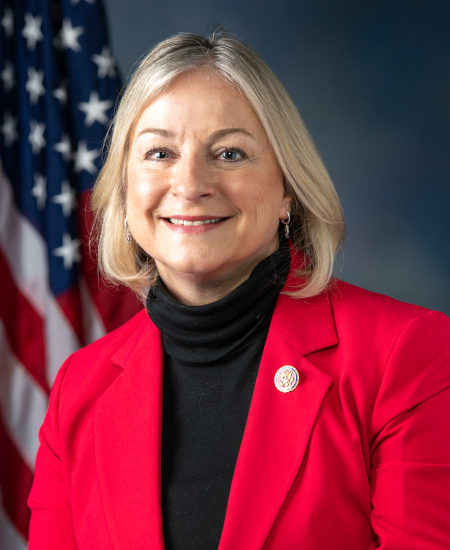
Rep. Susan Wild
Sponsored bills
Maddy summaryHR 7417 is a naming bill that would designate the United States Postal Service facility at 135 West Spring Street in Titusville, Pennsylvania as the "Edwin L. Drake Post Office Building." This bill does not change any laws or policies but simply provides a formal name for an existing post office location. The bill directly affects the USPS facility in Titusville by establishing its official name. This type of bill is purely ceremonial and affects no specific groups or policies beyond the naming of the building.
Maddy summaryThis bill extends funding for the Gabriella Miller Kids First Pediatric Research Program at the National Institutes of Health (NIH) through 2028, replacing the previous 2014-2023 authorization. It directs NIH to administer pediatric research funds through its Division of Program Coordination (instead of the "Common Fund") and requires NIH to coordinate pediatric cancer and disease research while prioritizing projects that avoid duplicating existing NIH work. The bill also mandates a report to Congress within five years detailing funded pediatric research projects and their advancements. This directly affects NIH's pediatric research funding structure and oversight, focusing on cancer and other childhood diseases.
Maddy summaryThe Women’s Suffrage National Monument Location Act (HR 1318) authorizes the placement of a monument on the National Mall to honor the women’s suffrage movement and the 19th Amendment. The bill specifies that the monument must be located within a designated area on the National Mall known as the "Reserve," bypassing standard requirements for monument locations under existing law. This legislation sets the physical site for a monument already authorized by previous law (Public Law 116-217), without creating new policy or altering commemorative regulations beyond the location.
Maddy summaryThis bill (HR 4955) names a Department of Veterans Affairs community-based outpatient clinic in Monroeville, Pennsylvania, as the "Henry Parham VA Clinic." It directly affects the Monroeville VA clinic by changing its official name to honor Henry Parham, an African-American soldier who served in the segregated 320th Barrage Balloon Battalion during the D-Day invasion of Normandy in 1944. The bill makes no policy changes or funding adjustments - it only updates the clinic’s official designation and all references to it in government records to reflect this new name. The renaming commemorates Parham as the last surviving African-American combat veteran of the D-Day landings, who later volunteered at VA facilities in Pittsburgh.
Maddy summaryThe Treat and Reduce Obesity Act of 2023 expands Medicare coverage for obesity treatment by allowing a wider range of healthcare providers - including nurse practitioners, dietitians, psychologists, and community-based counseling programs - to deliver intensive behavioral therapy for obesity, provided they coordinate with primary care providers. It also adds Medicare Part D coverage for medications used to treat obesity or for weight loss management in overweight individuals with related health conditions like diabetes or high blood pressure. These changes directly affect Medicare beneficiaries, particularly older adults (65+), who face higher obesity rates and associated costs, including $50 billion annually in Medicare spending for obesity-related care. The bill requires annual reports to Congress on implementation to improve coordination of obesity care across federal health programs.
Maddy summaryThis bill creates a 4-year transitional coverage period for Medicare to automatically cover "breakthrough medical devices" - new FDA-prioritized devices approved after March 2021 - as "reasonable and necessary" for treatment. During this period, these devices qualify for additional payments under Medicare's hospital and outpatient payment systems without requiring separate approval. After the 4-year period, Medicare must develop regular coverage based on additional data, with automatic coverage for all approved uses if no action is taken within two years. The bill requires Medicare to assign unique codes for these devices within three months of FDA approval and to update payment systems regularly. It also includes special provisions for "specified breakthrough devices" that lack existing Medicare benefit categories, requiring reports on their impact and cost to Congress.
Maddy summaryThe Stop Campus Hazing Act requires colleges and universities to publicly report hazing incidents involving student organizations. It defines hazing as intentional acts causing physical or psychological harm during initiation or membership in student groups, including activities like forced substance consumption, sleep deprivation, or sexual acts. Institutions must include hazing statistics in annual security reports and publish a "Campus Hazing Transparency Report" on their websites by July 1, 2025, detailing findings about organizations violating hazing policies. The reports must include organization names, violation descriptions, and key dates while excluding personally identifiable student information. This applies to all colleges participating in federal student aid programs.
Maddy summary# Summary of National Defense Authorization Act for Fiscal Year 2025 This extensive legislation contains numerous provisions governing U.S. defense programs, with key themes including: 1. **Aircraft Inventory Requirements & Restrictions**: - Extended prohibitions on reducing E-3 aircraft inventory through 2025 - Minimum inventory requirements for A-10 (96 aircraft), C-130 (minimum 205 aircraft), and KC-135 aircraft - Prohibition on retiring F-15E aircraft until September 2027 - Requirements for recapitalizing Air National Guard fighter fleet with a plan to maintain similar capability mix as active components 2. **F-35 Aircraft Procurement Limitations**: - Strict limits on F-35 procurement (30 F-35A, 9 F-35B, 9 F-35C maximum for FY2025) - Requires certification of multiple improvement plans before accepting additional aircraft - Mandates development of digital-twin models, test beds, and mission software integration labs 3. **Artificial Intelligence Initiatives**: - Establishment of a Chief Digital Engineering Recruitment and Management Officer - Development of AI education courses for military personnel - Requirements for identifying and planning the AI workforce - New restrictions on AI models that could pose national security risks 4. **Supply Chain Resilience**: - Comprehensive measures to increase supply chain resilience for small unmanned aerial systems (sUAS) - Disassembly and analysis of foreign drone aircraft (specifically Da Jiang Innovations) - Development of a supply chain risk framework 5. **Technology Restrictions**: - Prohibition on use of foreign-made LiDAR technology from covered foreign countries (China, Iran, North Korea, Russia) - Requires certification for any exceptions to this prohibition 6. **Defense Research & Development**: - Modifications to numerous research programs - Expansion of the Laboratory Quality Enhancement Program - Requirements for a biotechnology roadmap - Modifications to quantum information science programs The legislation contains numerous detailed requirements for military readiness, equipment maintenance, and strategic planning across all branches of the military, with significant focus on modernization, technology security, and maintaining force structure requirements.
Maddy summaryThis bill, HR 1097 (Everett Alvarez, Jr. Congressional Gold Medal Act of 2023), authorizes the award of a Congressional Gold Medal to Everett Alvarez, Jr., in recognition of his service as a U.S. Navy pilot and Vietnam War prisoner of war. It directly honors Alvarez, who was the first U.S. pilot shot down in the Vietnam War, spent over 8.5 years in captivity, and later served in the Peace Corps and Veterans Administration. The bill’s key mechanism is directing the U.S. Mint to strike a gold medal bearing his name and image, with bronze duplicates available for sale to cover costs. It does not create new policies or affect any group beyond the honoree.