

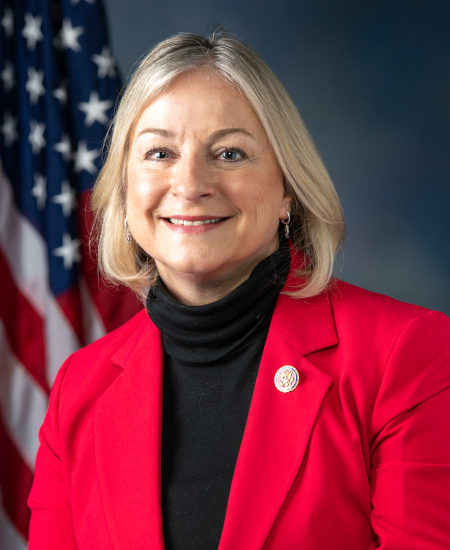
Photo of Susan Wild
D United States House · District 7 · Pennsylvania

Rep. Susan Wild

Compare
Total votes
2,168
all sessions
Attendance
97%
62 missed
Near the chamber average
With party
95%
of cast votes
Near the chamber average
Bipartisan score
3%
crosses aisle rarely
Near the chamber average
Sponsored
1,223
bills & resolutions
Higher than 80% of chamber peers
Committees
0
assignments
1,223 bills and resolutions

Sponsored bills

Total
1,223
Primary
45
Co-sponsor
1,178
This page
1,223
matching current filters
Co-sponsor HR 7254
In committee · United States House · Co-sponsor
Hearing Device Coverage Clarification Act

Maddy summaryThis bill clarifies that Medicare must cover fully implanted active middle ear hearing devices as prosthetics, not as hearing aids. It requires the Centers for Medicare & Medicaid Services (CMS) to update its rules within 60 days of the bill's enactment to remove these devices from Medicare's hearing aid coverage exclusion. This directly affects Medicare beneficiaries who rely on these specific implanted devices for hearing. The change means these devices will now be covered under Medicare's prosthetic benefits, not excluded under hearing aid rules, without altering existing coverage for other hearing aids.

In committee Dec 17, 2024 1 co-sponsor
Co-sponsor HR 7084
In committee · United States House · Co-sponsor
You Earned It, You Keep It Act

Maddy summaryThe "You Earned It, You Keep It Act" (HR 7084) establishes a $250,000 annual income threshold for Social Security taxes. Income above this threshold will no longer be subject to Social Security taxes but will still count toward Social Security benefits. This affects high earners who would have paid Social Security taxes on income above the current wage base. The bill also includes special rules for workers with multiple employers and applies to calendar years after 2024.

In committee Dec 17, 2024 1 co-sponsor
Co-sponsor HR 6961
In committee · United States House · Co-sponsor
Nutrition CARE Act of 2024

Maddy summaryThe Nutrition CARE Act of 2024 expands Medicare Part B coverage to include medical nutrition therapy services for beneficiaries diagnosed with eating disorders. It directly affects Medicare beneficiaries with eating disorders - particularly an estimated 420,500-560,700 Black, Indigenous, and People of Color seniors - by requiring coverage for 13 hours of initial care (including assessment) and 4 hours annually for ongoing management. The bill amends Medicare law to specify that these services must be provided by registered dietitians or nutrition professionals following referrals from physicians or psychologists. Coverage applies to all eating disorders as defined by the DSM-5, addressing a gap where Medicare previously excluded this critical treatment component. This policy change aims to improve access to evidence-based care for a condition linked to high mortality and significant healthcare costs.

In committee Dec 17, 2024 1 co-sponsor
Co-sponsor HR 6790
In committee · United States House · Co-sponsor
New Era of Preventing End-Stage Kidney Disease Act

Maddy summaryHR 6790 establishes National Institutes of Health centers to advance research, early detection, and public awareness of rare kidney diseases, with a focus on rural and underserved communities. It mandates a federal study on genetic testing barriers, treatment patterns, and public awareness for rare kidney diseases affecting disproportionately impacted populations, including barriers to insurance coverage and access to specialists. The bill also funds nephrology training programs to increase specialists serving these communities and requires experiments to delay or prevent the need for dialysis and transplants. Total funding of $7 million is authorized for fiscal years 2024-2028 to support these research, education, and early intervention efforts.

In committee Dec 17, 2024 1 co-sponsor
Co-sponsor HR 6683
In committee · United States House · Co-sponsor
Preserving Seniors’ Access to Physicians Act of 2023

Maddy summaryThe Preserving Seniors’ Access to Physicians Act of 2023 increases the Medicare payment adjustment rate for physicians from 1.25% to 4.62%, directly affecting doctors who treat Medicare patients (primarily seniors). It also reduces the funding for the Medicaid improvement fund from $5,796,117,810 to $3,973,117,810. These changes impact Medicare providers and Medicaid programs, with the Medicare adjustment aimed at supporting physicians adjusting to payment changes. The bill does not specify how the Medicaid funding reduction relates to its stated goal of preserving seniors' access to physicians.

In committee Dec 17, 2024 1 co-sponsor
Co-sponsor HR 6461
In committee · United States House · Co-sponsor
Black Lung Benefits Improvement Act of 2023

Maddy summaryThe Black Lung Benefits Improvement Act of 2023 makes key changes to improve benefits for coal miners with black lung disease (pneumoconiosis) and their families. It clarifies eligibility using medical evidence like chest scans and biopsies, creates a program to pay attorneys' fees and medical expenses for qualifying claims, and restores cost-of-living adjustments to benefits that had been frozen for years. The bill also requires a strategy to reduce delays in processing claims and improves how employment and earnings information is shared to support claims. These changes aim to make it easier for miners and their families to access the benefits they're entitled to under the Black Lung Benefits Act.

In committee Dec 17, 2024 1 co-sponsor
Co-sponsor HR 6110
In committee · United States House · Co-sponsor
Access to Inpatient Rehabilitation Therapy Act of 2023

Maddy summaryHR 6110, the Access to Inpatient Rehabilitation Therapy Act of 2023, would change how Medicare determines eligibility for inpatient rehabilitation therapy. It restores physicians' authority to modify a patient's therapy plan after admission to include additional medically necessary services - such as recreational or respiratory therapy - beyond the current four required therapies (physical, occupational, speech therapy, and orthotics/prosthetics). This applies to Medicare beneficiaries in inpatient rehabilitation facilities who already meet the initial requirement of needing at least two of the core therapies at admission. The change takes effect after December 31, 2023, allowing treatment teams to tailor care more flexibly based on patient needs.

In committee Dec 17, 2024 1 co-sponsor
Co-sponsor HR 5819
In committee · United States House · Co-sponsor
Connecting Our Medical Providers with Links to Expand Tailored and Effective Care Act

Maddy summaryHR 5819, the COMPLETE Care Act, incentivizes Medicare primary care providers to integrate behavioral health services by increasing payments for specific services (like mental health and substance use disorder support) during 2025-2027. Providers using designated HCPCS codes for integrated care would receive 125-175% of standard payment rates, with the percentage declining annually. The bill also requires these providers to report on integration quality measures and mandates technical assistance for practices adopting integrated models, funded through new appropriations for 2024-2027. It directly affects Medicare-participating primary care practices serving beneficiaries needing mental health or substance use services.

In committee Dec 17, 2024 1 co-sponsor
Co-sponsor HR 5611
In committee · United States House · Co-sponsor
HEALTH Act of 2023

Maddy summaryThis bill makes permanent Medicare coverage for telehealth services provided by Federally Qualified Health Centers (FQHCs) and Rural Health Clinics (RHCs), including audio-only visits. It directly affects Medicare beneficiaries who use these services and the FQHCs/RHCs delivering them by removing location restrictions - allowing telehealth visits to occur regardless of the patient's geographic location. Key provisions include permanently covering audio-only telehealth (previously temporary), treating telehealth visits as equivalent to in-person visits for payment, and ensuring costs for telehealth are included in FQHC/RHC payment calculations. These changes simplify access to telehealth for rural and underserved communities while maintaining consistent Medicare reimbursement for providers.

In committee Dec 17, 2024 1 co-sponsor
Co-sponsor HR 5256
In committee · United States House · Co-sponsor
Medicare Access to Rural Anesthesiology Act of 2023

Maddy summaryThis bill changes Medicare payment rules for anesthesiologist services in specific rural hospitals. It requires Medicare to pay for anesthesiologist services in qualifying rural hospitals using the same "reasonable cost, pass-through" reimbursement method currently used for certified registered nurse anesthetists (CRNAs), rather than the standard physician payment rate. The bill directly affects rural hospitals and anesthesiologists working in those facilities, ensuring they receive comparable reimbursement to CRNAs under existing rules. The change applies to services provided during cost reporting periods starting after the bill's enactment date. This is a technical adjustment to payment methodology, not a new coverage benefit.

In committee Dec 17, 2024 1 co-sponsor
Showing 21 to 30 of 1,223 bills
Previous 1 … 2 3 4 … 123 Next