

Maddy summaryThis is a non-binding resolution expressing the House of Representatives' symbolic support for designating February 27-March 3, 2023, as "Public Schools Week." It does not create new laws, allocate funding, or directly affect any individuals or institutions. The resolution highlights the importance of public schools to democracy, equity, and student success through a series of supporting statements. As a procedural resolution, it has no legal effect beyond acknowledging the significance of public education.
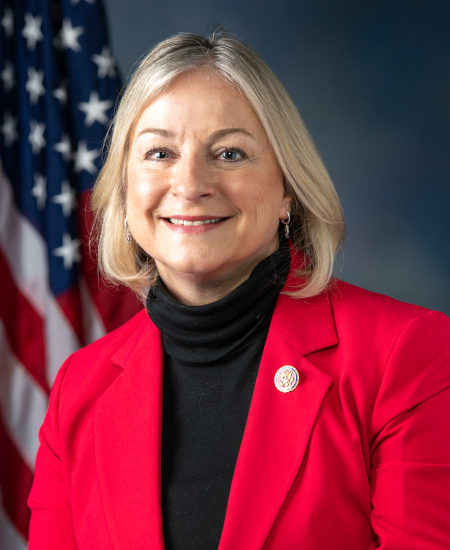
Rep. Susan Wild
Sponsored bills
Maddy summaryHRES 132 is a non-binding House resolution expressing condolences for the over 36,000 earthquake victims in Türkiye and Syria and commending humanitarian response efforts. It specifically condemns the Assad regime for obstructing aid delivery and exploiting the disaster, urging the Biden administration to open all UN border crossings for aid and prevent U.S.-funded assistance from being diverted to Syria’s government. The resolution also calls for continued enforcement of the Caesar Syria Civilian Protection Act to protect Syrian civilians. As a symbolic resolution, it does not create new law but formally directs the administration’s diplomatic approach to the crisis.
Maddy summaryHR 1204, the Protect Access to Justice for Veterans Act, limits attorney fees for veterans pursuing claims related to water contamination at Camp Lejeune, North Carolina. It caps fees at 20% for claims resolved within 180 days and 33.3% for later settlements or judgments. All settlement funds must be placed into a trust account for the veteran, with attorneys required to notify the veteran and deliver their share promptly before receiving payment. Violations, such as charging excessive fees, can result in fines up to $5,000.
Increasing Behavioral Health Treatment Act This bill repeals restrictions that generally prohibit federal payment under Medicaid for services provided in institutions for mental diseases (IMDs) for individuals under the age of 65. (Currently, states may receive payment for such services through certain mechanisms, such as through a Medicaid demonstration waiver.) The bill also requires state Medicaid programs that cover IMD services to improve patient access to outpatient and community-based behavioral health care, expand crisis stabilization services, facilitate care coordination between providers and first responders, and report specified information relating to IMD utilization and costs.
This resolution condemns Russia for committing acts of genocide against the Ukrainian people. It also calls on the United States, in cooperation with North Atlantic Treaty Organization and European Union allies, to undertake measures to support the Ukrainian government to prevent further acts of Russian genocide against the Ukrainian people.
Maddy summaryThis bill requires drug manufacturers to include patient experience data in the U.S. Food and Drug Administration's risk-benefit assessments for new drug approvals. It amends the Federal Food, Drug, and Cosmetic Act to mandate that sponsors submit and describe how patient experience data was considered during the review process. The law directly affects pharmaceutical companies seeking new drug approvals and the FDA during its evaluation. The key provision adds specific language to the approval framework, making patient experience data a formal part of the assessment.
Maddy summaryHRES 150 is a ceremonial House resolution honoring the late civil rights leader John Robert Lewis (1940-2020). It formally recognizes his lifelong commitment to nonviolent activism, including his leadership in the Civil Rights Movement, the 1965 Selma voting rights march ("Bloody Sunday"), and his 30+ years serving as a U.S. Representative from Georgia. The resolution specifically commends his "towering achievements in the nonviolent struggle for civil rights" and his dedication to building the "Beloved Community" through justice and equality. As a commemorative resolution, it has no policy impact but serves as an official tribute to Lewis's legacy for the public and Congress.
Transparent and Accessible Sanctions Coordinating Office Act or the TASCO Act This bill requires the President to ensure that all materials related to the imposition of sanctions are available in a consolidated, machine-readable database. The bill also establishes the Transparent and Accessible Sanctions Coordinating Office (TASCO) within the executive branch. TASCO must set up a publicly available database of individuals and entities subject to U.S. sanctions. The database must include sanctions data from various federal agencies, including the Department of the Treasury, Department of Commerce, and Department of State.
Maddy summaryHR 724, the Arctic Refuge Protection Act, repeals the existing oil and gas program for the Arctic National Wildlife Refuge in Alaska and designates approximately 1.56 million acres of the refuge's coastal plain as federal wilderness. This bill directly affects the Arctic Refuge by permanently prohibiting oil and gas leasing and development in that specific area. The key mechanism is adding the designated land to the National Wilderness Preservation System under the Wilderness Act, requiring it to be managed for its natural conditions. This change legally protects the area from future fossil fuel extraction activities.
Maddy summaryThis resolution allocates $9,276,290 for the operational expenses of the House Committee on Ethics during the 118th Congress. It specifies $4,517,066 for the 2023-2024 session and $4,759,224 for the 2024-2025 session, covering staff salaries and committee costs. The funding is drawn from the House's designated committee expense accounts. This procedural resolution directly affects the Committee on Ethics' budgeting and operations.