Improving Child Care for Working Families Act of 2023 This bill increases the limitation on the exclusion from employee gross income for employer-paid dependent care assistance from $5,000 to $10,500.
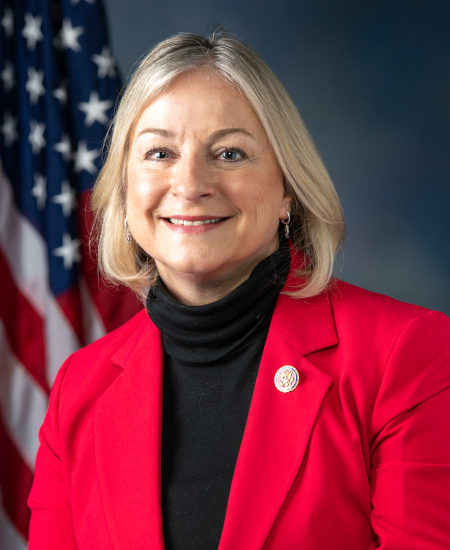
Rep. Susan Wild
Sponsored bills
Maddy summaryHR 1387, the Civics Learning Act of 2023, amends the Elementary and Secondary Education Act to strengthen civics education in public schools. It requires states to prioritize innovative civics teaching - including lessons on the Constitution, civil rights history, and community engagement - and allocates $70 million for grants to schools, with specific funding targets (30% for elementary, 30% for middle, max 40% for high school). The bill directly affects public elementary, middle, and high schools, particularly those serving high-need communities, by mandating new curriculum activities like service learning, student governance participation, and after-school programs. Grants must include reporting on how schools meet civics education goals, with the Department of Education required to submit annual progress reports to Congress.

Advancing Safe Medications for Moms and Babies Act of 2023 This bill establishes programs and requirements to support the inclusion of pregnant and lactating women in clinical research. For example, the bill requires the Department of Health and Human Services to align the Food and Drug Administration's regulations for human subjects in clinical trials with other departmental regulations for pregnant women in clinical research. The bill also establishes (1) a national online clearinghouse with information about clinical trials that enroll pregnant and lactating women, (2) an advisory committee to help coordinate federal activities with respect to clinical research for pregnant and lactating women, and (3) an educational campaign on the importance of including pregnant and lactating women in clinical research. The National Institutes of Health must also prioritize certain research projects on new and existing medications for pregnant and lactating women based on need, feasibility, and the potential impact of the research.
Maddy summaryHR 1322 expands federal retirement benefits to include specific non-traditional law enforcement roles. It adds IRS employees focused on tax collection, U.S. Postal Inspection Service staff, Department of Veterans Affairs police officers, and U.S. Customs and Border Protection seized property specialists to the definition of "law enforcement officer" under federal retirement systems. Current employees in these newly covered positions must elect to pay deposits for past service to receive full retirement credit, while their agencies must contribute additional funds for that past service. The bill also temporarily prevents mandatory separation for current law enforcement officers for three years after enactment.
Maddy summaryThe Military Spouse Hiring Act expands the Work Opportunity Tax Credit to include military spouses. Employers who hire a spouse of an active-duty military member - certified by a local agency as meeting eligibility requirements on the hiring date - can claim this tax credit. The credit reduces the employer's federal tax liability for hiring such individuals. This provision applies to new hires after the bill's enactment date.
Maddy summaryThe Peace Corps Reauthorization Act of 2023 makes several key updates to support Peace Corps volunteers. It increases readjustment allowances from $125 to $375, establishes protocols for safely returning volunteers whose service was interrupted by catastrophic events, and improves health care provisions including mental health services. The bill extends noncompetitive hiring eligibility for returning volunteers for up to three years and implements a zero-tolerance policy for illegal drug use. It also adds protections against retaliation for volunteers who report issues related to waste, fraud, or safety concerns. These changes aim to better support volunteers before, during, and after their service.
Maddy summaryThe United States Foundation for International Conservation Act of 2023 establishes a new independent foundation to provide long-term funding for the management of protected areas and conservation projects in eligible countries. The Foundation will be governed by a Board with government officials and private sector representatives, and it will fund projects that require non-U.S. Government funding to match the U.S. funding provided. Projects must demonstrate community support, environmental safeguards, and economic benefits for local communities. The Foundation will operate for 10 years with $100 million authorized annually for fiscal years 2024-2033, and must report annually to Congress on its activities and outcomes.
Maddy summaryThis bill establishes pay equity for federal firefighters by adjusting how their retirement benefits are calculated and setting a standard workweek. It requires retirement annuities to include overtime hours worked as part of a firefighter's regular schedule (e.g., overtime during standard shifts), rather than excluding them. The bill also mandates a maximum 60-hour regular workweek for federal firefighters, set by the Office of Personnel Management within one year of enactment. These changes directly affect federal firefighters, aiming to improve pay comparability with municipal firefighters and other federal employees while supporting recruitment and retention.
Maddy summaryHR 1247 would award a Congressional Gold Medal to the Freedom Riders collectively, honoring their pivotal role in challenging segregation in interstate travel during the Civil Rights movement. The medal, to be struck by the U.S. Mint and displayed at the Smithsonian Institution, recognizes their nonviolent protests that led to the 1961 federal ban on segregation in interstate public facilities. This is a symbolic tribute with no legal effect, as the bill does not create new policies or alter existing laws.
Maddy summaryThe Richard L. Trumka Protecting the Right to Organize Act of 2023 strengthens workers' rights to organize unions by making it harder for employers to interfere with organizing efforts. Key provisions include changing the definition of "employee" to make it more difficult to classify workers as independent contractors, prohibiting employers from threatening to permanently replace striking workers, and requiring employers to provide voter lists for union elections. The bill also creates a new electronic voting system for union elections, strengthens whistleblower protections for workers reporting labor violations, and increases penalties for unfair labor practices. These changes directly affect workers seeking to form unions, employers who may interfere with organizing, and labor organizations. The bill aims to make it easier for workers to exercise their right to collective bargaining under the National Labor Relations Act.