

Maddy summaryHR 5492, the Veteran Families Health Services Act of 2023, provides fertility treatment, counseling, and adoption assistance to military members and veterans with infertility conditions. The bill requires the Department of Defense to offer fertility preservation services like cryopreservation before deployment or hazardous assignments, and to cover fertility treatments including in vitro fertilization for current service members. For veterans, it adds fertility treatment and counseling to VA medical services, allows adoption assistance up to the cost of three adoptions, and mandates coordination between military and VA health systems. These provisions apply regardless of sex, gender identity, sexual orientation, or marital status, and are designed to support military families affected by service-related infertility.
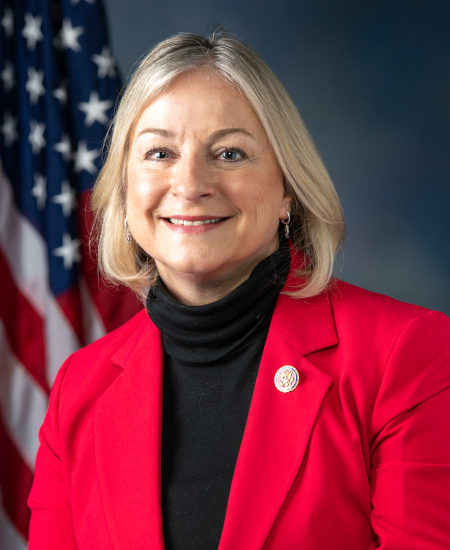
Rep. Susan Wild
Sponsored bills
Maddy summaryThe Better CARE for Animals Act of 2023 amends the Animal Welfare Act to strengthen enforcement of animal welfare standards. It gives the Attorney General authority to bring civil cases for violations, including seeking penalties up to $10,000 per day per violation and injunctions to remove or relocate animals. The bill also requires the Secretary of Agriculture and Attorney General to coordinate through a new Memorandum of Understanding, focusing on repeat violators. These changes directly affect dealers, exhibitors, and enforcement agencies by expanding civil enforcement tools and clarifying jurisdiction over rule violations.
Maddy summaryThis bill extends existing programs that provide payments to counties and states with federal land, primarily to support local schools and communities. It updates key deadlines, extending secure payments through 2026, special project authorities through 2029, and county fund expenditure authority through 2028. A new pilot program allows regional foresters to appoint resource advisory committee members directly, with this authority ending October 1, 2028. These changes directly affect rural counties and states managing federal lands, maintaining current funding mechanisms without altering eligibility or payment amounts.
Maddy summaryHR 4845, the Food Secure Strikers Act of 2023, amends the Food and Nutrition Act to remove a restriction that previously disqualified workers from the Supplemental Nutrition Assistance Program (SNAP) if they were on strike. The bill changes eligibility rules so that striking workers are no longer automatically ineligible for SNAP benefits solely because they are participating in a labor strike. This change directly affects workers involved in strikes who rely on SNAP for food assistance, ensuring they can access benefits during labor disputes. The key provision removes specific language from Section 6(d) of the Food and Nutrition Act that had barred strike participants from SNAP enrollment.
Maddy summaryThe John R. Lewis Voting Rights Advancement Act of 2023 would strengthen the Voting Rights Act of 1965 by updating the criteria for which states and localities must obtain federal preclearance before changing voting practices. It would establish new standards for proving vote dilution and vote denial by requiring courts to consider historical discrimination, racial polarization in voting, and whether voting practices disproportionately burden minority voters. The bill would also require states and localities to provide public notice of voting changes and share demographic data about polling locations. These changes would primarily affect jurisdictions with a history of voting rights violations, aiming to prevent discriminatory voting practices before they take effect.
Maddy summaryHRES 691 is a symbolic resolution designating September 17-23, 2023, as "Community School Coordinators Appreciation Week." It does not create new laws or affect any policies; instead, it formally recognizes community school coordinators who help build partnerships between schools and communities. The resolution thanks these coordinators for their work supporting students and families, and encourages public participation in events during that week. This is purely a gesture of appreciation, not a policy change.
Maddy summaryHRES 697 is a non-binding resolution expressing the U.S. House of Representatives' concerns about China's "Made in China 2025" (MIC2025) industrial plan and associated actions. The resolution cites alleged Chinese practices - including state-backed intellectual property theft, forced labor, unfair subsidies, and cyber espionage - as undermining U.S. competitiveness in key technology sectors like semiconductors, AI, and clean energy. It directly affects U.S. businesses, researchers, and government entities operating in these MIC2025 priority areas, urging them to strengthen security measures against foreign interference. The resolution calls for coordinated U.S. public-private efforts to protect innovation but does not impose new legal requirements.
Maddy summaryThis symbolic resolution designates September 17, 2023, as "National Physician Suicide Awareness Day" to raise public awareness about high suicide rates among physicians and reduce mental health stigma. It urges the House to support national discussions on physician mental health, honor those lost to suicide, and encourage research into barriers preventing help-seeking behavior. The resolution does not create new laws, allocate funding, or impose obligations - it is a non-binding call for awareness and education.
This resolution expresses support for the goals and ideals of PCOS Awareness Month. Polycystic ovary syndrome (PCOS) is caused by a hormone imbalance. Symptoms can include infertility, weight gain, excess hair growth, and acne.
Maddy summaryThe Humane Cosmetics Act of 2023 bans cosmetic animal testing in the United States, prohibiting companies from conducting or contracting such testing after its enactment (effective 1 year later). It also bans selling or transporting cosmetics developed using animal testing conducted after that date within U.S. interstate commerce. The law directly affects cosmetic manufacturers, retailers, and suppliers operating in the U.S. market, requiring them to use non-animal testing methods for safety evaluations. Exceptions exist for foreign regulatory requirements or when no alternative testing methods are available for specific ingredients.