

Maddy summaryHR 6451, the Mental Health Justice Act of 2023, provides $250 million in federal grants to states, tribes, and localities to hire mental health professionals as first responders for specific emergencies. It directs these professionals to replace police in situations involving mental health crises, substance use, or intellectual/developmental disabilities - such as when a 911 caller describes a mental health emergency or a first responder identifies someone needing mental health support. The bill requires grantees to train responders in de-escalation techniques, link individuals to community-based services (not incarceration), and report on outcomes like reduced arrests or use of force. It also mandates data collection on demographics and prevents funneling people into institutional settings, with annual reports to Congress on program effectiveness.
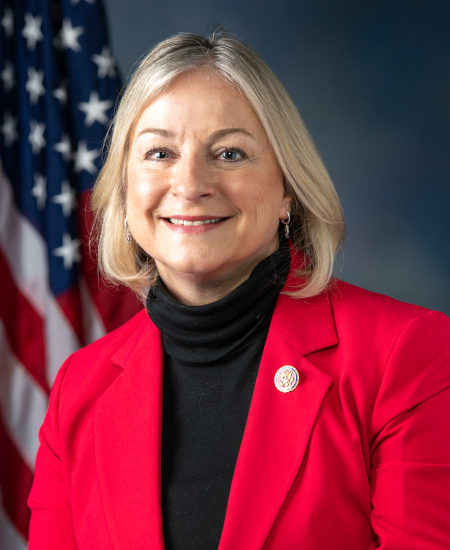
Rep. Susan Wild
Sponsored bills
Maddy summaryThis resolution (HRES 872) reaffirms the U.S. commitment to transatlantic cooperation in combating antisemitism across Europe. It calls on European governments and the European Union to implement national strategies against antisemitism, standardize data collection on incidents, share best practices, and include Holocaust education in school curricula. The resolution specifically urges European countries to address rising antisemitic incidents documented by reports from ADL and Tel Aviv University, which show widespread antisemitic attitudes in multiple European nations. It does not create new laws but emphasizes collaboration to protect Jewish communities and counter online hate. The resolution directly affects European governments and Jewish communities in Europe through its recommendations for policy action.
Maddy summaryHR 3601, the Student Veteran Work Study Modernization Act, expands eligibility for a Veterans Affairs work-study allowance to veterans enrolled at least half-time in rehabilitation, education, or training programs - lowering the previous requirement from three-quarter-time. The bill establishes a five-year pilot program to test this change, requiring the VA to apply the same allowance rules to these veterans as to other participants, except for the enrollment threshold. It also mandates annual reports to Congress tracking participation numbers, four-year degree completion rates, and full-time VA employment outcomes for participants. The policy directly affects veterans seeking education benefits while balancing academic and personal responsibilities.
Maddy summaryThe Veteran Improvement Commercial Driver License Act of 2023 modifies rules for veterans' educational benefits to streamline approval of commercial driver education programs at branch locations. It allows a branch of an educational institution to be exempt from full approval requirements if it is appropriately licensed and uses the same curriculum as an approved main location. Schools must submit an annual report to the Department of Veterans Affairs verifying curriculum consistency, and the VA may withhold this exemption if needed. The changes will take effect 180 days after the VA establishes reporting rules, which must be finalized within 180 days of the bill's enactment.
Maddy summaryThis bill establishes a competitive grant program to improve recycling access in underserved communities - defined as areas lacking full recycling services due to cost, distance, or insufficient processing capacity. It allocates $30 million annually (2023-2027) for grants to eligible entities like states, local governments, tribes, or public-private partnerships to fund projects such as expanding transfer stations, adding curbside collection, or creating hub-and-spoke infrastructure networks. Grants range from $500,000 to $15 million per project, with 70% of funds reserved for single or multiple underserved communities, and require 90% federal cost coverage (with possible waivers for financial hardship). The program prohibits grant use for education and mandates a congressional report on implementation and outcomes within two years.
Maddy summaryThis resolution designates the week beginning November 13, 2023, as "National Apprenticeship Week" through symbolic congressional support. It does not create new laws or programs but formally recognizes the value of registered apprenticeships in providing paid on-the-job training, industry credentials, and career pathways. The resolution highlights apprenticeships' role in developing skilled workers, supporting high-wage sectors like healthcare and green energy, and promoting diversity in training opportunities. It aims to increase public awareness of apprenticeships as an effective "earn-and-learn" model for workers and employers.
Maddy summaryHR 6288, the Data for Pediatric Brain Cancer Act of 2023, establishes a federal program to create a real-world data registry for children with rare brain tumors, initially focusing on atypical teratoid rhabdoid tumor (ATRT). The bill directs the Secretary to develop and maintain a registry collecting treatment data from routine clinical practice, which can be used to form external control groups for clinical trials when randomized trials are impractical due to the disease's rarity. It authorizes $2 million for fiscal year 2025 to fund grants for academic institutions and support data infrastructure, analysis, and collaboration with experts. This registry aims to accelerate research for pediatric brain cancer treatments by providing real-world data benchmarks for trial design, directly affecting children with rare brain tumors and the research community studying them.
Maddy summaryThis bill would authorize the U.S. government to confiscate Russian sovereign assets held in U.S. jurisdiction and use those funds to support Ukraine's reconstruction and humanitarian needs following Russia's invasion. It prohibits releasing these blocked assets until Russia fully compensates Ukraine or agrees to an international compensation mechanism. The bill establishes a "Ukraine Support Fund" to hold confiscated assets and requires regular congressional reporting on how these funds are allocated for Ukraine's recovery. It also includes provisions for international coordination with allies on sanctions and asset management related to Russia's invasion of Ukraine.
Maddy summaryThe SHIP Act imposes sanctions on foreign entities that knowingly handle Iranian petroleum, targeting those involved in port operations, transportation, refining, or ship-to-ship transfers of Iranian oil. Starting 90 days after enactment, the President must block assets, deny visas, and impose penalties on individuals or companies engaging in these activities, including family members or owners of sanctioned entities. It requires annual reports tracking Iran's oil exports, revenues, and key players like shipping companies and ports. The sanctions terminate if the President certifies Iran has stopped supporting terrorism and dismantled weapons programs.
Maddy summaryThe ADOPT Act of 2023 makes it a federal crime for unlicensed individuals or organizations to provide adoption intermediary services, place adoption advertisements, or offer payments exceeding $500 to parents placing children for adoption. It directly affects prospective adoptive parents, placing parents, and unlicensed adoption facilitators by prohibiting these activities while exempting licensed agencies and attorneys. Key provisions criminalize unlicensed brokering, restrict certain advertising, and limit payments to placing parents, with penalties including fines up to $100,000 or 5 years in prison per violation. The law aims to prevent exploitation and commodification of children in domestic adoptions by requiring services through licensed providers.