

Maddy summaryThe ARMAS Act of 2023 transfers regulatory control of certain firearm exports from the Department of Commerce to the Department of State. It designates Mexico, Guatemala, Honduras, El Salvador, Haiti, Jamaica, and other Caribbean nations as "covered countries" requiring special oversight for firearm exports. The bill requires the State Department to develop strategies to disrupt illegal firearm trafficking to these countries, implement tracking systems for firearms, and submit annual reports on exports. It establishes certification requirements for exports to covered countries, including detailed reporting to Congress about proposed exports. The law aims to improve tracking of firearms used in violence and reduce illegal trafficking that fuels crime and violence in the region.
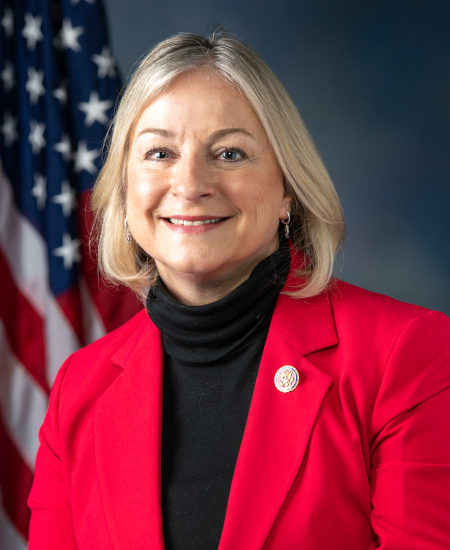
Rep. Susan Wild
Sponsored bills
Maddy summaryThe PLAN for School Safety Act of 2023 creates a federal program to fund State and regional centers that help schools develop and improve individualized safety plans. These centers, established by eligible entities like state education agencies or Tribal organizations, provide tailored consulting on school safety, mental health, and violence prevention using research-backed methods. The program requires centers to cover 5% of activity costs and prioritizes support for schools in rural, Tribal, or low-resourced communities. Annual reports to Congress will track implementation progress, effectiveness, and how centers assist schools in accessing funding for safety initiatives.
Maddy summaryThe Elizabeth Dole Home Care Act of 2023 increases the expenditure cap for home- and community-based care for veterans from 65% to 100% of costs, with exceptions for certain cases based on clinical need and geographic factors. It establishes new programs including Veteran-Directed Care, which allows veterans to select and manage their own in-home care services, and Home-Based Primary Care, which provides in-home health care overseen by VA providers. The bill requires improved coordination with existing programs like the Program of All-Inclusive Care for the Elderly (PACE) and mandates a centralized website with information about available services. It specifically targets veterans who would otherwise require nursing home care or face increased risk of hospitalization, and includes provisions to address home health aide shortages through pilot programs.
Maddy summaryThis bill changes the standard for proving discrimination under federal law. Workers can now show that a protected characteristic (like age, race, sex, religion, national origin, or disability) was a motivating factor in an employment decision - even if other factors were also involved - rather than proving it was the sole cause. If a violation is found and the employer shows the same decision would have been made without the discriminatory factor, courts can only grant limited remedies like injunctive relief or attorney fees, not damages or reinstatement. This applies to claims under the Age Discrimination in Employment Act (ADEA), Title VII, the Americans with Disabilities Act (ADA), and the Rehabilitation Act, affecting workers facing discrimination and the employers they sue.
Maddy summaryHRES 874 is a symbolic resolution expressing the House's support for designating November as "Prematurity Awareness Month." It does not create new laws or alter funding but urges the public, organizations, and communities to observe the month through events, promote awareness, and support preterm birth prevention programs. The resolution highlights statistics on preterm births (383,000 babies born preterm in 2021) and health disparities, but its sole action is endorsing the awareness designation. As a non-binding resolution, it has no direct impact on policy or affected individuals beyond raising public visibility.
Maddy summaryHRES 870 is a symbolic House resolution supporting National Rural Health Day, observed annually on the third Thursday of November. It recognizes rural health care providers and the 60+ million people living in rural communities who face challenges like hospital closures, limited access to care, and health disparities. The resolution expresses commitment to improving rural health care accessibility and affordability but includes no new funding, programs, or policy changes - only a formal acknowledgment of existing efforts. It directly affects rural communities by honoring their health care contributions through a non-binding statement.
Billionaire Minimum Income Tax Act This bill imposes a minimum tax on individual taxpayers whose net worth for the taxable year exceeds $100 million. The tax is equal to 25% of the sum of a taxpayer's taxable income, plus net unrealized gains for the taxable year. The tax may not exceed 40% of the amount by which the taxpayer's net worth exceeds $100 million.
Maddy summaryHRES 895 is a resolution introduced in the U.S. House of Representatives on November 28, 2023, that condemns statements by some members of Congress calling for the expulsion of Palestinians from the United States. The resolution states such rhetoric is un-American, bigoted, and dangerous because it unfairly conflates Palestinians with Hamas and ignores the U.S. history of welcoming immigrants of all backgrounds. It specifically references H.R. 6211 (introduced November 2, 2023) as an example of harmful rhetoric. This resolution has no legal effect - it is a symbolic statement expressing the House's position.
Maddy summaryHRES 793 is a resolution passed by the U.S. House of Representatives calling on Hamas to immediately release all 199 hostages taken during Hamas' October 7, 2023 attack on Israel. The resolution condemns Hamas for the attack, the taking of hostages, and threats against hostages, while stating that holding hostages violates international humanitarian law under the Geneva Conventions. It demands the immediate release of all hostages and expresses sympathy for victims and their families. As a symbolic resolution, it does not create legal obligations but formally expresses the House's position.
Maddy summaryThis bill establishes a two-year pilot program within the Department of Veterans Affairs (VA) to improve data collection and analysis of suicides and suicide attempts by veterans occurring on VA property (e.g., at medical centers or facilities). It creates a cross-departmental working group - including staff from mental health, health care, benefits, and cemetery offices - to conduct root cause analyses, interview families, and standardize data collection through updated reports and a unified management system. The program requires annual briefings to Congress on findings and mandates annual VA reports starting in 2025 to track trends and recommend prevention strategies. Additionally, it directs the Comptroller General to assess the VA’s suicide prevention efforts, including staffing, policies, and organizational structure.