

Maddy summaryHRES 1110 is a symbolic resolution passed by the U.S. House of Representatives in March 2024 to commemorate March 2024 as National Women’s History Month. It formally supports the month’s goals, recognizes women and organizations advancing women’s history education, and highlights the intersectional contributions of Black, Hispanic, Asian, Native American, Pacific Islander, LGBTQ+, and disabled women throughout U.S. history. The resolution has no legal effect or policy changes - it serves solely as a ceremonial acknowledgment of historical milestones and ongoing advocacy for gender equality. It directly affects all Americans by affirming the significance of women’s historical contributions through official congressional recognition.
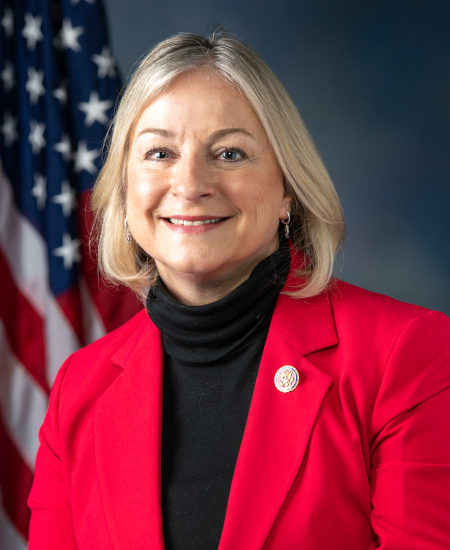
Rep. Susan Wild
Sponsored bills
Maddy summaryHR 7825, the Shrinkflation Prevention Act of 2024, would ban manufacturers from reducing product sizes (like smaller cereal boxes or thinner soap bars) without lowering the price proportionally or clearly disclosing the change. It directly affects consumer goods manufacturers by requiring the Federal Trade Commission (FTC) to create regulations prohibiting this practice within 18 months of the bill becoming law. The bill treats shrinkflation as an unfair or deceptive act under existing FTC law, allowing the FTC and state attorneys general to enforce the ban through fines, injunctions, or restitution for affected consumers. This focuses on making product size changes transparent and preventing companies from profiting from misleading downsizing without altering the price.
Maddy summaryHR 7808, the EARLY Minds Act, amends the Public Health Service Act to require states receiving federal mental health funds to include evidence-based prevention and early intervention strategies for children and adolescents in their state plans. It allows states to use up to 5% of their annual mental health allotment to support these programs, which aim to prevent, delay, or reduce the severity of mental health issues before they become serious. States must report biennially to Congress by 2025 on the programs they implement, including demographics served, outcomes like reduced care access delays, and how programs lessen the onset of serious mental illness. The bill directly affects states administering federal mental health funds and targets youth populations aged 0-18.
Maddy summaryHRES 1089 is a symbolic resolution designating March 18, 2024, as the inaugural "Health Workforce Well-Being Day of Awareness" to highlight the crisis of burnout among U.S. healthcare workers. It recognizes widespread burnout (affecting 50% of workers in 2020), associated mental health risks (like depression and suicide), and its impact on patient care and healthcare system capacity. The resolution expresses support for raising public awareness and mobilizing action across sectors - including government, health systems, and employers - to improve well-being, reduce administrative burdens, and strengthen the healthcare workforce. It does not create new laws or allocate funding, serving solely as a formal acknowledgment of an existing public health concern.
Maddy summaryThe AADAPT Act reauthorizes and expands the Project ECHO grant program to specifically address Alzheimer's disease and dementia care. It provides $1 million annually (2026-2031) for grants to eligible health care entities - such as rural clinics, tribal organizations, or community health centers - to develop online training programs for primary care providers working in underserved areas (including rural, frontier, or medically underserved communities). These programs aim to improve provider retention, increase early diagnosis of dementia, and enhance quality care. The bill requires grantees to report on outcomes and ensures funding supplements, rather than replaces, existing resources.
Maddy summaryHRES 1084 is a non-binding resolution condemning the death of Russian opposition leader Alexei Navalny in a Russian prison and demanding the release of all political prisoners in Russia. It specifically calls on the U.S. State and Treasury Departments to impose sanctions on Russian officials responsible for Navalny’s death and ongoing imprisonment of political prisoners, including U.S. citizens like Evan Gershkovich. The resolution expresses solidarity with Navalny’s family and other imprisoned activists, highlighting Russia’s systemic abuse of prisoners and politically motivated detentions. It does not create new laws but urges U.S. and allied governments to prioritize the release of political prisoners through diplomatic and economic pressure.
Maddy summaryHR 7770, the Rosie the Riveter Commemorative Coin Act, authorizes the U.S. Mint to produce and sell three commemorative coins honoring women who worked on the U.S. home front during World War II. It specifies $5 gold coins (max 50,000), $1 silver coins (max 400,000), and half-dollar coins (max 750,000), all to be issued between January 1, 2025, and December 31, 2025. Each coin sale includes a surcharge ($35 for gold, $10 for silver, $5 for half-dollar), with all surcharge funds directed to the Rosie the Riveter Trust for maintaining the Rosie the Riveter WWII Home Front National Historical Park and educational programs. The coins will feature designs reflecting the legacy of diverse women workers and must meet specific weight, diameter, and composition standards.
Maddy summaryHR 6727 establishes the United States Foundation for International Conservation, a nonprofit organization that will provide grants to support long-term management of protected and conserved areas in eligible countries. The Foundation requires a 2:1 cost match from other sources, demands host country and community consent through binding agreements, and prioritizes areas with high biodiversity or species of significant importance. It will be governed by a Board of Directors including government officials and private sector experts, operate for 10 years with $1 million authorized for 2024 and $100 million annually from 2025-2035, and must follow international conservation standards while prohibiting funding for countries supporting terrorism or violating human rights.
Maddy summaryThis bill would create a new wealth tax on individuals with significant assets, targeting those with net assets exceeding $50 million. It would tax assets between $50 million and $1 billion at 2%, and assets above $1 billion at 3% (potentially increasing to 6% if certain health care legislation is enacted). The tax would apply to individuals, married couples treated as a single taxpayer, and certain trusts, with specific valuation and reporting requirements for assets. The bill also includes $70 billion in funding over 10 years for the IRS to enforce this new tax and related reporting requirements.
Maddy summaryHR 4723 requires the U.S. President to impose sanctions on foreign individuals and entities that threaten Bosnia and Herzegovina's territorial integrity, democratic institutions, or the Dayton Peace Agreement. The President must submit a list of such persons every 90 days, triggering sanctions that block their U.S. assets and ban entry into the United States. The bill codifies existing sanctions from two executive orders and allows limited national security waivers (up to 180 days each, expiring after two years). It specifically targets actions like forming unauthorized government structures that disrupt Bosnia's central authority, violating court rulings, or engaging in government corruption.