

Maddy summaryThe GLOBE Act of 2023 requires the U.S. Department of State to document and report on violence and discrimination against LGBTQI people worldwide in annual country reports, with specific requirements to identify countries criminalizing LGBTQI status. It establishes a Special Envoy for LGBTQI Human Rights to coordinate U.S. government efforts internationally and creates targeted sanctions against foreign officials responsible for human rights violations against LGBTQI individuals, including denying visas and imposing financial penalties. The bill also includes provisions to improve U.S. foreign assistance programs to better support LGBTQI communities, reform immigration processes to better protect LGBTQI asylum seekers, and ensure inclusive policies in diplomatic and consular settings. These measures aim to advance LGBTQI rights globally through diplomatic, financial, and policy mechanisms.
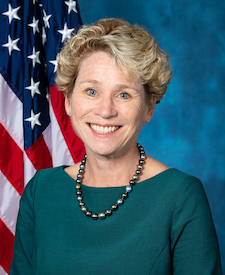
Rep. Chrissy Houlahan
Sponsored bills
Maddy summaryHR 3975, the IT Service Corps Act, amends the National and Community Service Act of 1990 to create a new digital equity program within existing AmeriCorps and service programs. The program directly supports individuals in underserved communities - particularly those facing digital access barriers, job displacement from the pandemic, or long-term unemployment - by providing IT training, industry certification support, necessary equipment (like computers and smartphones), and mentorship from IT professionals. Key provisions require collecting participant data on demographics, career backgrounds, and post-program placements to track outcomes. The bill integrates this digital equity focus into established service frameworks without creating a standalone program, aiming to improve digital literacy and workforce readiness in communities with technology access gaps.
Maddy summaryThis bill requires federal agencies collecting demographic survey data to begin including questions on sexual orientation, gender identity, and variations in sex characteristics (intersex traits) within 360 days of enactment. Agencies must review existing surveys to identify gaps, develop privacy-protective methods for collecting this data (including anonymization and data destruction protocols), and incorporate it into relevant reports within three years. The law applies to all federal surveys that collect standard demographic data (like race, ethnicity, and age), such as the census or health surveys, but does not compel individuals to disclose their status. It emphasizes maintaining confidentiality, allows limited agency waivers if standards can't be met, and mandates a congressional report on implementation within two years.
Maddy summaryThe Neighborhood Homes Investment Act creates a new tax credit for developers who rehabilitate or build affordable homes in distressed communities. The credit is calculated based on the difference between rehabilitation costs and the sale price, with homes required to be sold at affordable prices to qualified homeowners with incomes up to 140% of the local median family income. The bill targets specific "qualified census tracts" defined by high poverty rates, low homeownership, and below-average home values. Developers must ensure homes are sold to qualified homeowners who use them as primary residences for at least five years, with additional safeguards to prevent program abuse and ensure fair housing practices.
Maddy summaryHR 3850, the Pride In Mental Health Act of 2023, establishes a federal grant program to improve mental health and substance abuse services for LGBTQ+ youth (including nonbinary, intersex, and Two Spirit individuals). The bill directs the Health and Human Services Secretary to fund eligible organizations to provide trauma-informed care, cultural competency training for caregivers, school bullying prevention guidelines, and family support resources. It explicitly prohibits grant funds from being used for conversion therapy or advertising related to such therapy. The bill also requires data collection on LGBTQ+ youth mental health and a federal survey to measure psychological distress.
Maddy summaryHR 3879, the Supporting Families through Addiction Act of 2023, provides federal grants to nonprofit organizations that support families with members struggling with substance use disorder. The bill authorizes $5 million annually (2024-2028) to fund community-based family support services, including education, stigma reduction, and connecting families to treatment resources. Grants cover up to 85% of costs and require organizations to be led by experts, including families with lived experience. This directly affects families navigating addiction in their households by expanding access to evidence-based support programs and improving provider knowledge about family impacts.
Maddy summaryHR 3805, the KIDS Health Act of 2023, establishes a federal demonstration project to test integrated "whole child health" models in up to 15 states. It authorizes $125 million to fund states in designing and implementing community-based programs that address children’s physical, mental, emotional, developmental, and social health needs - specifically for Medicaid-eligible children under 21. Key provisions require states to conduct comprehensive needs assessments, coordinate services across Medicaid, schools, and community partners, adopt value-based payment systems, and integrate primary care with mental health and substance use services. The 48-72 month demonstration will mandate regular reporting on outcomes, health disparities, and best practices, with final evaluation reports to Congress.
Maddy summaryThe American Family Act establishes a monthly child tax credit of $250 per month for each child under age 6 and $300 per month for each child aged 6-18, with income limits of $150,000 for joint filers and $112,500 for other filers. The credit is refundable, meaning it can be paid even if the taxpayer owes no income tax, and will be adjusted annually for inflation. The bill includes detailed rules for determining eligibility, including requirements that the child resides with the taxpayer for more than half the month and provisions to prevent fraud through recapture of improperly received payments. The credit will be paid monthly in advance rather than as a single annual payment, with specific mechanisms for calculating and distributing the payments.
Maddy summaryHR 3869, the Trucker Bathroom Access Act, requires certain businesses (like warehouses, distribution centers, and shipping/receiving facilities) to allow commercial truck drivers access to their restrooms when delivering or waiting to transport goods. It specifically applies to drivers regulated by the Department of Transportation and excludes small businesses (under 800 sq ft) with employee-only restrooms. The bill mandates that businesses provide access without requiring physical restroom modifications, and for port terminals, requires operators to provide sufficient restrooms with parking access for large cargo trucks (over 33,000 lbs) while avoiding obvious safety risks.
Maddy summaryHR 3861, the Filing Relief for Natural Disasters Act, extends federal tax filing deadlines for taxpayers affected by disasters. It allows state governors (or the D.C. mayor) to request postponement of tax deadlines when a disaster is declared under *state* law, not just federal declarations. The bill increases the maximum extension period from 60 to 120 days for affected taxpayers in all U.S. states, territories (including Puerto Rico, Guam, and the U.S. Virgin Islands), and the District of Columbia. This change directly impacts individuals and businesses needing more time to file taxes after qualifying natural disasters.