

Maddy summaryHR 698, the Assault Weapons Ban of 2023, prohibits the sale, manufacture, transfer, and possession of specific firearms and ammunition devices commonly referred to as "assault weapons" and "large capacity magazines" in interstate commerce. The bill defines "semiautomatic assault weapons" to include rifles like AR-15s and AK-47s, as well as firearms with specific features such as folding stocks, pistol grips, threaded barrels, and detachable magazines holding more than 15 rounds. It exempts law enforcement, military, antique firearms, and weapons already lawfully owned before the law's enactment (known as "grandfathered" weapons). The bill also requires new identification markings on these weapons and large capacity magazines, and adds background check requirements for transfers of grandfathered weapons.
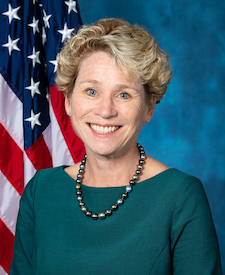
Rep. Chrissy Houlahan
Sponsored bills
Maddy summaryHRES 455 is a symbolic House resolution expressing support for Black service members who died protecting the U.S. during military conflicts while facing racism in the Armed Forces and systemic inequities. It acknowledges their historical contributions and struggles, citing examples from the Revolutionary War through the Global War on Terror. The resolution has no legislative effect - it solely affirms recognition on Memorial Day without proposing policy changes or requiring action. As a non-binding resolution, it directly affects public acknowledgment of this group but does not alter military policies or address systemic issues.
Maddy summaryHR 3713 creates federal grants to fund comprehensive school-based mental health programs for students in grades K-12, including those in Bureau of Indian Education schools. It requires partnerships between schools and community mental health providers to deliver trauma-informed, culturally appropriate services addressing suicide risk, grief, violence, and trauma exposure. The bill authorizes $300 million annually (2024-2027) for these programs, mandating privacy protections under HIPAA and FERPA, and requires annual reporting on program effectiveness.
Maddy summaryHR 3631, the State Strategic Stockpile Act of 2023, extends the deadline for a federal pilot program supporting state medical stockpiles from 2024 to 2028 by amending Section 319F-2(i)(9) of the Public Health Service Act. This procedural bill directly affects states participating in the existing pilot program for building medical supply reserves. It makes no new policy changes or funding commitments, only prolonging the current program's authorization period. The extension applies solely to the pilot program's timeline, not to the program's scope or requirements.
Maddy summaryHR 3577, the Medical and Health Stockpile Accountability Act of 2023, requires the federal government to create an automated tracking system for critical medical supplies held in the national stockpile and shared with state, tribal, local, and private entities like hospitals and manufacturers. The system must provide near real-time data on supply levels, establish standardized reporting for product categories and inventory, and ensure private entities' data remains confidential and cannot be used for reallocation or commercial purposes. It mandates annual testing of the system, provides $250 million for development (2024-2029), and offers support to smaller healthcare facilities without automated tracking systems. The bill directly affects federal agencies managing the stockpile, healthcare providers, and medical supply manufacturers by standardizing and securing supply chain data during emergencies.
Maddy summaryHRES 439 is a non-binding resolution expressing the House of Representatives' support for keeping the U.S. Postal Service (USPS) as an independent federal agency, not subject to privatization. It highlights USPS's constitutional role, self-sustaining nature (relying on service revenue, not taxpayer funds), and its importance to rural communities, e-commerce, and over 600,000 employees. The resolution urges Congress to take action to preserve USPS's independence, emphasizing that privatization could raise prices, reduce services, and harm the nation's mail infrastructure. As a procedural resolution, it does not change law but formally states the House's position.
Maddy summaryHR 3592, the Donut Dollies Congressional Gold Medal Act, would award a Congressional Gold Medal to the 627 women who served as "Donut Dollies" in the Red Cross Supplemental Recreation Activities Overseas (SRAO) program during the Vietnam War (1962-1973). The bill directs the Treasury to design and strike the medal, which would be presented by congressional leaders and then given to the Smithsonian Institution for public display and research. It also authorizes the sale of bronze duplicates at cost to cover production expenses. This commemorative measure recognizes the service of these women, who provided recreational support to U.S. troops across 28 locations in Vietnam while facing war-zone dangers.
Maddy summaryThis bill requires that AM radio receivers be included as standard equipment in all new motor vehicles (such as cars and trucks) sold in the United States, with a rule to be issued by the Department of Transportation within one year. The rule must ensure AM radio is easily accessible on the dashboard and allows manufacturers to use digital AM radio technology instead of traditional AM. During the one-year period between the bill's enactment and the rule's effective date, manufacturers must clearly label vehicles without AM radio. The bill also directs a study to evaluate whether an alternative system could deliver emergency alerts as reliably as AM radio across the country, especially during crises.
Support, Treatment, and Overdose Prevention of Fentanyl Overdoses Act of 2023 or the STOP Fentanyl Overdoses Act of 2023 This bill addresses data collection, treatment, harm reduction, and other issues related to substance misuse and addiction. It particularly focuses on opioids, fentanyl, and related substances. Specifically, the bill expands surveillance of fentanyl and related substances. This includes requiring a study on how to track overdoses by type of drug (including fentanyl) and awarding grants to states for collecting data about fentanyl-involved overdoses. The bill also provides for (1) training on detecting and handling fentanyl for law enforcement, and (2) grants for forensic laboratories to facilitate surveillance of controlled substances seized by law enforcement. Additionally, the bill establishes and modifies requirements to increase access to treatment and prevention services. For example, the Bureau of Prisons must make certain services, including medication-assisted treatments, available to individuals in its custody. The bill also establishes grants and requires other efforts to expand access to medications that temporarily reverse opioid overdoses (e.g., naloxone) and related harm reduction activities. Furthermore, the bill extends, subject to some conditions, liability protections for those who administer aid in an emergency (commonly known as Good Samaritan laws) to individuals who administer opioid overdose reversal drugs and to individuals who seek medical attention for themselves or on behalf of another for a drug overdose. The bill also requires multiple reports, including a report by the Department of State on foreign sources of certain drugs.
Maddy summary# Comprehensive Summary: Maternal Health and Vaccination Legislation This proposed legislation establishes a comprehensive framework to improve maternal health outcomes across multiple dimensions, with a strong focus on equity and addressing systemic disparities. The bill is organized into 13 titles covering various aspects of maternal health care. ## Key Focus Areas 1. **Maternal Health Equity**: The legislation emphasizes reducing racial and ethnic disparities in maternal health outcomes, with specific provisions targeting communities of color and underserved populations. 2. **Incarcerated Mothers**: Includes provisions to end shackling of pregnant individuals in correctional facilities and establishes programs for maternal health care in prisons and jails. 3. **Technology and Telehealth**: Creates grant programs for telehealth models, technology-enabled collaborative learning, and digital tools to improve access to maternal care. 4. **Climate Change Impact**: Addresses how climate change affects maternal and infant health, with a focus on vulnerable populations. 5. **Public Health Emergencies**: Establishes protocols for maternal care during public health crises like pandemics. 6. **Vaccinations**: Expands maternal vaccination awareness and equity campaigns. ## Major Provisions **Maternal Vaccination Campaign (Title XIII)**: - Expands awareness campaigns to specifically target pregnant and postpartum individuals - Allocates $17 million annually (2024-2028) for vaccination outreach - Includes specific efforts to increase vaccination rates among racial/ethnic minority groups **Technology and Telehealth (Titles IX)**: - $6 million annually for technology-enabled collaborative learning models - $6 million annually for digital tools to promote equity in maternal health - Creates a demonstration project for alternative payment models in maternal care **Climate Change and Maternal Health (Title XII)**: - $100 million for a grant program to protect vulnerable mothers and babies from climate change risks - $5 million for education and training at health profession schools - Establishes a National Institutes of Health Consortium on Birth and Climate Change Research **Incarcerated Mothers (Title VIII)**: - Requires 25% grant reduction for states that don't restrict restraints on pregnant incarcerated individuals - Establishes model programs in Bureau of Prisons facilities for pregnant and postpartum incarcerated individuals - $10 million annually for State and local prison and jail programs **Public Health Emergency Response (Title XI)**: - $100 million for data collection on maternal health during public health emergencies - $30 million for expanding maternal mortality reviews - $45 million for Pregnancy Risk Assessment Monitoring System (PRAMS) - $15 million for research on public health emergencies' impact on maternal health ## Cross-Cutting Themes - **Equity Focus**: Nearly every provision includes specific measures to address racial and ethnic disparities - **Data Collection**: Strong emphasis on collecting and analyzing demographic data - **Community Involvement**: Requires input from community-based organizations and affected populations - **Interagency Coordination**: Mandates collaboration between multiple federal agencies - **Long-Term Investment**: All funding is allocated for 5-year periods (2024-2028) The legislation represents a comprehensive, multi-faceted approach to improving maternal health outcomes in the United States, with particular attention to vulnerable populations and systemic barriers that contribute to poor maternal health outcomes.