

Maddy summaryHR 3755, the Industrial Hemp Act of 2023, clarifies federal definitions and regulations for industrial hemp production. It defines industrial hemp as the *Cannabis sativa L. plant* (excluding cannabinoid resin from stalks or seeds) and requires hemp farmers to designate their crop as "industrial hemp" or "hemp for any purpose" when applying for state or federal programs. The bill mandates visual inspections for industrial hemp producers, with documentation requirements (like seed tags or harvest records) if inspections fail, and imposes a 5-year program ineligibility for producers who knowingly grow crops inconsistent with their designation. This directly affects hemp farmers, state regulators, and the agricultural industry by creating a clearer legal framework for industrial hemp cultivation.
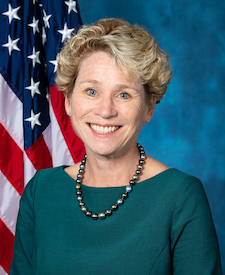
Rep. Chrissy Houlahan
Sponsored bills
Maddy summaryThe SAFE Act of 2023 extends a 2018 law that prohibits slaughtering animals for human consumption to include horses, donkeys, and other equine animals, such as ponies. It amends Section 12515 of the Agriculture Improvement Act of 2018 by updating the language to replace "dog or cat" with "dog, cat, or equine" in both the section title and the main prohibition. This change directly affects the livestock industry and slaughter facilities by banning the processing of equines for food. The bill modifies existing law without adding new enforcement mechanisms, closing a gap in animal protection.
Maddy summaryThe Equality Act (HR 15) would amend federal civil rights laws to explicitly prohibit discrimination based on sexual orientation and gender identity in public accommodations, housing, employment, credit, and jury service. It amends the Civil Rights Act of 1964 to include sexual orientation and gender identity as protected characteristics under existing sex discrimination provisions. The bill would require businesses, housing providers, employers, and government entities to provide equal access and services without regard to a person's sexual orientation or gender identity. It includes specific definitions for gender identity and sexual orientation to clarify protections across all covered areas. The law would apply to all entities covered by the Civil Rights Act of 1964, including those receiving federal funding.
Secure E-Waste Export and Recycling Act This bill prohibits the export or reexport of electronic waste, such as computers, televisions, and consumer electronics, subject to certain exemptions (e.g., items that meet specific criteria designed to ensure they do not become the source of counterfeit products).
Maddy summaryHR 4121, the Right to Contraception Act, establishes a federal statutory right for individuals to access contraceptives and contraception services without government restriction or coercion, directly affecting all people seeking reproductive care and health care providers. The bill prohibits state or federal laws that limit access to contraceptives (defined broadly to include devices, drugs, and fertility methods), prevent individuals from obtaining or using them, or allow providers to refuse services based on personal beliefs. It preempts conflicting state laws, requires any restrictions to be justified by "clear and convincing evidence" of advancing access with no less restrictive alternative, and allows private lawsuits to challenge violations. The Act applies nationwide to all health care providers and individuals, protecting access regardless of factors like race, income, or location.
Maddy summaryHR 4040, the Recycling and Composting Accountability Act, requires federal agencies and states to collect and report detailed data on recycling and composting practices. It mandates the EPA to create reports on composting infrastructure capabilities, federal agency recycling/composting rates, and end-market sales of recyclables, while also developing a national inventory of materials recovery facilities. The bill directly affects federal agencies, state and local governments, and Indian Tribes by requiring standardized reporting on recycling rates, facility capabilities, and contamination rates. Key mechanisms include biannual facility inventories, standardized reporting metrics for recyclable diversion rates, and voluntary guidelines to improve labeling and public education on proper sorting. The goal is to strengthen data collection to address contamination issues and support infrastructure improvements, without imposing new regulatory requirements.
Maddy summaryHR 4166, the Support UNFPA Funding Act, authorizes annual U.S. funding for the United Nations Population Fund (UNFPA) over five years. It directly supports UNFPA’s global programs serving women and girls in over 150 countries, particularly focusing on reducing preventable maternal deaths, expanding access to contraception, ending gender-based violence, and addressing harmful practices like female genital mutilation and child marriage. The bill specifically directs funding toward UNFPA’s core work in developing nations, humanitarian crises (such as in Ukraine and Yemen), and rebuilding health systems post-pandemic, without altering UNFPA’s existing operations or policies.
Maddy summaryThe American Dream and Promise Act of 2023 would create two pathways to permanent residency for certain immigrants. The "Dream Act" portion would provide conditional permanent resident status to individuals who entered the U.S. as children, have lived continuously in the U.S. since January 1, 2021, and meet educational requirements (such as completing high school, earning a degree, or enrolling in education programs). The "American Promise Act" portion would provide permanent residency to individuals eligible for Temporary Protected Status (TPS) or Deferred Enforced Departure (DED) as of specific dates (January 1, 2017, or January 20, 2021). The bill includes provisions for background checks, fee exemptions for low-income applicants, and processes for removing conditional status after meeting specific criteria like completing higher education or earning income.
Maddy summaryHJRES 72 proposes a constitutional amendment to remove the exception in the Thirteenth Amendment that allows slavery and involuntary servitude as punishment for a crime. If ratified, this amendment would ban the use of forced labor in prisons as a criminal penalty, directly affecting how the U.S. criminal justice system handles sentencing. The resolution clarifies it does not interfere with voluntary work programs in correctional facilities, existing employment protections for incarcerated people, or community service alternatives. This change aims to eliminate a historical loophole that has disproportionately impacted Black Americans since the 1860s.
Maddy summaryHRES 499 is a symbolic House resolution expressing support for designating June 12, 2023, as "Women Veterans Appreciation Day." It honors women veterans' service throughout U.S. military history, highlighting their current representation in the armed forces (17% active duty as of 2021) and their growing numbers in the veteran population. The resolution does not create new policies or funding but formally recognizes women veterans' contributions through a commemorative designation. This is a procedural resolution with no binding legal effect, solely serving to acknowledge their service.