

Legacies of War Recognition and Unexploded Ordnance Removal Act This bill authorizes humanitarian assistance to Vietnam, Laos, and Cambodia to clear landmines and other explosive remnants of war. Under the bill, the President may, from FY2024 through FY2029, provide humanitarian assistance to (1) develop national surveys of landmines and other explosive remnants of war; (2) clear such explosive remnants of war; (3) manage stockpiles of small arms, light weapons, and ammunition; (4) build capacity and improve physical security related to such explosive remnants of war; and (5) support survivors of incidents involving such explosive remnants of war, including by providing related medical assistance and prosthetic devices. The bill also requires the President to report to Congress about any assistance provided.
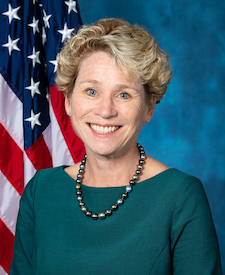
Rep. Chrissy Houlahan
Sponsored bills
Maddy summaryThe DISCLOSE Act of 2023 would increase transparency in political spending by requiring organizations making campaign-related disbursements over $10,000 to disclose the names and addresses of their major donors, including the top five funders for political communications. It would close loopholes allowing foreign nationals to secretly fund election activities through corporations or other entities by expanding the definition of prohibited foreign contributions. The bill would mandate "stand by every ad" disclosure requirements for political communications across all media, including audio, video, and internet ads, requiring clear identification of funders. It would also require reporting of disbursements related to Federal judicial nominations, which currently aren't subject to disclosure requirements. These provisions would apply to corporations, labor organizations, and certain nonprofits that engage in political activity.
Maddy summaryThe IDEA Full Funding Act (HR 4519) mandates specific annual increases in federal funding for special education programs under the Individuals with Disabilities Education Act (IDEA). It requires Congress to appropriate increasing amounts each fiscal year - from $5.87 billion for 2024 up to $55.53 billion for 2033 - to reach 40% of the national average per-pupil expenditure for public schools by 2033. This directly affects all public school districts serving students with disabilities, as federal IDEA funding supports their special education services. The bill sets fixed dollar amounts or percentage targets (whichever is greater) for each fiscal year, aiming to gradually close the long-standing gap between promised and actual federal funding. It does not alter eligibility for services but mandates higher, phased funding levels to meet the 40% target.
Maddy summaryHR 3815, the Protecting Mushroom Farmers Act, requires the Federal Crop Insurance Corporation to research and develop new insurance policies specifically for mushroom farming. The bill directs the Corporation to evaluate policies covering mushroom growing media and production, focusing on risks like pests (e.g., phorid flies), fungal pathogens, weather-related power outages, and heavy rainfall events. It mandates research into streamlined paperwork for mushroom farms' short crop cycles and revenue loss protection. The Corporation must submit a report to Congress within two years detailing the research findings and recommendations. This bill targets mushroom farmers by laying groundwork for future insurance options but does not create immediate coverage.
Maddy summaryThe MARCH for Military Servicemembers Act repeals a restriction that previously prohibited the use of Department of Defense (DoD) funds and facilities for abortion care. This change directly allows military healthcare providers to offer abortion services using DoD resources within military treatment facilities. It affects active-duty service members, veterans, and dependents receiving care through the military health system. The policy removes a longstanding barrier to accessing abortion care under the DoD’s healthcare framework.
Maddy summaryHR 4422 (Global Respect Act) requires the President to publicly identify foreign officials responsible for violence, torture, or arbitrary detention against LGBTQI individuals and block their entry to the U.S., including revoking visas for them and their immediate families. It mandates annual reporting to Congress on the list of sanctioned individuals, the reasons for additions/removals, and efforts to coordinate with other countries on similar sanctions. The bill also updates U.S. human rights reporting requirements to explicitly include data on violence and discrimination against LGBTQI people worldwide. These measures aim to increase accountability for human rights violations against LGBTQI individuals without advocating for specific policy outcomes.
Maddy summaryThis bill authorizes the Department of Homeland Security and Department of Justice to detect, identify, monitor, and mitigate drone threats to specific high-risk facilities including government buildings, airports, critical infrastructure, and locations hosting special events. It establishes a 5-year pilot program allowing state and local law enforcement agencies to use drone detection technology under federal oversight, with strict privacy protections requiring 180-day data retention limits and mandatory training for personnel. The bill requires coordination with the Federal Aviation Administration to minimize impacts on air traffic and mandates regular congressional reporting on how these authorities are being used. It sets an expiration date of 7 years after enactment for these new authorities.
Maddy summaryHR 4355, the Rural Veterinary Workforce Act, modifies the Internal Revenue Code to exclude certain loan repayment or forgiveness assistance from taxable income. It specifically adds programs under the National Agricultural Research, Extension, and Teaching Policy Act of 1977 and similar state initiatives - designed to boost veterinary services in rural areas - to the list of tax-exempt benefits. This directly affects veterinary students participating in these state or federal programs who work in underserved rural communities. The change takes effect for assistance received in taxable years beginning after December 31, 2023.
Maddy summaryThe PRIDE Act of 2023 amends the Internal Revenue Code to replace gender-specific terms like "husband and wife" with gender-neutral language such as "married couple" or "spouses" across numerous tax code sections. This bill affects all legally married couples who file federal tax returns by updating language in over 30 sections of the tax code related to filing status, deductions, credits, and other tax matters. The bill is a language update that makes the tax code more inclusive without changing existing tax treatment for married couples. It does not alter tax rates, benefits, or policies, but ensures all provisions apply equally regardless of gender.
Maddy summaryThis bill establishes a National Commission on Critical Supply Chains to study vulnerabilities in U.S. supply chains for critical products. The Commission would examine dependencies on foreign sources for items including medical supplies, rare earth materials, semiconductors, defense components, and food products. It would identify risks to national security, economic competitiveness, and public health if these supply chains were disrupted. The Commission would produce annual reports with recommendations for Congress to strengthen domestic manufacturing and supply chain resilience. The Commission would operate for 10 years, with an annual budget of $6 million.