

Maddy summaryHCONRES 56 is a non-binding congressional resolution recognizing that climate change disproportionately harms children's health, economic opportunities, and rights. It expresses Congress's view that U.S. leadership is urgently needed to address the climate crisis and calls for a national climate recovery plan. The resolution specifically demands a science-based plan to phase out fossil fuels, protect natural carbon sinks, and reduce atmospheric CO2 to below 350 parts per million by 2100. This resolution does not create new laws or allocate funds but formally states congressional support for a comprehensive climate strategy prioritizing children's well-being.
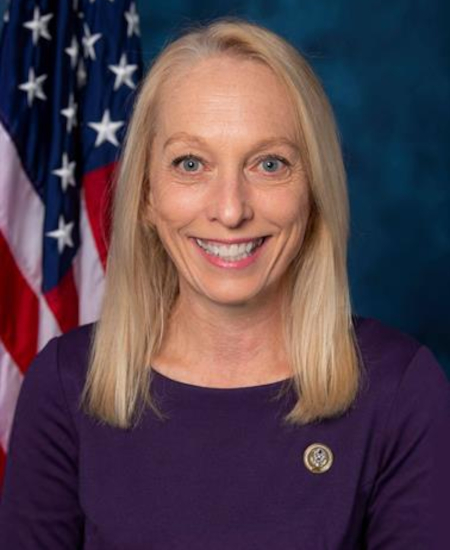
Rep. Mary Gay Scanlon
Sponsored bills
Maddy summaryHJRES 82 is a non-binding resolution stating that the Equal Rights Amendment (ERA) has been validly ratified by the required 38 states (including Virginia's 2020 ratification) and should be certified as the 28th Amendment to the U.S. Constitution. It directs the Archivist of the United States to fulfill their statutory duty under Title 1, U.S. Code, to certify and publish the ERA without delay. The resolution argues Article V of the Constitution has no ratification deadline, citing precedents like the 27th Amendment. It does not change the Constitution itself but urges the Archivist to complete the certification process. The bill affects the Archivist’s office, requiring them to act on the ERA’s ratification status.
Maddy summaryHRES 580 is a symbolic resolution expressing the House's support for designating "Journeyman Lineworkers Recognition Day." It honors lineworkers who work in hazardous conditions (such as at heights near live wires) and respond to disasters like hurricanes and wildfires, while recognizing their contributions and the legacy of Henry Miller, an early electrical worker who died on the job. The resolution has no legal effect - it solely encourages public recognition and reflection on these workers' service.
Maddy summaryThe Algorithmic Justice and Online Platform Transparency Act requires major online platforms to disclose how they use personal information in algorithmic processes that recommend content, moderate posts, and target advertisements. Platforms must provide transparent notices to users about data collection and use, publish annual transparency reports showing content moderation decisions broken down by demographic information, and maintain an accessible advertisement library showing targeted ads. The bill prohibits algorithms from discriminating in housing, employment, credit, and education opportunities based on protected characteristics like race, gender, or disability. It establishes an interagency task force to study discriminatory algorithmic practices and empowers the Federal Trade Commission to enforce these requirements.
Maddy summaryThe PLAYS in Youth Sports Act establishes federal grant programs to improve youth sports access, safety, and health for underserved children. It provides up to $2.5 million in grants to national nonprofits and $250,000 to local organizations, requiring them to fund subgrants for regional sports groups. These subgrants - ranging from $1,000 to $10,000 - must support coaching training (emphasizing child development over winning), reducing participation barriers for low-income or disabled youth, and implementing safety measures like background checks and concussion protocols. The bill allocates $75 million total, with a focus on evidence-based practices to increase healthy sports participation and safety across communities.
Maddy summaryThe RISE from Trauma Act creates federal grants to support community-based coordination of trauma-informed services for children, youth, and families who have experienced or are at risk of trauma. It provides up to $6 million per grant to local entities that bring together diverse stakeholders (including schools, healthcare providers, law enforcement, and community organizations) to develop local strategies for preventing trauma, promoting resilience, and improving outcomes in health, education, and child welfare. The bill reauthorizes and expands existing programs like the National Child Traumatic Stress Network, school-based trauma support services, and hospital-based interventions for trauma patients. It also includes specific funding increases for these programs and requires grant recipients to prioritize communities with high rates of trauma exposure, including those affected by violence, substance misuse, or systemic inequities.
Amend the Code for Marriage Equality Act of 2023 This bill amends the Internal Revenue Code, the Social Security Act (SSA), and other federal laws to replace (1) references to wife or husband with references to spouse , and (2) references to husband and wife or husband or wife with references to married couple or married person. For purposes of federal laws or regulations, marriage is defined as a legal union between two people as spouses. The bill eliminates a definition of spouse that refers only to a person of the opposite sex who is a husband or a wife. Requirements concerning compensation to a surviving wife after the disability or death of a person employed at a military, air, or naval base outside the United States are revised to make surviving spouses eligible for such compensation. The bill makes similar revisions to the Family and Medical Leave Act of 1993, the Federal Mine Safety and Health Act of 1977, and other federal statutes. The bill revises title II (Old Age, Survivors, and Disability Insurance) of the SSA to consolidate separate provisions for a wife's insurance benefits and a husband's insurance benefits into a single standard for a spouse's insurance benefits.
Maddy summaryThe Federal Death Penalty Prohibition Act would ban the federal government from imposing or carrying out the death penalty for any violation of federal law after the bill's enactment. It would require federal courts to resentence all individuals currently under a federal death sentence to a non-death penalty. This bill directly affects federal criminal defendants and inmates on federal death row, but does not impact state-level death penalty cases. The law would take effect immediately upon passage, ending federal death penalty sentencing for future cases and changing current death row sentences.
Maddy summaryThe DISCLOSE Act of 2023 would increase transparency in political spending by requiring organizations making campaign-related disbursements over $10,000 to disclose the names and addresses of their major donors, including the top five funders for political communications. It would close loopholes allowing foreign nationals to secretly fund election activities through corporations or other entities by expanding the definition of prohibited foreign contributions. The bill would mandate "stand by every ad" disclosure requirements for political communications across all media, including audio, video, and internet ads, requiring clear identification of funders. It would also require reporting of disbursements related to Federal judicial nominations, which currently aren't subject to disclosure requirements. These provisions would apply to corporations, labor organizations, and certain nonprofits that engage in political activity.
Maddy summaryThe IDEA Full Funding Act (HR 4519) mandates specific annual increases in federal funding for special education programs under the Individuals with Disabilities Education Act (IDEA). It requires Congress to appropriate increasing amounts each fiscal year - from $5.87 billion for 2024 up to $55.53 billion for 2033 - to reach 40% of the national average per-pupil expenditure for public schools by 2033. This directly affects all public school districts serving students with disabilities, as federal IDEA funding supports their special education services. The bill sets fixed dollar amounts or percentage targets (whichever is greater) for each fiscal year, aiming to gradually close the long-standing gap between promised and actual federal funding. It does not alter eligibility for services but mandates higher, phased funding levels to meet the 40% target.