

Maddy summaryThis bill establishes new federal requirements for employers to prevent heat-related illness and injury among workers. It mandates that employers provide safe work environments by implementing specific measures, including access to cool water, scheduled rest breaks in shaded areas, employer-paid cooling equipment, and training for employees and supervisors on recognizing heat illness symptoms. The Secretary of Labor must create these standards within one year, requiring employers in high-heat occupations (like construction, agriculture, and outdoor labor) to adopt engineering controls, administrative schedules, and health protocols. Key provisions include ensuring hydration, rest, and language-accessible training, while preserving existing safety protections and allowing for updates as scientific evidence evolves.
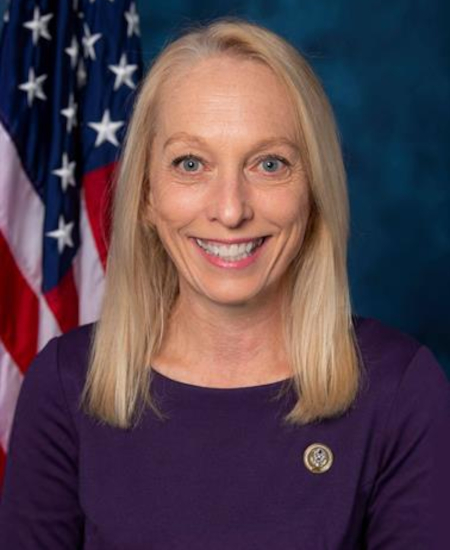
Rep. Mary Gay Scanlon
Sponsored bills
Maddy summaryHR 4852, the "IDs for an Inclusive Democracy Act," requires the Social Security Administration to create and issue free federal identification cards within three years. These cards would be accepted like state driver's licenses for most purposes, including voting and accessing services, and must include a gender option for "X" (unspecified/other identity) alongside male and female. The bill mandates the U.S. Postal Service to handle applications through existing passport-like processes, with free photography and mail-in options, and establishes a Task Force to develop security features and accessibility guidelines. It also sets special validity rules: cards for minors expire at age 18, while those for seniors 65+ remain valid indefinitely after their 10-year term.
Maddy summaryHR 4893, the Scientific Integrity Act, requires federal agencies that fund, conduct, or oversee scientific research to adopt policies preventing political interference in science. The bill mandates these agencies to prohibit suppression or distortion of research findings, establish Scientific Integrity Officers to enforce policies, and implement training and reporting systems. It directly affects scientists and engineers employed by or contracted with covered agencies (like the EPA or NIH), ensuring their work remains free from political pressure. Key mechanisms include annual public reporting on misconduct complaints, whistleblower protections, and requiring scientific conclusions to be based on evidence, not ideology.
Maddy summaryHR 4889, the Raise the Wage Act of 2023, would gradually increase the federal minimum wage for most workers to $15.50 per hour by 2027, with specific annual targets: $9.50 starting in 2023, rising to $11.00 after one year, $12.50 after two years, and $15.50 after four years. It would also phase out the separate lower minimum wage for tipped employees (starting at $6.00/hour) by aligning their pay with the regular minimum wage by 2028, while requiring employers to let workers keep all tips. The bill includes similar phased increases for workers under 20 and transitions toward fairer wages for workers with disabilities under special certificates, which would sunset after 2028. Future annual increases after 2028 would tie the minimum wage to the median hourly wage of all workers.
Maddy summaryThis bill amends the Robert T. Stafford Disaster Relief Act to define "high need communities" as small areas (under 10,000 people) with high disaster risk, not already covered by existing programs. It requires FEMA to issue guidance on extreme temperature events within one year and mandates that state and local hazard mitigation plans include resilience goals, address disparities in underserved communities, and integrate nature-based solutions. The bill also allows communities meeting advanced building codes to use disaster funds for resilience projects and directs FEMA to provide technical assistance for implementing these plans. These changes primarily affect small, high-risk communities and state/local governments managing disaster recovery funds.
Advancing Maternal Health Equity Under Medicaid Act This bill provides a 90% federal matching rate for Medicaid maternal health care expenditures that exceed 2019 levels. Qualifying services must be provided by maternity care providers or perinatal health workers (e.g., doulas) and include prenatal and postpartum telehealth services, home visits, and behavioral health care.
Maddy summaryThis bill amends the Child Nutrition Act to extend liability protections for food and pet supply donations. It adds definitions for "pet," "emotional support animal," and "pet supply" to the Act, clarifying that donations of pet food or supplies for pets, service animals, or emotional support animals are covered. The key provision (Section 22(c)(4)) shields donors and nonprofits from civil/criminal liability when donating such items in good faith for direct distribution to animals. It directly affects pet food donors, animal welfare nonprofits, and local governments distributing pet supplies. The bill does not create new programs but modifies existing donation rules to include pet-related items.
Maddy summaryH.J.Res. 25 would remove the 1979 deadline for states to ratify the Equal Rights Amendment (ERA), which was originally proposed in 1972. This bill directly affects states that ratified the ERA after the deadline (such as Nevada, Illinois, and Virginia in 2017-2018) by making their ratifications legally valid. The key provision states that the ERA is valid as part of the Constitution if ratified by three-fourths of states, regardless of the original deadline. The bill does not create new rights but aims to finalize the constitutional amendment process by eliminating the time limit.
Maddy summaryHR 1815 creates a three-year pilot program to test assisted living services as an alternative to VA nursing home care for eligible veterans. It directly affects veterans currently receiving VA nursing home care or needing higher care than VA domiciliary services but not meeting full nursing home criteria. The program selects six VA service networks (prioritizing regions with high nursing home use and rural areas), contracts with approved facilities meeting VA standards, and pays lower rates than nursing home costs. The VA must report annually on participants, costs, barriers, and quality, with a final report recommending whether to expand the program nationwide.
Maddy summaryThis bill, HR 1282 (Major Richard Star Act), expands benefits for certain military retirees by allowing them to receive both veterans' disability compensation and military retirement pay simultaneously. It specifically affects combat-related disabled retirees under Chapter 61 of the military retirement system who have fewer than 20 years of service. The key change removes the automatic reduction of military retirement pay when these retirees also receive disability compensation, as amended in Section 1413a(b)(3) of Title 10. Technical updates to the law’s structure and effective date (starting after enactment) complete the provisions.