

Maddy summaryThe Rebuild America's Schools Act of 2023 creates a $20 billion annual federal grant program to fund long-term improvements to public school facilities across the United States. It requires states to prioritize school districts serving high-poverty students (with high percentages of students eligible for free/reduced lunch) and those with deteriorating infrastructure, while mandating that recipient schools develop 10-year facilities master plans. The bill specifies that funds must be used for construction, renovation, and modernization projects that improve energy efficiency, address environmental health hazards (including lead, asbestos, and poor air quality), and ensure school safety, while requiring the use of American-made materials for construction projects.
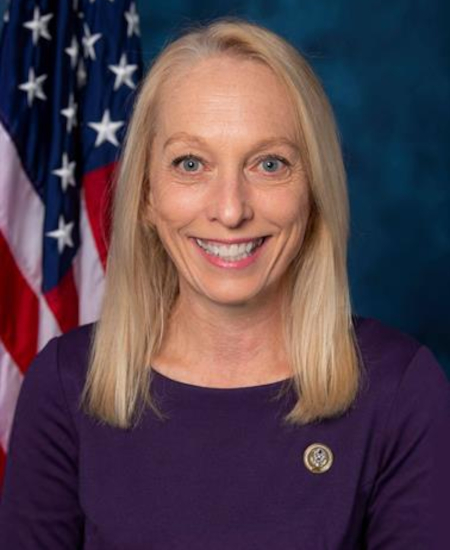
Rep. Mary Gay Scanlon
Sponsored bills
Chyna Gibson Stop the Transgender Murder Epidemic Act of 2023 or the Chyna Gibson STME Act of 2023 This bill establishes a commission to address various issues facing gender-nonconforming, gender-expansive, and transgender women of color. The commission must be comprised of 13 members who are qualified based on their education, training, activism, or experience, particularly in the field of transgender studies and human rights. The commission may hold hearings and must report its findings and recommendations to Congress no later than 18 months after its first meeting.
Maddy summaryThis bill removes an age restriction for expunging certain criminal records. It amends federal law to eliminate the requirement that a nonviolent offender must have been under 21 years old at the time of a simple possession conviction involving controlled substances. As a result, individuals convicted of these offenses who are now 21 or older can now qualify for record expungement, regardless of their age at the time of the offense. The bill directly affects nonviolent offenders with past simple possession convictions who previously could not seek expungement due to their age when convicted. This change expands eligibility for record clearance under federal expungement provisions.
Maddy summaryThe Preventing Election Subversion Act of 2023 restricts how statewide election officials can suspend or remove local election administrators who manage federal elections, requiring removals to be based only on "inefficiency, neglect of duty, or malfeasance in office." It allows local election administrators who believe they were improperly removed to sue in federal court and requires statewide election officials to report removals to the Department of Justice with detailed information. The bill also adds new voter protection requirements, mandating that challenges to voter eligibility be documented, supported by personal knowledge, and subject to penalty of perjury. It prohibits challenges to voter eligibility on or near election day unless the voter registered within 20 days of the election. These provisions aim to prevent political interference in election administration while ensuring fair and uniform federal election processes.
Maddy summaryThe Break the Cycle of Violence Act establishes federal grants to fund community-based violence intervention programs in areas disproportionately affected by gun violence, particularly communities of color. It authorizes $300 million for 2024, increasing to $700 million annually through 2031, for evidence-informed strategies including trauma-responsive care, violence interruption, and economic opportunities for opportunity youth (ages 16-25 not in school or employment). The bill requires grantees to implement culturally competent services targeting individuals at high risk of violence or victimization, with a focus on reducing gun violence without contributing to mass incarceration. It creates a National Community Violence Response Center to coordinate data collection, research, and best practices for community violence prevention. The legislation also includes provisions for job training and workforce development programs through the Department of Labor to connect opportunity youth with in-demand occupations.
Maddy summaryHR 5047, the Justice for Juveniles Act, amends a federal law to allow juveniles under 22 years old to file lawsuits about prison conditions they experienced before turning 22. It exempts these cases from certain legal requirements under the Civil Rights of Institutionalized Persons Act, specifically removing the phrase "adjudicated delinquent for" and adding new protections for juvenile prisoners. The key change means young people who were incarcerated as minors can now pursue legal claims regarding conditions they faced during their juvenile detention or incarceration. This directly affects juvenile prisoners who experienced prison conditions prior to age 22, providing them a clearer path to seek redress.
Maddy summaryThis bill regulates "ghost guns" (unserialized firearms assembled from kits or parts) by requiring all firearms to have unique serial numbers for traceability. It makes it unlawful for unlicensed individuals to manufacture, sell, transfer, or possess ghost guns in interstate commerce, with limited exceptions for licensed dealers during a one-year transition period. The law defines ghost guns as firearms lacking a serial number from a licensed manufacturer and prohibits unlicensed people from engraving serial numbers or using machines to manufacture firearms. It directly affects individuals building or possessing untraceable firearms, including those using 3D-printed parts or unfinished frames. The bill aims to improve law enforcement's ability to track firearms used in crimes, referencing that 27.4% of traced firearms in 2021 were recovered across state lines.
Maddy summaryHR 4965, the Kimberly Vaughan Firearm Safe Storage Act, requires the Attorney General to create voluntary best practices for safe firearm storage in homes, businesses, vehicles, and other locations within 180 days of enactment, with public input. Starting January 1, 2025, firearm manufacturers must include a "SAFE STORAGE SAVES LIVES" notice with each new handgun, rifle, or shotgun, directing buyers to the public website with these guidelines. The bill also establishes a $10 million annual grant program for states and tribes to fund public programs distributing safe firearm storage devices (like locked containers) and requires grantees to use at least 75% of funds for these programs. It does not mandate storage for individuals but provides resources and information to promote safer practices.
Maddy summaryHCONRES 60 is a symbolic congressional resolution calling for the immediate release of Marc Fogel, a U.S. citizen and former teacher imprisoned in Russia since 2021. It states Fogel was sentenced to 14 years for carrying medical marijuana (prescribed in Pennsylvania for his chronic pain) in his luggage, which the resolution deems an unjust and disproportionate sentence compared to typical Russian penalties for similar offenses. The resolution urges the Russian government to release Fogel, respect his human rights, and allow consular access, while also demanding the release of other detained U.S. citizens like Paul Whelan and Evan Gershkovich. It emphasizes Fogel’s health decline and the U.S. State Department’s failed humanitarian request for his release. As a non-binding resolution, it expresses congressional support but does not alter U.S. policy or law.
Maddy summaryHRES 619 is a symbolic House resolution expressing support for designating July as "Disability Pride Month." It recognizes that 61 million U.S. adults have disabilities and notes July coincides with the anniversary of the Americans with Disabilities Act (ADA). The resolution calls on the public to observe the month through celebrations and to actively prevent discrimination against people with disabilities. As a non-binding resolution, it does not create new legal requirements but aims to raise awareness of disability inclusion.