

Maddy summaryThis bill authorizes increased federal funding for early childhood special education programs under the Individuals with Disabilities Education Act (IDEA). It specifically restores funding for Part C (services for infants and toddlers with disabilities) and Section 619 (preschool programs for children with disabilities ages 3-5) by setting annual appropriations from $503 million to $1.22 billion for Section 619 and $932 million to $1.73 billion for Part C through 2028. These funds would directly support states in delivering high-quality early intervention and preschool services to children with disabilities and their families. The bill aims to reverse decades of reduced per-child funding, which had fallen significantly from historical highs.
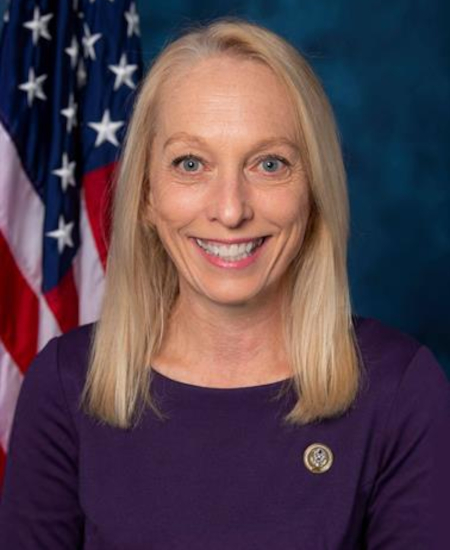
Rep. Mary Gay Scanlon
Sponsored bills
Maddy summary# Summary of the "Protecting Our Democracy Act" This comprehensive legislation aims to strengthen democratic processes, increase government transparency, and prevent foreign interference in elections. Key provisions include: ## Ethics and Transparency - **Ethics Pledge**: Requires all appointees to sign an ethics pledge committing to: - Ban on gifts from registered lobbyists - 2-year revolving door ban (prohibiting participation in matters related to former employers) - Golden parachute ban (no special payments from former employers) - Commitment to decision-making based on public interest - **Tax Transparency**: Requires presidential and vice presidential candidates to disclose 10 years of tax returns, with sitting presidents submitting returns within 30 days of enactment ## Campaign Finance and Foreign Interference - **Foreign Contact Reporting**: Requires political committees to report any contact with "covered foreign nationals" within 1 week - **Enhanced Penalties**: Criminal penalties of up to $1 million and 5 years in prison for violations - **Online Advertising Rules** ("Honest Ads Act"): - Requires clear disclosure of who paid for political ads online - Mandates machine-readable public databases of political ads - Requires visible sponsor identification that remains when ads are shared - Defines "qualified political advertisements" to include various online formats ## Preventing Patronage Systems - Limits exceptions to competitive service for federal positions - Restricts transferring positions between competitive and excepted service - Requires employee consent for position transfers ## Use of Federal Property - Prohibits holding national political conventions on federal property - Requires publicly available visitor records at White House and other official locations (with privacy exceptions) The legislation establishes detailed definitions, reporting requirements, and enforcement mechanisms across multiple agencies, with the goal of increasing transparency, preventing foreign interference, and ensuring ethical conduct in government service.
Maddy summaryThe Communications, Video, and Technology Accessibility Act of 2023 requires video programming providers to provide closed captions and audio description for all online video content, including live and near-live programming. It mandates that video playback devices (such as smart TVs and streaming devices) include accessible controls for captions and audio description, with specific requirements for labeling and discoverability. The bill establishes advisory committees to develop technical standards for accessibility and updates requirements for video conferencing services to include built-in captioning and compatibility with assistive technologies. These provisions directly affect video service providers, device manufacturers, and video conferencing platforms, aiming to improve accessibility for people who are deaf, hard of hearing, blind, or DeafBlind.
Maddy summaryThis bill prohibits federal involvement in commercial greyhound racing, live lure training, and open field coursing by banning interstate activities related to these practices. It makes it unlawful to conduct betting on greyhound races (including remote gambling), use live animals as bait, or transport animals for these purposes. The law specifically targets the declining greyhound racing industry (now operating at only two tracks in West Virginia), banning federal facilitation of betting, live bait use, and interstate transport of animals for racing or training. It does not affect horse racing or state laws already prohibiting these activities in most states.
Animal Welfare Enforcement Improvement Act This bill revises the licensing process of the Department of Agriculture (USDA) for animal dealers and exhibitors to expand USDA's oversight and enforcement of animal welfare requirements. Dealers and exhibitors must apply to USDA for licenses or renewal licenses each year. In order to obtain the licenses or renewals, dealers and exhibitors must meet certain standards for the humane treatment of animals and pass inspections as specified by this bill. USDA may not issue or renew such licenses if the dealers or exhibitors have violated laws relating to animals or if the issuance of the licenses would facilitate the circumvention of state or local laws that prohibit the private ownership of certain animals. Further, USDA must suspend the licenses of dealers or exhibitors whose violations present a risk to animal welfare. USDA must revoke the licenses if the violations persist or if the licensees commit multiple violations. Dealers and exhibitors with suspended or revoked licenses may not be (1) granted another license, (2) granted another license through another person or entity, or (3) employed by another licensee to work with animals during the period of the suspension or revocation.
Maddy summaryThis bill adds spotted lanternfly control to the list of high-priority research initiatives funded by the USDA. It enables federal grants for developing and sharing practical tools to combat this invasive insect pest, directly affecting agricultural researchers and farmers in affected areas (like Pennsylvania, where the pest causes significant crop damage). The key provision modifies existing law to specifically include lanternfly research under funding programs, without changing current grant rules. The bill also extends the funding authorization period for such initiatives through 2028.
Maddy summaryThis bill establishes a federal pilot program to help homeless individuals access SNAP (Supplemental Nutrition Assistance Program) benefits. It authorizes $12.5 million annually (2024-2029) to fund grants for community organizations, homeless service providers, and public housing agencies to provide direct outreach, application assistance, transportation to SNAP offices, and staff training. The program specifically targets barriers like lack of documentation and awareness, focusing on helping homeless households enroll in SNAP by connecting them with existing resources. Grantees must report annually on outcomes, including the number of homeless individuals served and enrollment impacts. The pilot runs for up to 5 years, with funds supplementing (not replacing) existing state/local programs.
This concurrent resolution opposes actions that undermine Israel's future as a Jewish, democratic state. The resolution expresses that democracy is at the core of the special relationship between the United States and Israel, and that Congress stands with all Israelis seeking to defend liberal democracy, judicial review, and independent political institutions.
Maddy summaryThis bill establishes the Chesapeake National Recreation Area as a new unit of the National Park System to preserve and promote public access to the Chesapeake Bay watershed. It defines the Recreation Area's boundaries using a specific map, creates an Advisory Commission with 19 members representing Maryland, Virginia, tribal interests, and youth, and outlines how land acquisition and management will occur through donations, purchases, or partner agreements. The legislation requires coordination with existing programs like Chesapeake Gateways and the Bay Program, while emphasizing conservation of natural, recreational, historical, and cultural resources. It directly affects communities, conservation organizations, and local governments in the Chesapeake Bay watershed by creating a formal structure for managing and expanding public access to Bay resources. The bill sets requirements for cooperative agreements with partner sites and mandates a management plan to coordinate activities with neighboring communities and existing conservation efforts.
Maddy summaryHR 4963, the Tax Fairness for Workers Act, would restore tax deductions for certain employee expenses. It creates an above-the-line deduction for union dues and expenses paid by wage-earning employees, and allows miscellaneous itemized deductions for other work-related expenses (like uniforms or supplies) that were previously disallowed after 2017 tax law changes. These provisions directly affect employees who pay union dues or incur qualifying job-related costs. The bill amends specific sections of the Internal Revenue Code to make these deductions available for taxable years beginning after December 31, 2022. It does not change tax rates or provide new benefits, only reinstating previously eliminated deductions for eligible workers.