

Advancing Energy Manufacturing in Coal Communities Act This bill requires the Department of Energy to establish a program to award grants to certain manufacturing firms for qualifying advanced energy projects. To qualify for a grant, a project must (1) re-equip, expand, or establish a manufacturing or recycling facility for the production or recycling of advanced energy property (e.g., property designed to produce renewable energy); or (2) re-equip an industrial or manufacturing facility with equipment designed to reduce the greenhouse gas emissions of that facility substantially below the greenhouse gas emissions under current best practices. Further, the project must have a reasonable expectation of commercial viability and be located near or in an area where a coal mine has closed or coal-fired plant that produced electricity has been retired.
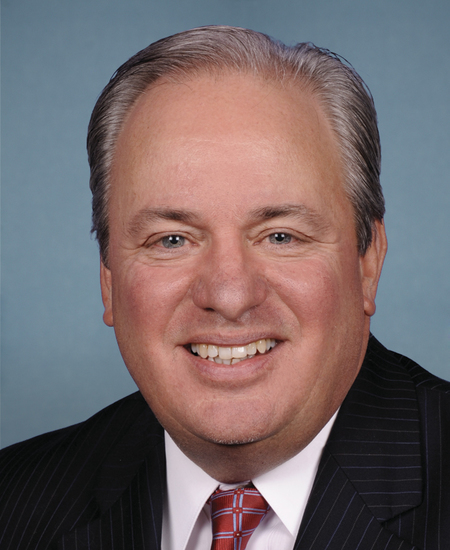
Rep. Michael F. Doyle
Sponsored bills
Investing in Energy Regions Act This bill requires the Department of Energy (DOE) to establish a program to demonstrate the technical and economic viability of carrying out clean energy projects on current and former mine land. Under the program, DOE must select no more than five projects that will be carried out in geographically diverse regions. At least two of the projects must be solar projects.
Medically Tailored Home-Delivered Meals Demonstration Pilot Act of 2021 This bill requires the Centers for Medicare & Medicaid Services to establish a demonstration program to allow hospitals to provide medically tailored, home-delivered meals to Medicare beneficiaries who have a diet-impacted disease (e.g., kidney disease) and have daily living limitations. Participating hospitals must (1) retain a physician, registered dietitian or nutrition professional, or clinical social worker to screen, monitor, and coordinate services for individuals who receive meals through the program; and (2) contract with experienced organizations for meal delivery. Hospitals may choose to also provide meals to an individual's primary caregiver or to a dependent under the age of 18 who resides in the same household.
Two-State Solution Act This bill addresses U.S. policy and related activities to preserve conditions for a two-state solution to resolve territorial disputes between Israel and Palestine. The bill prohibits the United States from providing support for projects in geographic regions that came under Israeli control after June 5, 1967. It also prohibits the use of any U.S. security assistance, defense articles, or defense services provided to Israel for efforts to annex or exercise permanent control over any part of the West Bank or Gaza. Current law designates the Palestine Liberation Organization (PLO) as a terrorist organization and restricts its activities (e.g., prohibiting it from maintaining an office in the United States). The President may waive for up to six months some of these restrictions to serve U.S. national security or diplomatic interests. If the President certifies that the PLO has ceased supporting terrorist actions and met other conditions, the bill automatically terminates the terrorist organization designation. Goods produced in the West Bank or Gaza that are imported into the United States must indicate those areas as the country of origin on their labels. The bill expands the scope of certain foreign and development assistance to foster initiatives, including shared educational opportunities and youth activities, that connect Israelis and Palestinians. Additionally, the Department of State and the U.S. Agency for International Development may jointly award grants to private, nonprofit organizations to promote human rights and democracy, strengthen civil society, and otherwise address the needs of the Palestinian people.
Reclaiming the Solar Supply Chain Act of 2021 This bill requires the Department of Energy to establish a program to award grants and loans to support a solar component manufacturing supply chain. Under the program, grants and loans must be used for (1) the construction of new facilities that manufacture solar components; and (2) retooling, retrofitting, or expanding existing facilities that manufacture solar components.
This resolution supports the designation of National Clean Energy Week.
Tyler Clementi Higher Education Anti-Harassment Act of 2021 This bill addresses harassment at institutions of higher education (IHEs). Specifically, the bill requires each IHE to include in its annual security report a statement of policy regarding harassment on the basis of a student's actual or perceived race, color, national origin, sex (including sexual orientation, gender identity, pregnancy, childbirth, a medical condition related to pregnancy or childbirth, and a sex stereotype), disability, or religion. In addition, the Department of Education may award grants to IHEs to initiate, expand, or improve programs to (1) prevent the harassment of students; (2) provide counseling or redress services to students who have been harassed or accused of subjecting other students to harassment; or (3) educate and train students, faculty, or staff to prevent harassment or address harassment if it occurs.
Manufacturing Reinvestment Corporation Act This bill establishes the Manufacturing Reinvestment Corporation within the Department of Commerce. The corporation must set national strategic objectives for the manufacturing industry with an emphasis on equity and inclusion. Based on specified criteria, the corporation also must establish and make grants to 30 local Manufacturing Renaissance Councils to support the corporation's objectives. Each council must have a governing board comprised of at least nine members, which include community stakeholder organizations, local governments, educational institutions, and manufacturing companies. Each council must use grants from the corporation for economic development programs in the community, education and training, and wraparound services such as child care and mental health services. Additionally, the bill provides for the composition of the corporation's board of directors as well as the appointment of an executive director and other employees. The corporation must report annually about its national strategy and finances. The bill requires financial audits of the corporation and of each grantee and contractor.
John R. Lewis Voting Rights Advancement Act of 2021 This bill establishes new criteria for determining which states and political subdivisions must obtain preclearance before changes to voting practices may take effect. Preclearance is the process of receiving preapproval from the Department of Justice (DOJ) or the U.S. District Court for the District of Columbia before making legal changes that would affect voting rights. A state and all of its political subdivisions shall be subject to preclearance of voting practice changes for a 10-year period if 15 or more voting rights violations occurred in the state during the previous 25 years; 10 or more violations occurred during the previous 25 years, at least 1 of which was committed by the state itself; or 3 or more violations occurred during the previous 25 years and the state administers the elections. A political subdivision as a separate unit shall also be subject to preclearance for a 10-year period if three or more voting rights violations occurred there during the previous 25 years. States and political subdivisions that meet certain thresholds regarding minority groups must preclear covered practices before implementation, such as changes to methods of election and redistricting. Further, states and political subdivisions must notify the public of changes to voting practices. Next, the bill authorizes DOJ to require states or political subdivisions to provide certain documents or answers to questions for enforcing voting rights. The bill also outlines factors courts must consider when hearing challenges to voting practices, such as the extent of any history of official voting discrimination in the state or political subdivision.
Improving Medicare Coverage Act This bill temporarily expands eligibility for Medicare. It also temporarily establishes a premium and cost-sharing assistance program for low-income beneficiaries. Specifically, the bill lowers the age of eligibility for Medicare from 65 to 60. The Centers for Medicare & Medicaid Services must establish procedures to provide for automatic enrollment of qualifying individuals. Enrollment must be completed within 11 months of the bill's enactment. The bill also establishes a program under Medicare to assist low-income Medicare beneficiaries with premiums, coinsurance, deductibles, and other costs. Currently, such assistance is provided through Medicare Savings Programs, which are administered by state Medicaid programs. The bill also establishes a related special enrollment period under Medicare, expands eligibility for assistance to beneficiaries with income up to 200% of the federal poverty line, and provides for joint eligibility determinations with respect to the bill's program and the low-income subsidy program under the Medicare prescription drug benefit. The bill's provisions generally take effect six months after the bill's enactment and terminate five years later.