

Manufacturing American Dynamism in Entrepreneurship and Harnessing Education to Retool Employees Act or the MADE HERE Act This bill requires the National Institute of Standards and Technology, the Department of Energy, and the Department of Defense to establish a manufacturing cluster program to award resources and grants to eligible manufacturing clusters, and it establishes an interagency entity to oversee and coordinate the activities of manufacturing cluster programs at federal agencies. A manufacturing cluster is a geographic concentration of companies and institutions within a particular field of manufacturing that engage collaboratively in workforce development, technology development, supply chain sourcing, and other activities. The program shall be comprised of three phases wherein awards shall be distributed to manufacturing clusters for (1) the development of a detailed implementation plan, (2) the implementation of such plan, and (3) continuing the activities of the cluster. Phase two and three awards may be used for purposes such as developing and deploying educational programs for cluster members, funding efforts with respect to supply chain sourcing and innovation, and developing shared infrastructure or resources for cluster members.
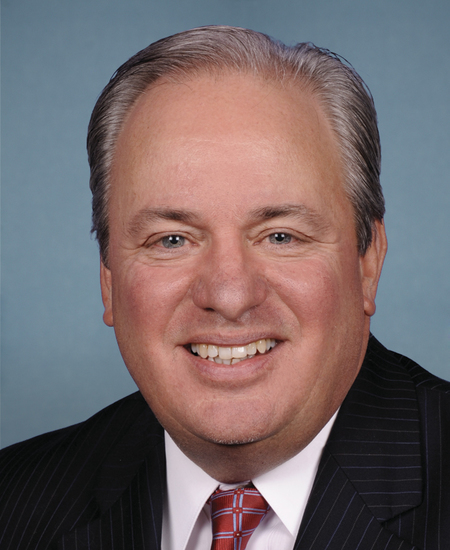
Rep. Michael F. Doyle
Sponsored bills
Maddy summaryThis is a non-binding House resolution (HRES 707) introduced on October 8, 2021, that formally supports recognizing October 8, 2021, as "National Hydrogen and Fuel Cell Day." It does not create new laws or policies - it is a symbolic gesture to acknowledge the importance of hydrogen and fuel cell technologies. The resolution cites their role in energy, transportation, and environmental applications but does not affect any specific groups or require government action. It has no legislative effect beyond raising awareness.
Maddy summaryHR 5544 would remove the requirement for annual U.S. presidential determinations about Kazakhstan's trade status under the Trade Act of 1974. Specifically, it allows the President to formally extend permanent "normal trade relations" (NTR) treatment to Kazakhstan's products, ending the need for yearly reviews under Title IV of the Trade Act. This bill directly affects U.S. trade with Kazakhstan by making the country's trade status with the U.S. permanent and predictable, rather than subject to annual renewal. The key provision streamlines trade relations by eliminating the existing Title IV review process once the President extends NTR treatment.
Animal Freedom from Testing, Experiments, and Research Act of 2021 or the AFTER Act of 2021 This bill requires federal research facilities to facilitate the adoption or nonlaboratory placement of certain warm-blooded animals (e.g., dogs, cats, monkeys, guinea pigs, hamsters, and rabbits) with animal rescue organizations, animal sanctuaries, animal shelters, or individuals. In order to be adopted or placed, the animals must (1) no longer be needed for research; (2) be suitable for release; (3) not be birds, rats, or mice.
Minks in Narrowly Kept Spaces are Superspreaders Act or the MINKS are Superspreaders Act This bill makes it unlawful to import, export, transport, sell, receive, acquire, or purchase American mink ( Neovison vison ) raised in captivity for fur production, whether dead or alive.
Improving Access to Home Dialysis Act of 2021 This bill provides for Medicare coverage of staff-assisted home dialysis services for certain individuals with end-stage renal disease (ESRD). Specifically, the bill provides for coverage of services for ESRD individuals who are either initiating peritoneal or home hemodialysis or receiving home dialysis and are unable to self-dialyze due to illness, injury, caregiver issues, or other temporary circumstances. The Centers for Medicare & Medicaid Services must develop a payment system for such services. The bill also requires the development of a patient-centered decision tool that includes home dialysis as an option, as well as a report on racial disparities with respect to the use of staff-assisted home dialysis services.
Israel Relations Normalization Act of 2021 This bill requires the Department of State to take certain actions promoting the normalization of relations between Israel, Arab states, and other relevant countries and regions. Specifically, the State Department must develop a strategy on expanding and strengthening the Abraham Accords (the term used to refer collectively to agreements between Israel and the United Arab Emirates and between Israel and Bahrain marking the public normalization of relations between the two Arab countries and Israel). The strategy must include a description of how the U.S. government will encourage further normalization of relations with Israel. In addition, the State Department must report on options for U.S. international efforts to promote the strengthening of ties between Israel, Arab states, and other relevant countries and regions. The State Department must also report on the status of the normalization of relations with Israel, including information on (1) laws that punish individuals for people-to-people relations with Israelis (i.e., anti-normalization laws), and (2) evidence of steps taken by Arab governments toward permitting or encouraging normalized relations between their citizens or residents and Israeli citizens.
Solar Energy Manufacturing for America Act This bill allows a new tax credit for the production and sale of certain solar equipment produced and sold in a taxpayer's trade or business.
Cancer Patient Equity Act of 2021 This bill provides for coverage of certain cancer diagnostic and laboratory tests under Medicare, Medicaid, and the Children's Health Insurance Program (CHIP). Specifically, the bill provides for coverage of microarray analysis, DNA and RNA sequencing, whole-exome sequencing, and other next-generation sequencing for individuals diagnosed with cancer. Additionally, the Department of Health and Human Services must establish an education and awareness program for physicians and the public about genomic testing and the role of genetic counselors.
Spectrum Innovation Act of 2021 This bill specifies a process for auctioning a portion of the electromagnetic spectrum between 3100 megahertz (MHz) and 3540 MHz for nonfederal use, shared federal and nonfederal use, or a combination of those uses. Most wireless technologies (e.g., mobile communication) rely on the electromagnetic spectrum to transmit signals. Specifically, the Office of Management and Budget must transfer funding from the Spectrum Reallocation Fund to federal entities for planning related to the reallocation. The National Telecommunications and Information Administration (NTIA) and the Executive Office of the President must oversee the planning. Informed by the planning, the Department of Commerce must identify at least 200 MHz of spectrum for reallocation. In identifying the spectrum, Commerce must consult with the Department of Defense, the Office of National Science and Technology Policy, and the Federal Communications Commission (FCC). The FCC must (1) adopt rules authorizing the use of the identified spectrum in consultation with the NTIA, and (2) auction licenses for the identified spectrum within seven years of the bill's enactment. Additionally, the President must modify or withdraw (subject to certain limits) current federal assignments of the identified spectrum to increase nonfederal use. The FCC must allow for opportunistic uses (i.e., allow devices to opportunistically identify and transmit on unused spectrum without infringing on the rights of the spectrum license holder) of a withdrawn or modified assignment. An allowed opportunistic use must cease after the auction if the use is inconsistent with the rights of the licensee that obtains its license through the auction.