

Maddy summaryThe Assad Regime Anti-Normalization Act of 2023 amends the Caesar Syria Civilian Protection Act to expand sanctions against individuals and entities supporting the Assad regime in Syria. It targets those who provide financial or material support to the regime, divert humanitarian aid, seize property, or engage with Syria Arab Airlines or Cham Wings. The bill prohibits U.S. officials from recognizing or normalizing relations with the Assad regime and requires the administration to develop a strategy to counter other countries' engagement with Syria. It also mandates annual reports on diplomatic meetings with Syria, transactions involving Syria, and how the Assad regime manipulates UN operations in Syria.
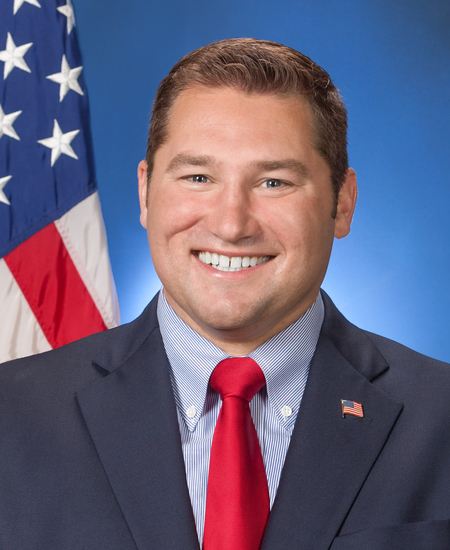
Rep. Guy Reschenthaler
Sponsored bills
Maddy summaryHR 7450, the Protecting Privacy in Purchases Act, prohibits payment card networks and covered entities (like payment processors) from requiring or assigning merchant category codes that specifically identify firearms retailers as different from general stores or sporting goods retailers. This directly affects firearms retailers and payment networks by preventing them from using business classification codes that could flag firearm sales. The bill establishes an enforcement process where the Attorney General investigates complaints, issues remediation notices, and can seek court injunctions for non-compliance, while preempting state or local laws on this issue. It does not create private lawsuits for individuals.
Maddy summaryHR 7176, the "Unlocking our Domestic LNG Potential Act of 2024," streamlines approval processes for U.S. liquefied natural gas (LNG) export terminals. It grants the Federal Energy Regulatory Commission (FERC) exclusive authority to approve or deny LNG export facility projects, requiring FERC to deem such exports "consistent with the public interest" unless specific legal exceptions apply. The bill explicitly preserves the President’s authority to block LNG exports under sanctions laws targeting countries designated as state sponsors of terrorism. This directly affects LNG companies seeking export permits and FERC’s regulatory role, without altering existing environmental or safety regulations.
Maddy summaryHRES 1009 is a procedural resolution that enables the House to consider H.R. 7176, a bill aiming to repeal restrictions on natural gas exports and imports. It waives procedural objections to the bill and its provisions, and sets a one-hour debate period equally divided between the committee leadership and the ranking minority member. This resolution does not change policy but streamlines the process for voting on H.R. 7176.
Maddy summaryThis bill restricts how credit reporting companies share homebuyers' credit reports during mortgage applications. It prevents companies from sending these reports to third parties (like marketers) just because a lender requested them for a mortgage. Only specific entities can receive the reports: the mortgage lender who originated the loan, the company servicing the loan, or the bank holding the homebuyer's account. This directly protects homebuyers' privacy by limiting unauthorized sharing of their financial data.
This resolution expresses the sense of the House of Representatives that former President Trump did not engage in insurrection or rebellion against, nor give aid or comfort to the enemies of, the United States.
Maddy summaryThis non-binding resolution urges the U.S. State Department to redesignate Nigeria as a "Country of Particular Concern" (CPC) for systematic religious freedom violations under the International Religious Freedom Act, and to appoint a Special Envoy for Nigeria and the Lake Chad region. It cites U.S. Commission on International Religious Freedom (USCIRF) recommendations, reports of ongoing violence against Christian communities (including church attacks and kidnappings), and Nigeria’s blasphemy laws as justification. The resolution specifically requests the Secretary of State to immediately redesignate Nigeria as a CPC and the President to appoint a Special Envoy with direct reporting to the Secretary. It does not create new law but expresses congressional intent for U.S. diplomatic action. (3 sentences)
Maddy summaryThis bill prohibits U.S. real estate purchases by nationals or entities tied to specific foreign governments designated as "adversaries," including China, Russia, North Korea, Iran, Cuba, Venezuela (under Maduro), and certain foreign terrorist organizations. It directly affects foreign governments and their agents (like trustees or fiduciaries) seeking to buy public or private U.S. property. The President is directed to take necessary actions to enforce this ban, overriding other existing laws. The prohibition covers all U.S. states, territories, and possessions, including Puerto Rico and Guam.
Maddy summaryThis bill appropriates over $15 billion in supplemental funding for U.S. security assistance to Israel following attacks in Israel. It includes specific allocations such as $5.2 billion for Israel's Iron Dome, David's Sling, and Iron Beam defense systems, as well as funds for military personnel, operations, and equipment across all branches of the military. The bill requires the Secretary of Defense and Secretary of State to submit regular reports to Congress detailing security assistance provided to Israel and designates all funding as "emergency requirements" under federal law. This funding directly supports U.S. security assistance programs with Israel to respond to regional security threats.
Maddy summaryThis resolution disapproves a Department of Energy rule that would have set new energy efficiency standards for consumer furnaces. The rule, published in the Federal Register (88 Fed. Reg. 87502), aimed to require furnace manufacturers to produce models meeting higher energy conservation levels. If enacted, this resolution would cancel the rule, preventing it from taking effect. As a result, current energy efficiency standards for furnaces would remain unchanged, and manufacturers would not face the new requirements.