

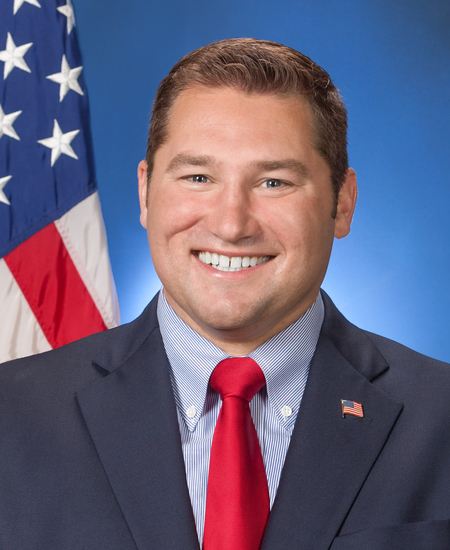
Photo of Guy Reschenthaler
R United States House · District 14 · Pennsylvania On the 2026 ballot

Rep. Guy Reschenthaler

Compare
Total votes
2,837
all sessions
Attendance
99%
30 missed
Near the chamber average
With party
96%
of cast votes
Higher than 95% of chamber peers
Bipartisan score
2%
crosses aisle rarely
Lower than 96% of chamber peers
Sponsored
876
bills & resolutions
Lower than 97% of chamber peers
Committees
4
assignments
876 bills and resolutions

Sponsored bills

Total
876
Primary
42
Co-sponsor
834
This page
876
matching current filters
Co-sponsor HR 1121
Passed · United States House · Co-sponsor
Protecting American Energy Production Act

Maddy summaryThe Protecting American Energy Production Act (HR 1121) states that Congress believes states should have primary authority to regulate hydraulic fracturing for oil and gas production on state and private lands. It prohibits the President from declaring a moratorium on hydraulic fracturing without specific authorization from Congress. This bill directly affects federal and state governments by limiting the executive branch’s power to halt hydraulic fracturing operations and reinforcing state regulatory control. The key provision ensures any federal restriction on hydraulic fracturing would require a new law passed by Congress, not a presidential order.

Passed Mar 21, 2024 1 co-sponsor
Primary HRES 1085
Passed · United States House · Lead sponsor
Providing for consideration of the bill (H.R. 1023) to repeal section 134 of the Clean Air Act, relating to the greenhouse gas reduction fund; providing for consideration of the bill (H.R. 1121) to prohibit a moratorium on the use of hydraulic fracturing; providing for consideration of the bill (H.R. 6009) to require the Director of the Bureau of Land Management to withdraw the proposed rule relating to fluid mineral leases and leasing process, and for other purposes; providing for consideration of the concurrent resolution (H. Con. Res. 86) expressing the sense of Congress that a carbon tax would be detrimental to the United States economy; providing for consideration of the resolution (H. Res. 987) denouncing the harmful, anti-American energy policies of the Biden administration, and for other purposes; and providing for consideration of the bill (H.R 7023) to amend section 404 of the Federal Water Pollution Control Act to codify certain regulatory provisions relating to nationwide permits for dredged or fill material, and for other purposes.

Maddy summaryThis House resolution establishes special rules for considering six separate bills and resolutions related to energy, environmental regulation, and economic policy. The measure allows expedited debate and passage of legislation that would repeal greenhouse gas reduction funding under the Clean Air Act, lift restrictions on hydraulic fracturing, require withdrawal of a Bureau of Land Management rule on fluid mineral leases, express opposition to a carbon tax, and codify nationwide permits for dredged or fill material under water pollution laws. By waiving points of order and limiting debate time, the resolution streamlines the legislative process for these specific items without changing their substantive content.

Passed Mar 20, 2024 0 co-sponsors
Co-sponsor HR 5499
In committee · United States House · Co-sponsor
Congressional Oversight of the Antiquities Act

Maddy summaryHR 5499, titled "Congressional Oversight of the Antiquities Act," would amend the Antiquities Act to impose time limits on national monument designations. It requires that any national monument established by presidential proclamation under the law expires after six months unless Congress extends it, and if not extended, the land cannot be re-designated as a monument for 25 years. This directly affects federal land managers and future presidents, who would need congressional action to maintain or expand monument boundaries. The bill changes the current process by adding automatic expiration and a long-term moratorium on re-designation, shifting authority to Congress.

In committee Mar 20, 2024 1 co-sponsor
Co-sponsor HR 7725
In committee · United States House · Co-sponsor
To amend the Higher Education Act of 1965 to prohibit graduate medical schools from receiving Federal financial assistance if such schools adopt certain policies and requirements relating to diversity, equity, and inclusion.

Maddy summaryHR 7725 would block federal funding for graduate medical schools that require students or staff to adopt specific statements about race, gender, or identity (like claiming systemic racism or collective guilt), use race-based distinctions in admissions or programs, maintain DEI offices, or mandate "diversity statements" for admission. It directly affects graduate medical schools at colleges/universities receiving federal financial aid, including student loans. The bill exempts medical education about race-related health needs, demographic data collection for reporting, and religious institutions from adhering to policies conflicting with their beliefs. Schools violating these rules would lose eligibility for federal funds, though they could still comply with anti-discrimination laws and provide general academic instruction.

In committee Mar 19, 2024 1 co-sponsor
Co-sponsor HR 7629
In committee · United States House · Co-sponsor
Protect Our Letter Carriers Act of 2024

Maddy summaryHR 7629, the Protect Our Letter Carriers Act of 2024, allocates $1.4 billion annually (2025-2029) to the U.S. Postal Service for high-security collection boxes and replacing physical universal mailbox keys with electronic versions, directly affecting USPS operations and letter carriers. It requires the Attorney General to appoint specialized prosecutors in each district to coordinate investigations and prosecutions of postal-related crimes, such as assaults on carriers or mail theft. The bill also mandates the U.S. Sentencing Commission to adjust guidelines so that assaults or robberies against postal employees are treated with the same severity as assaults against law enforcement officers. These provisions aim to enhance safety through infrastructure upgrades, improved prosecution, and stricter sentencing for crimes targeting postal workers.

In committee Mar 12, 2024 1 co-sponsor
Co-sponsor HR 7620
In committee · United States House · Co-sponsor
PARC Act

Maddy summaryThe PARC Act requires national parks that charge entrance fees to accept cash payments as a standard option. This applies to all National Park System units where fees are collected, ensuring visitors can pay with physical currency. The bill amends federal law to mandate this change, directly affecting park visitors who rely on cash and park staff responsible for payment systems. It does not alter fee amounts or other park policies, only the accepted payment methods. The requirement is now enforced across all fee-charging park locations.

In committee Mar 11, 2024 1 co-sponsor
Co-sponsor HR 7511
Passed · United States House · Co-sponsor
Laken Riley Act

Maddy summaryThe Laken Riley Act (HR 7511) would require federal authorities to detain non-citizens charged with or convicted of burglary, theft, larceny, or shoplifting offenses. It also creates new legal standing for state attorneys general to sue federal immigration officials in federal court if they believe immigration enforcement decisions (like releasing aliens or granting parole) cause financial harm exceeding $100 to the state or its residents. The bill amends immigration laws to expand detention requirements for certain property crimes and allows states to seek court orders to enforce immigration policies. It does not create new criminal penalties but modifies existing immigration enforcement procedures. The bill’s findings and political language about the Laken Riley case are not part of its policy provisions.

Passed Mar 11, 2024 1 co-sponsor
Co-sponsor HR 7469
In committee · United States House · Co-sponsor
To designate the facility of the United States Postal Service located at 28 East Airy Street in Norristown, Pennsylvania, as the "Charles L. Blockson Post Office Building".

Maddy summaryThis bill designates the U.S. Postal Service facility at 28 East Airy Street in Norristown, Pennsylvania, as the "Charles L. Blockson Post Office Building." It directly affects the specific post office location and all official references to it. The key provision requires that all future government documents, maps, and records referencing this facility must use the new name. The bill makes no changes to postal services, operations, or affected individuals - only updating the facility's official designation. (Procedural naming bill; summary limited to 2 sentences as specified.)

In committee Feb 28, 2024 1 co-sponsor
Co-sponsor HR 7468
In committee · United States House · Co-sponsor
To ensure that United States diplomats and officials of the U.S. Section of the International Boundary and Water Commission are able to advance efforts seeking compliance by the United Mexican States with the 1944 Treaty on Utilization of Waters of the Colorado and Tijuana Rivers and of the Rio Grande.

Maddy summaryThis bill directs the Secretary of State to actively use U.S. diplomatic resources, including the voice and influence of U.S. diplomats and officials at the International Boundary and Water Commission, to advance efforts ensuring Mexico complies with the 1944 water treaty. It requires U.S. officials to work toward establishing reliable water delivery agreements under the treaty for the Colorado, Tijuana, and Rio Grande rivers. The key mechanism is mandating diplomatic engagement to address Mexico's compliance with treaty obligations, aiming to secure predictable water flows for U.S. users. The bill affects U.S. diplomatic operations and water management coordination with Mexico, focusing on treaty implementation rather than new water infrastructure.

In committee Feb 28, 2024 1 co-sponsor
Co-sponsor HR 7455
In committee · United States House · Co-sponsor
Sunset Act of 2024

Maddy summaryHR 7455, the Sunset Act of 2024, requires federal agencies to automatically expire significant rules after 10 years unless Congress passes a new law extending them. Agencies must submit reports 180 days before expiration, and Congress can extend rules via joint resolution within 3 legislative days of receiving the report. The bill also mandates annual reviews of 10% of active agency rules for 9 years, with rules not extended by Congress after the 10-year period expiring. It applies to all major agency rules (e.g., environmental or safety regulations) and includes limited presidential exemptions for emergencies, but does not affect existing rules already in effect.

In committee Feb 26, 2024 1 co-sponsor
Showing 221 to 230 of 876 bills
Previous 1 … 22 23 24 … 88 Next